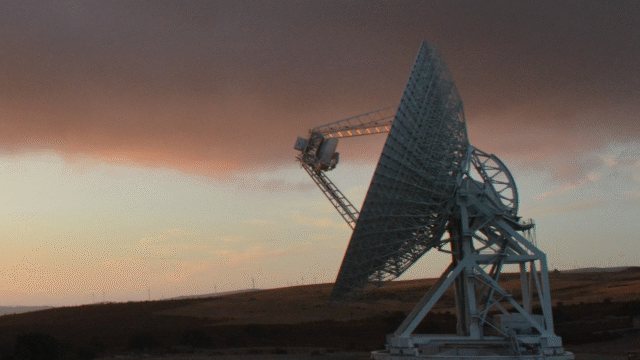
Telespazio has successfully completed a significant milestone in the upgrade of the Sardinia Deep Space Antenna (SDSA), a facility managed by the Italian Space Agency (ASI) that plays a crucial role in deep-space communications and scientific research. The achievement marks a major step forward in enhancing Italy’s capacity to support interplanetary missions and lunar exploration programs.
The Sardinia Deep Space Antenna, located near San Basilio in Sardinia, is a 64-meter-diameter radio telescope designed to communicate with spacecraft far beyond Earth’s orbit. The upgrade project, carried out by Telespazio under contract with ASI, aims to improve the antenna’s sensitivity, data transmission capabilities, and operational flexibility. This enhancement is critical for supporting future missions to the Moon, Mars, and other deep-space destinations, as well as for advancing radio astronomy and planetary science.
The milestone achieved by Telespazio involves the successful integration and testing of new subsystems, including advanced receivers, cryogenic cooling systems, and signal processing electronics. These components are essential for reducing noise and increasing the antenna’s ability to detect faint signals from distant spacecraft. The upgrade also includes improvements to the antenna’s mechanical structure and control systems, ensuring it can operate reliably under extreme environmental conditions.
The SDSA is part of a global network of deep-space antennas that enable continuous communication with interplanetary probes. Italy’s investment in this facility underscores its commitment to maintaining a leading role in space exploration and scientific research. The upgraded antenna will support missions by the European Space Agency (ESA), NASA, and other international partners, as well as Italy’s own national space programs, including the upcoming lunar missions under the Artemis program.
The project also contributes to the broader scientific community by providing a powerful instrument for radio astronomy observations. The enhanced sensitivity of the SDSA will allow researchers to study pulsars, quasars, and other cosmic phenomena with unprecedented detail. Additionally, the antenna will be used for tracking and data relay for future lunar bases, as part of the Italian-led EMM (Exploration and Moon Missions) program, a national initiative involving INAF (National Institute for Astrophysics), ASI, and CNR (National Research Council).
The successful completion of this milestone follows a series of rigorous tests and validations conducted by Telespazio’s engineering team. The company, a joint venture between Leonardo and Thales, has extensive experience in managing complex space ground segment projects. The upgrade is expected to be fully operational by the end of 2026, positioning the SDSA as one of the most advanced deep-space antennas in the world.
ASI President Teodoro Valente praised the achievement, highlighting the importance of the SDSA for Italy’s space ambitions. “This milestone demonstrates Italy’s technological excellence in deep-space communications,” Valente said. “The upgraded antenna will be a key asset for future exploration missions and scientific discoveries.”
The Sardinia Deep Space Antenna was originally built in the 1980s and has been continuously upgraded to meet the demands of modern space exploration. The current enhancement program represents a multi-million-euro investment by ASI, reflecting the strategic importance of deep-space infrastructure for national and international space programs.
With this milestone achieved, Telespazio and ASI are now focusing on the next phases of the upgrade, which include final integration and commissioning. Once completed, the SDSA will join a select group of deep-space antennas capable of supporting missions to the outer solar system and beyond, cementing Italy’s role as a key player in the global space community.
141