Researchers at Maynooth University in Ireland have unveiled a DNA computer that performs calculations by settling into thermal equilibrium, an approach that could dramatically reduce the energy demands of computation. The system, described in the journal Nature, ran more than 700 individual computations — including addition, multiplication, and division — using only a handful of molecular components and no external fuel.
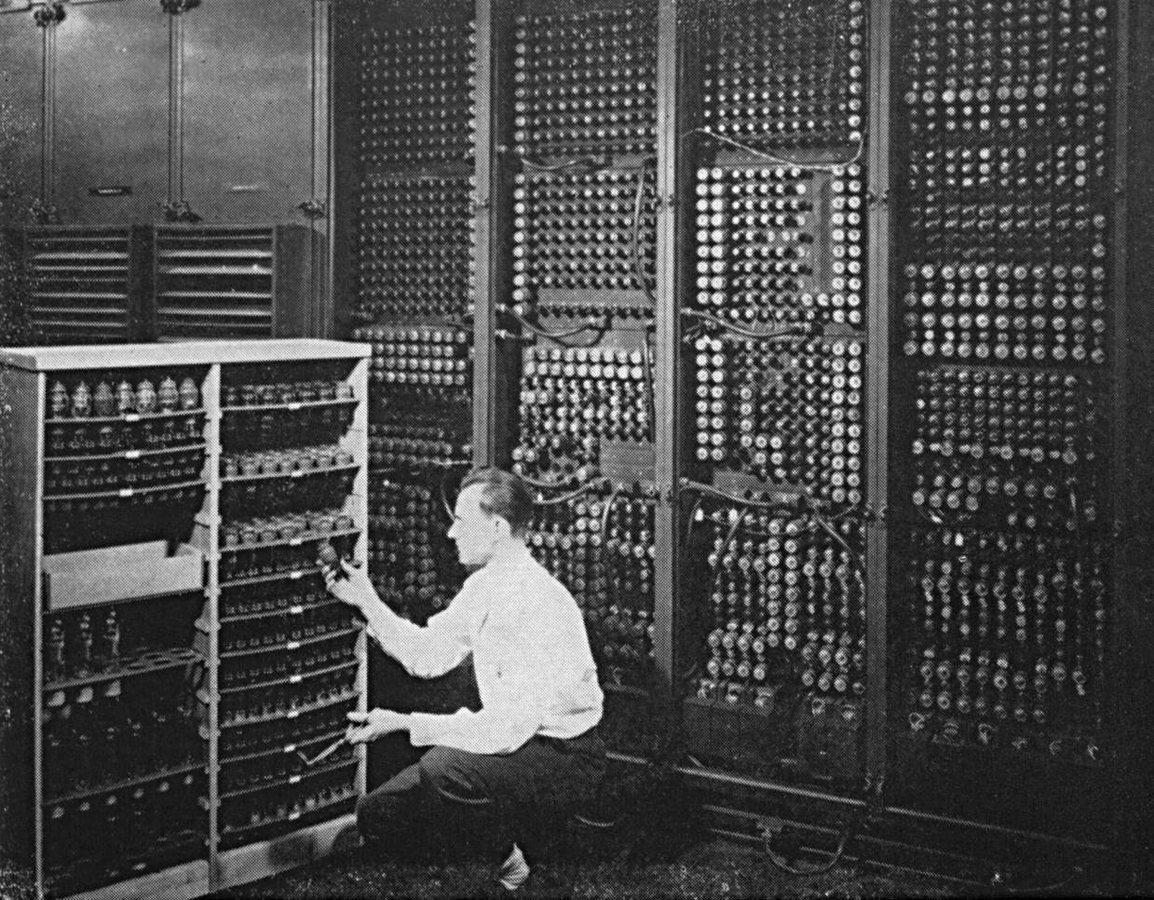
Conventional computers operate far from thermal equilibrium, expending energy to maintain bits of information and switch between them quickly. In the 1970s, physicist Charles Bennett showed that any computation can in principle be modified to have reversible dynamics, allowing it to operate close to equilibrium and slash its energy demand. Later work suggested that an algorithm's output could be delivered in a system's equilibrium state itself, with the computer naturally drifting toward the solution as it settles into its most stable configuration.
That idea presents multiple challenges, according to Damien Woods of Maynooth University, including finding a physical implementation that is computationally expressive and programmable, has easily prepared initial states, and offers a controllable energy landscape for rapid navigation to target outputs with high probability. DNA computing, first introduced in the 1990s, replaces silicon chips and electrical currents with DNA strands and biochemical reactions. Because DNA strands bind according to simple, predictable rules, researchers can engineer the energy landscape directly, allowing incorrectly bound strands to detach and be replaced by better-fitting ones until the system reaches its most stable state.
Woods' team drew inspiration from DNA origami, a technique demonstrated in 2006 by Paul Rothemund, in which a long single-stranded DNA scaffold binds to a chosen set of shorter strands and folds into a wide array of shapes as it settles into thermal equilibrium. Applying these ideas to computing, the researchers designed a DNA scaffold carrying an engineered sequence of binding domains, which they mixed into a solution of shorter DNA strands dubbed tiles. These tiles represent possible values at each step of a calculation and compete with each other to bind to the scaffold, a form of molecular competition first devised by Erik Winfree in the 1990s.
At each binding domain, the winning tile is the one that binds most favorably to both the scaffold and its neighboring tiles. The specific strands that win each position play the role of bits in a conventional computer. Eventually, the system settles into its energetically preferred state, which encodes the answer to the computation as a sequence of tiles each bound to the scaffold and to neighboring tiles on its left and right. The competitive process of binding executes the computation.
The team demonstrated 10 different programs across more than 700 individual computations. Simple calculations took as little as a minute to complete, though larger ones took considerably longer. The same molecular computer can be reused to perform new calculations, running the same program up to 25 times on different inputs, according to Maynooth's Abeer Eshra. In one case, the team repeated an experiment after 15 months, simply adding water to a setup that had partially dried out, and still obtained correct answers.
«Our system uses just a handful of different kinds of molecules, never really following an organized process of steps, never making irreversible steps, and yet ending up with the right answer,» said Maynooth's Constantine Evans. «When thinking about computation at a molecular level, reliably making even those seemingly simple computations is very hard.»
To run a computation, the researchers simply mixed all the strands together, heated the solution, and let it cool as the system settled toward equilibrium, without any need for molecular fuel or specially prepared initial states. The programs turned out to be surprisingly fast and easy to implement. The team created what is arguably one of the most complex DNA computers built to date, paving the way for new directions in molecular computing.
«Although we optimized some aspects of the design, there remain many ways it could be improved and generalized,» Woods said. «The work opens the door to new ways of thinking about computation in a wet environment, and about energy use in computation overall.»
11