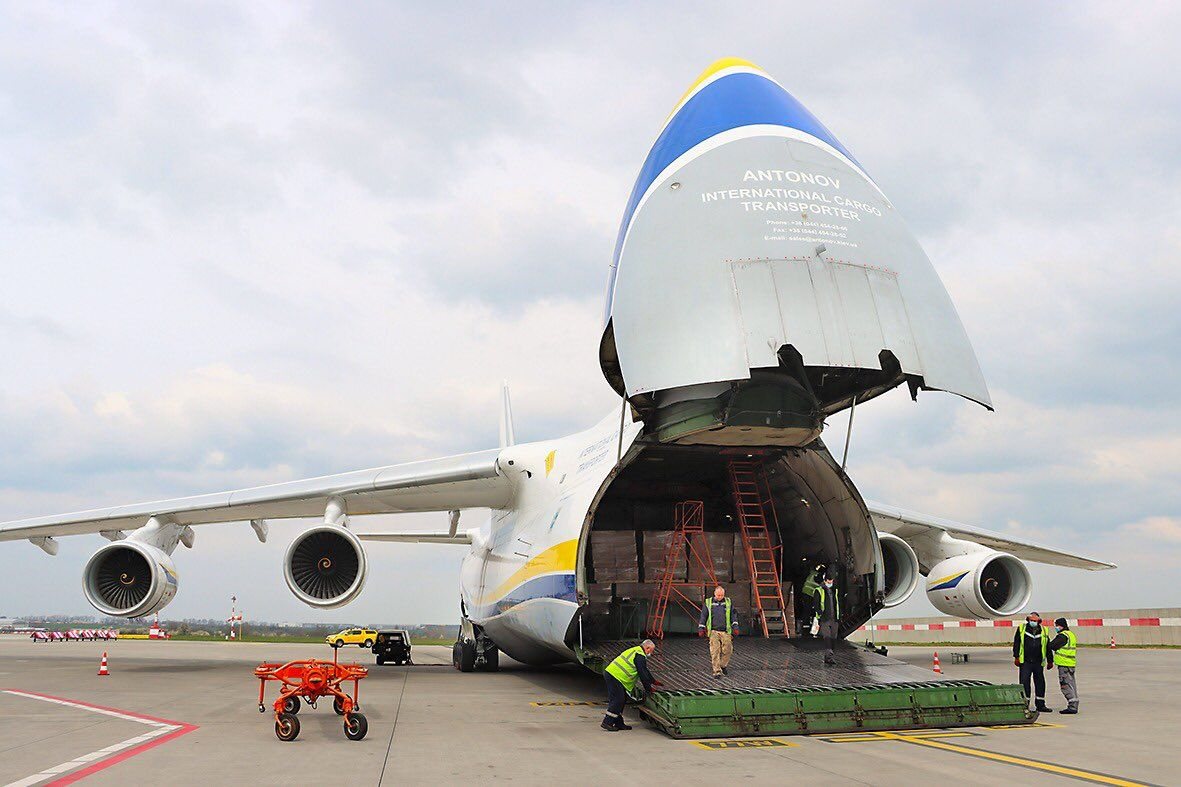
The explosive-drone incident at Leipzig/Halle Airport is a useful case study in the engineering problem of defending complex infrastructure against small unmanned aircraft. German authorities confirmed that a drone carrying an explosive device was found in a restricted area close to a Ukrainian Antonov An-124. Die Zeit now reports that surveillance video may show the drone striking the aircraft’s wing before falling away.
The incident occurred on the night of Aug. 4-5. Bomb-disposal specialists neutralized the device, no injuries were reported and airport operations resumed after temporary restrictions. Those facts establish a successful emergency response after discovery. They do not, however, tell us whether the drone should have been detected earlier or what sensor systems were in place.
According to a reproduction of Die Zeit’s Aug. 10 report, airport video appears to show an object flying directly toward the An-124 at roughly 7:30 p.m., hitting a wing and bouncing to the ground. The report suggests that the explosive component may have separated during the collision and did not detonate. German investigators have not publicly confirmed this full reconstruction, so it should be treated as a reported finding rather than an official forensic conclusion.
From a technology perspective, small drones pose a detection problem because no single sensor is reliable in every environment. Radar can struggle with small cross-sections and clutter. Radio-frequency detection is useful when an aircraft communicates in recognizable bands, but it may be less effective against modified systems or autonomous flight profiles. Optical and thermal cameras can provide confirmation but depend on line of sight, weather, lighting and effective automated or human monitoring.
This is why modern counter-UAS design tends toward layered sensing rather than one detector. Radar, passive radio-frequency monitoring, optical cameras, acoustic sensors and data fusion can each compensate for weaknesses in the others. The goal is not merely to see an object but to classify it fast enough to decide whether it is a bird, a legal aircraft, a hobby drone, an airport vehicle-related artifact or an actual threat.
Neutralization is even more complicated at an airport. Jamming may affect communications or navigation systems if used improperly. Kinetic interception can create falling debris. Capturing or redirecting a drone may require time and precise tracking. Any response has to consider aircraft on approach, fuel facilities, people on the apron and the possibility that the drone itself carries an explosive that could detonate when disturbed.
Germany has been expanding its legal and operational counter-drone framework. Amendments to aviation-security law took effect in March 2026, and the government has broadened the Federal Police’s authority for drone detection and defense. Those measures create more options, but the Leipzig incident illustrates that authority alone does not solve the sensing and response problem.
A separate unidentified object collided with another cargo aircraft during the same period, causing minor damage and a diversion to Hanover. Authorities have not linked it to the explosive drone. Technically, however, the incident reinforces the importance of low-altitude situational awareness: even a non-explosive small object can be hazardous when it intersects with aircraft operations.
The precise drone type remains uncertain in public reporting. Social-media accounts frequently call it an FPV drone, but available reliable sources do not establish whether the operator used first-person-view video control, autonomous navigation or another method. Scientific and technical reporting should avoid inferring a control architecture from the fact that the platform was a quadcopter with an explosive payload.
The target environment was also unusual. Leipzig/Halle is a major cargo hub and a base for Antonov Airlines. Local reporting says six An-124 heavy-lift aircraft are stationed there. Protecting large parked aircraft requires coverage of apron space, approach paths at very low altitude and areas where conventional airport surveillance may be optimized for different threats.
Another early claim — that the Ukrainian An-124 carried ammunition — was denied by Germany’s Interior Ministry. This matters technically because the potential hazard analysis should be based on confirmed materials present at the site, not assumptions about a military cargo. Aircraft wings themselves commonly contain fuel, which is one reason a strike there could be consequential, but the exact damage potential depends on the explosive, impact point and aircraft condition.
The larger lesson is that counter-drone defense is a systems problem. Detection, classification, identification, decision-making and neutralization must occur in sequence and in seconds or minutes. A failure at any stage can let a relatively inexpensive unmanned aircraft reach a high-value target. Leipzig/Halle provides a real-world reminder that the most advanced law or interceptor is only as useful as the sensing network and command process that brings it into action in time.
67