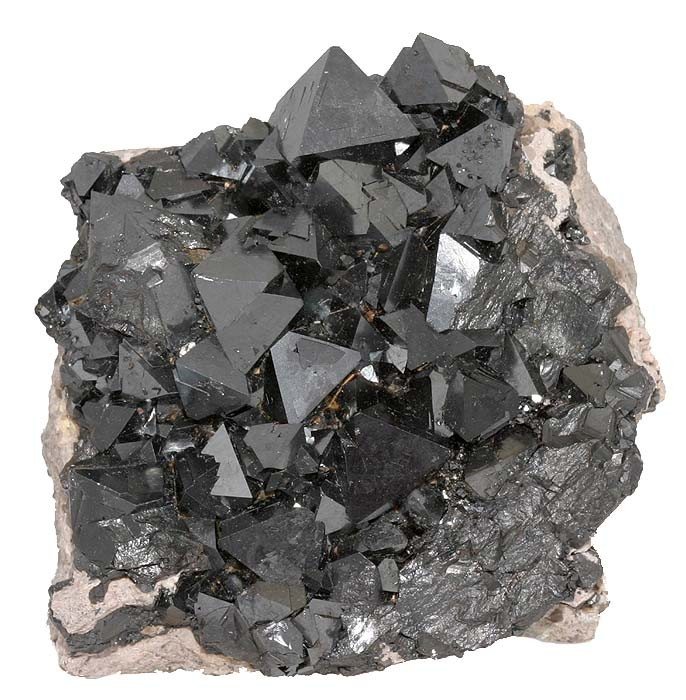
Scientists have developed a simpler, greener way to remove persistent dyes from industrial wastewater by synthesizing magnetite nanoparticles directly in the polluted water. The method skips the usual multi-step process of making, washing, drying, and treating the adsorbent material, according to a study published in RSC Advances.
The research team, led by Hebatullah Hassan Farghal at The American University in Cairo, created magnetite nanoparticles — particles made from a naturally magnetic form of iron oxide — inside water contaminated with dyes. As the particles formed, they pulled dye molecules onto their surfaces, reducing the dye concentration in the water. The resulting «dirty» nanoparticles were then used again to capture two entirely different dyes.
Industrial wastewater discharges approximately 5,000 tonnes of dyes each year, about 50 times the weight of a blue whale. These dyes block light from reaching aquatic plants and animals, cause unpleasant odors, and pose risks to human health. Congo red is notably persistent in the environment, while methyl orange is difficult to remove with standard biological or chemical treatments and has been linked to cancer and DNA damage.
In the first stage, the researchers loaded the nanoparticles with two dyes — Congo red (CR) and bromocresol green (BCG) — as they formed in the wastewater. More than 90% of both dyes stuck to the particles, and the loaded particles grew slightly larger, reaching about 34 nm compared with 26 nm for plain magnetite.
The same «dirty» particles then adsorbed almost 80% of methylene blue (MB) from a single-dye system after about three hours. That removal rate dropped to just over 50% when a second dye, methyl orange (MO), was mixed in.
To reuse the particles after MB adsorption, the team rinsed them in alcohol, which stripped the trapped blue dye molecules back off. They repeated this cycle four times without any drop in performance, and none of the originally loaded dyes leaked out during the process. The researchers note that MB removal worked best at high pH, where the nanoparticles become negatively charged while MB molecules are positively charged. This electrostatic attraction gave the main mechanism an extra boost.
Several lab measurements, including infrared spectroscopy of the particle surface, indicated that physisorption — a weaker attraction similar to static cling, with no permanent bond — is the main mechanism binding CR, BCG, and MB molecules to the nanoparticles. This weak binding also explains why the ethanol wash could remove the dye without damaging the particle.
To confirm this, the team ran density functional theory (DFT) simulations on a single dye molecule sitting on a magnetite surface. All dyes bound with similar strength. The simulations also showed electrons flowing in opposite directions depending on the dye's charge — from the negatively charged CR and BCG toward the surface, and from the surface toward the positively charged MB — matching the charge attraction seen in the lab. The researchers caution that DFT and experimental outcomes cannot be compared quantitatively, only qualitatively, since simulations examine a perfect molecule on an ideal surface while experiments involve real-world conditions. The DFT analysis was carried out by Ahmed A Abokifa and Mohamed S Mohamed from the University of Illinois Chicago, with Mayyada El-Sayed supervising the wider study.
In standard tap water or saline (3% NaCl), the picture becomes more complicated. The researchers increased the adsorbent dose roughly 15 times — from 0.67 to 10 g/l — to compensate for real-world conditions. This worked in saline, but removal in tap water was only about half of what it was in distilled water, likely because calcium, magnesium, and other substances naturally present in tap water compete with the dyes for space on the particle's surface.
«Though the dose significantly increased in tap water and saline, this dose is still applied in the literature,» Farghal said, adding that her future investigation will try to close that gap and reduce costs.
One factor works in the material's favor: making the particles is cheap. Producing 1 kg costs around $3,730 — roughly eight times cheaper than other nanomaterials sometimes used for the same purpose, such as cobalt ferrite, which costs about $30,100 per kilogram.
Farghal says her next research will involve «circular economy approaches that will be outside the box.» Circular economy is an approach in which materials are kept in use for as long as possible, maximizing value and reducing waste.
16