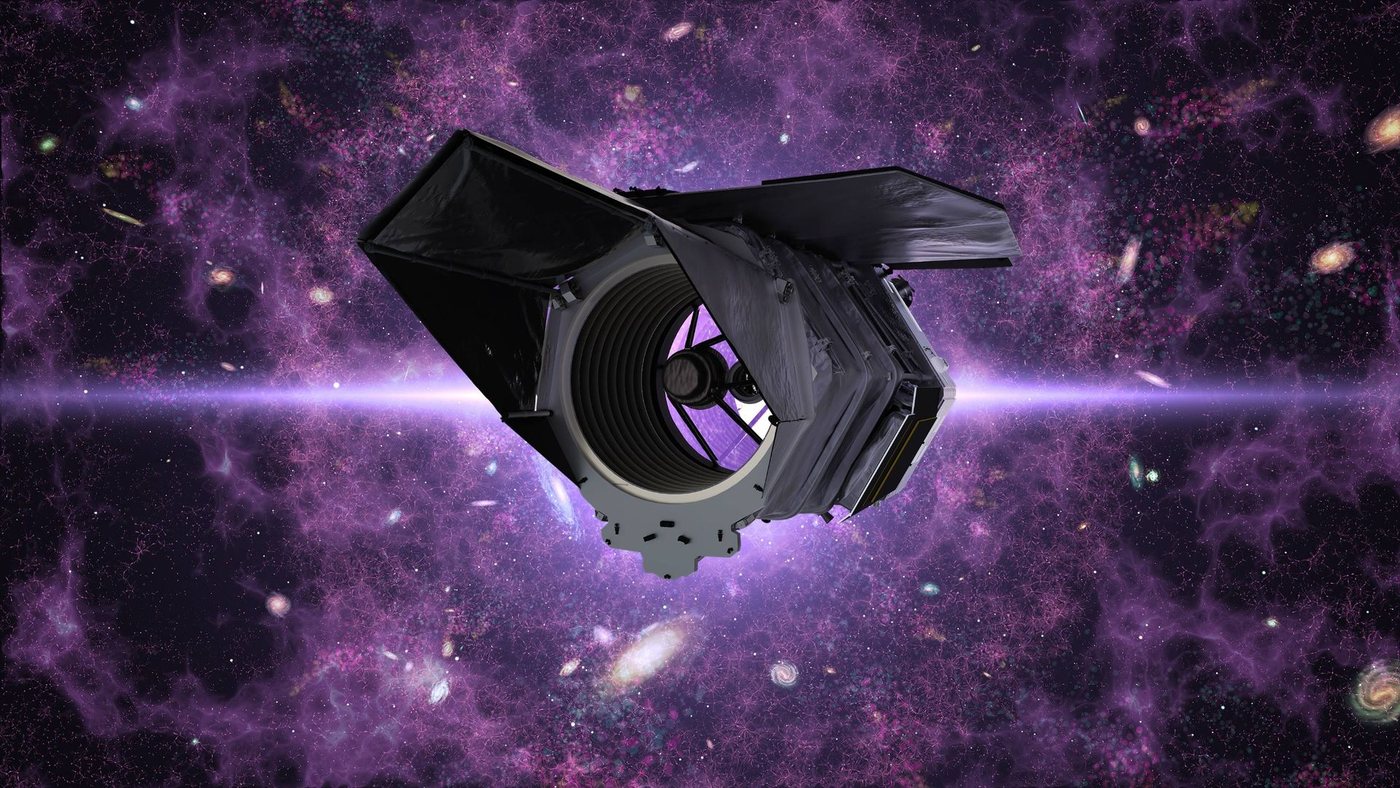
NASA's Roman Space Telescope has reached a major milestone after engineers successfully powered up its 300-megapixel infrared camera, a critical step toward the observatory's planned science operations in 2027. The camera is designed to capture enormous stretches of the cosmos with the sharpness of the Hubble Space Telescope, but across a field of view hundreds of times larger.
The successful activation confirms that the mission's primary instrument is functioning as intended. Roman's planet-hunting coronagraph, a specialized optical system designed to block the glare of distant stars so that faint orbiting worlds can be detected, is also working as expected. Together, the two systems position the telescope to begin its science mission on schedule.
Roman's wide-field infrared camera represents a significant leap in survey capability. While Hubble has delivered iconic deep-field images by staring at small patches of sky for long periods, Roman is built to scan vast regions efficiently. That design allows astronomers to study dark energy, the mysterious force accelerating the universe's expansion, and to map the distribution of galaxies and dark matter across cosmic history.
The coronagraph adds a second major science capability. By suppressing starlight, it will allow researchers to directly image gas giant planets orbiting nearby stars and to study their atmospheres. This technology also serves as a proving ground for future missions that aim to image smaller, Earth-like worlds.
The telescope is named after Nancy Grace Roman, NASA's first chief of astronomy, who played a central role in the development of the Hubble Space Telescope. Roman's mission is expected to deliver a new generation of wide-field infrared surveys, complementing the work of Hubble and the James Webb Space Telescope.
With the camera powered up and the coronagraph verified, the mission remains on track for launch and the start of science operations in 2027. The successful test marks another step toward a telescope that astronomers expect to reshape their understanding of dark energy, exoplanets, and the large-scale structure of the universe.
20