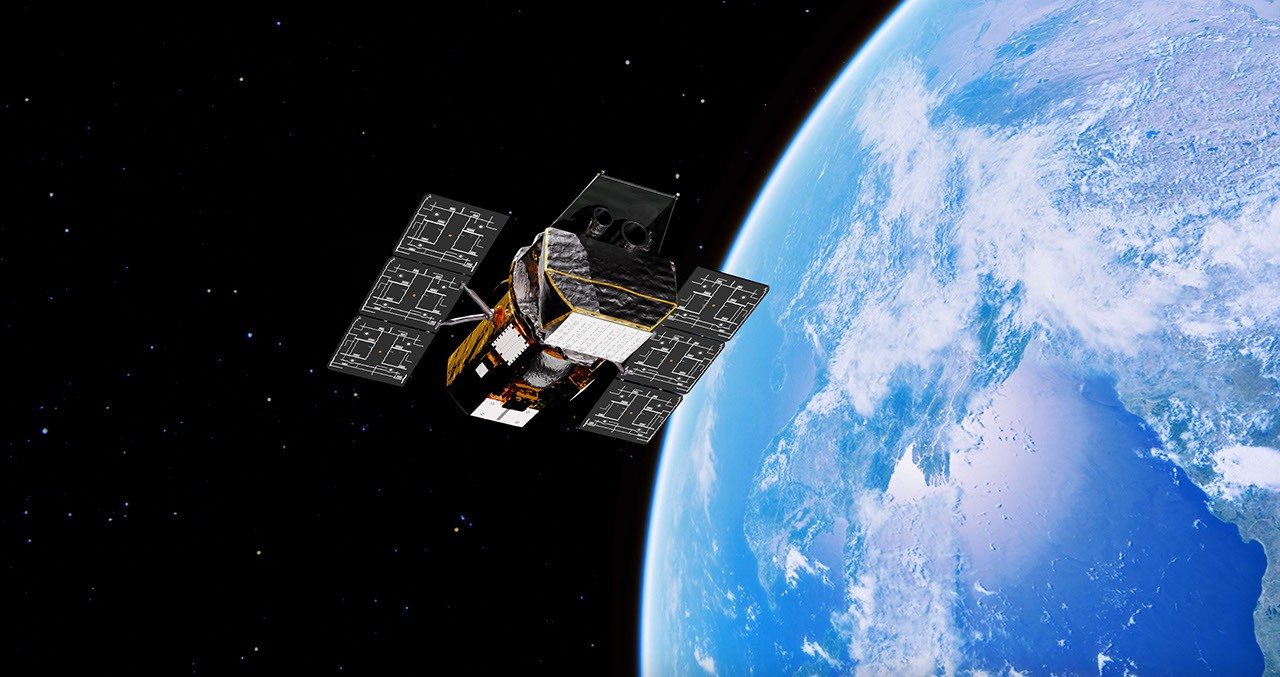
NASA’s Swift observatory, a space telescope that spent almost two decades studying some of the universe’s most violent explosions, fell back into Earth’s atmosphere on Wednesday morning. The spacecraft came down over northern Sumatra, Indonesia, near 3 degrees north latitude and 99 degrees east longitude, closing out its mission. Officials expect the bulk of the satellite, which weighed about 3,200 pounds, to burn up during descent, and no damage on the ground has been reported.
The final plunge was driven by the Sun. Peak solar activity had heated and expanded the upper atmosphere, which increased drag on satellites in low orbit. Swift’s altitude had already dropped to roughly 171 miles, and the spacecraft entered safe mode after it could no longer offset that drag. Denser fragments may have survived the heat of re-entry, but the agency has said the risk to people on the ground is very small, estimated at about one in 2,100.
Swift’s end came after a rescue effort fell short. NASA had contracted Katalyst Space to fly a robotic mission in July to boost the observatory’s orbit and extend its life. That vehicle, the robotic LINK, lost attitude control, began spinning and fell back to Earth in September, leaving the telescope with no way to counter the drag.
Swift launched in November 2004 for a planned two-year study of gamma-ray bursts, the brief and intensely bright flashes that signal distant explosive events. It went on to operate for nearly 22 years, tracking supernovae, black holes and X-ray flares. NASA is now gauging industry interest in either a rescue of the Hubble Space Telescope or a controlled deorbit of other aging spacecraft, a step that would give the agency more control over where debris lands.
Credit. Based on reporting for newsy-today.com. Is this your work? Write to us.
27