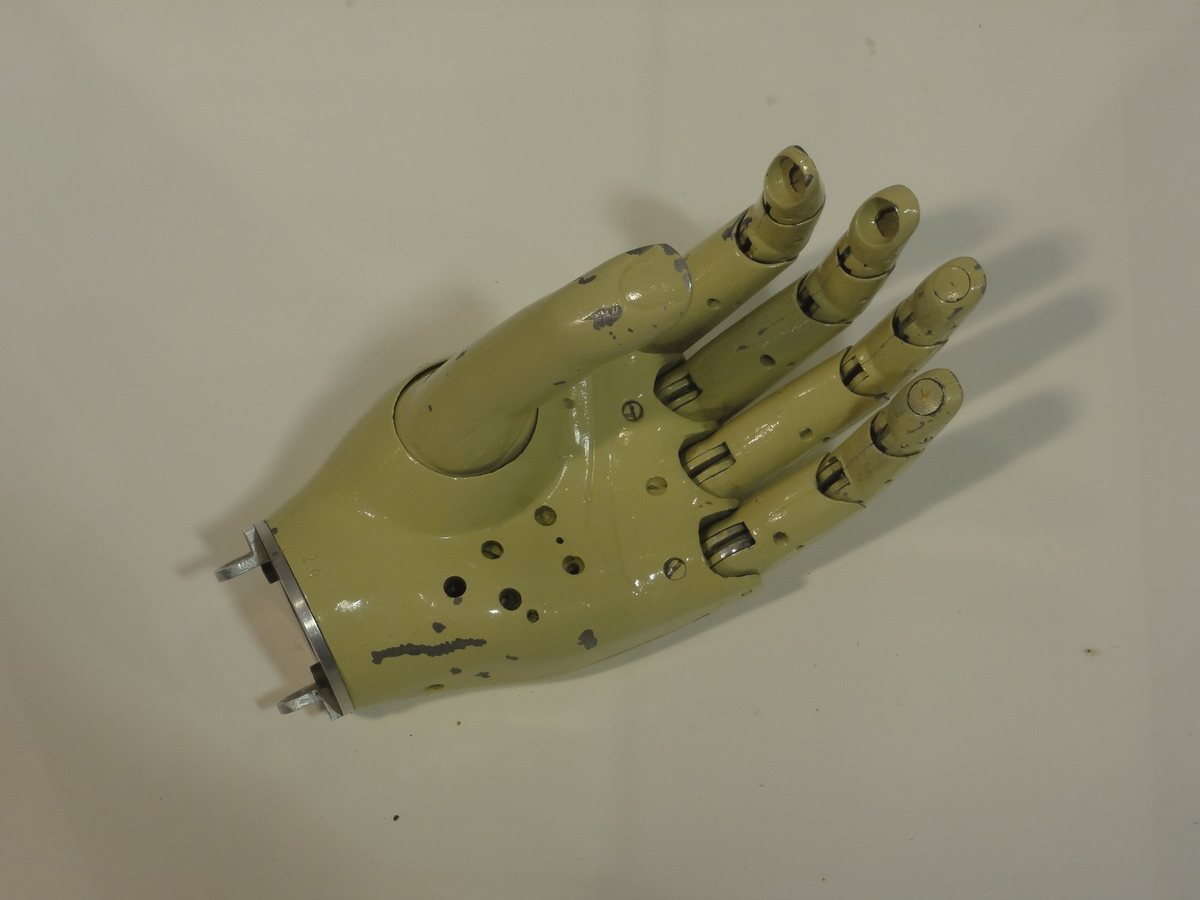
A Ukrainian-Estonian technology company is working on a bionic hand prosthesis that its developers hope will cost no more than 100 euros. Haydamax OÜ, registered in Estonia, announced the start of the project in November 2026, with Oxogent Laboratory leading development under the working name H-MUSCLE.
The design departs from conventional prostheses, which typically rely on motors and gears. Instead, it uses McKibben-style artificial muscles: thin braided elastic tubes that shorten when pressurized with fluid. Bundles of these fibers, which the developers call muscle nets, would move the joints in a way meant to resemble a human hand. Some fiber channels would run into the forearm to allow a longer stroke, and the team plans to control groups of channels together rather than each one individually.
So far the work exists only as a digital model that includes bones, joints and about 40 muscle channels. To shape natural hand movements, the developers drew on an open dataset covering 22 people performing 26 daily tasks. Their focus areas are the thumb, palm mobility, grip precision and handling small objects. No physical prototype has been built yet, and the model is still being refined.
The 100-euro figure is an engineering target rather than a confirmed price. High-end bionic prostheses commonly cost tens of thousands of euros, and the final price, along with fitting and medical adaptation costs, has not been determined. The company has not announced timelines for prototypes or mass production. The first development stage is expected to cost about 1.5 million euros, with the work carried out at a laboratory in Germany.
The project comes against the backdrop of Russia's full-scale invasion of Ukraine, which has sharply increased demand for prostheses in the country.
28