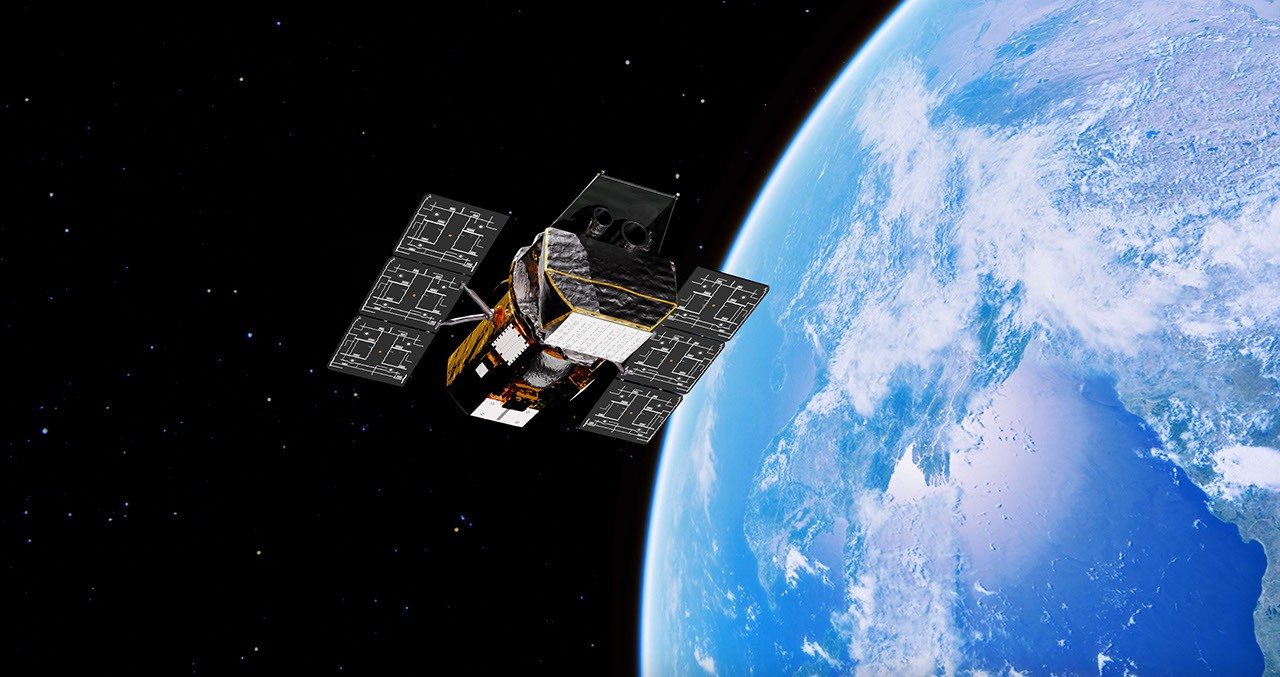
A gas detected above Mars may point to hidden geological activity beneath one of the planet's largest volcanoes. Instruments aboard the ExoMars Trace Gas Orbiter registered unusual levels of hydrogen chloride near Alba Mons, according to a study published Wednesday in the journal Science Advances.
The research was led by the European Space Agency together with data from Russia's Roscosmos mission. The team used infrared spectrometers from the orbiter's Atmospheric Chemistry Suite and images from the CaSSIS camera. The hydrogen chloride peaks returned each year at the start of the northern-hemisphere summer, a pattern that suggests a seasonal process rather than a one-off event.
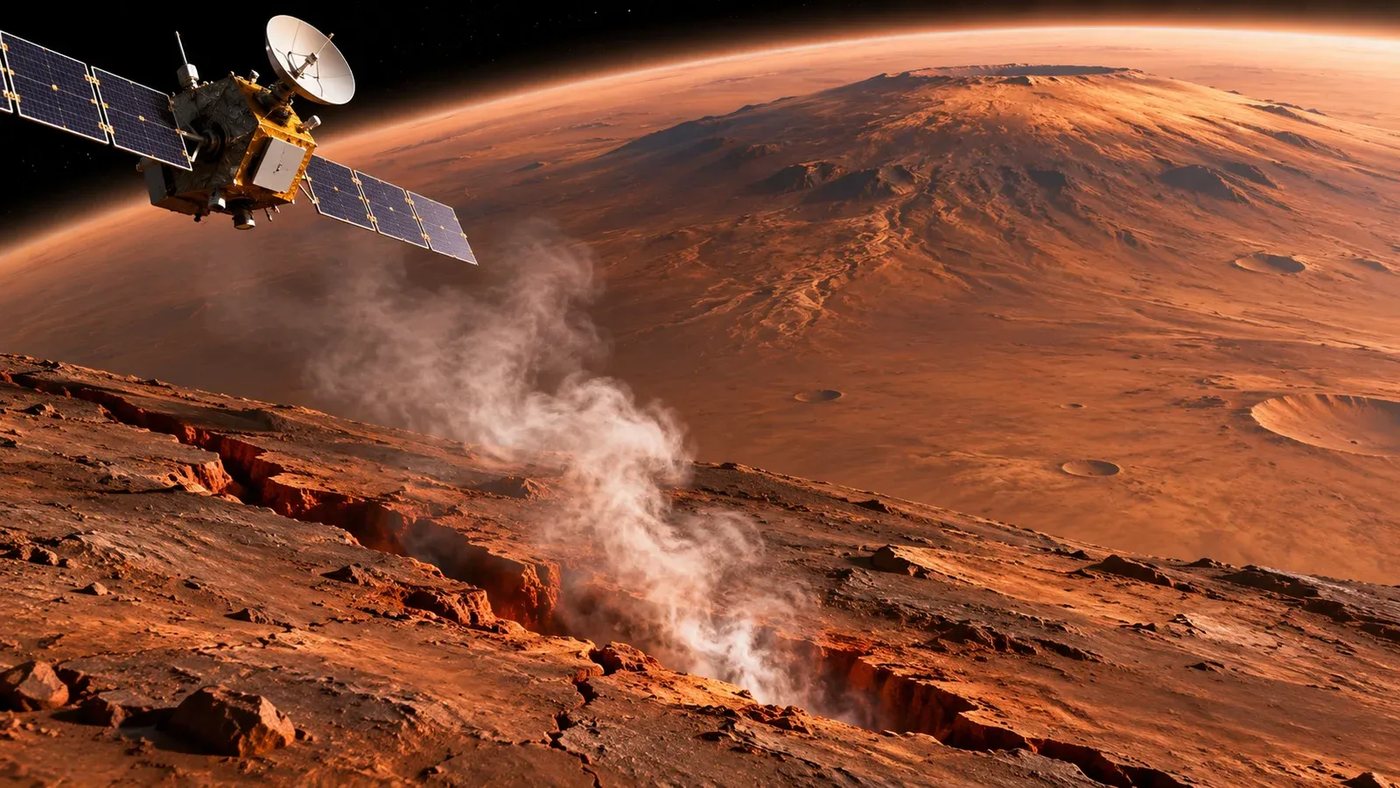
Images of the surrounding terrain show narrow fissures, some hundreds of meters long. Researchers say these cracks could have been carved by gas moving through the ground, although that link has not been confirmed. No exposed magma or active eruption has been observed.
The leading explanation is a heat source deep below the surface that releases gas through the fissures. According to the team, winter ice may seal the cracks, and as the warmer season arrives the ice turns directly into vapor, allowing the gas to escape. The lead author, Alexander Trokhimovskiy of the Russian Academy of Sciences, has described the pattern as consistent with this seasonal release.
The scientists have not ruled out other sources, such as chemical reactions with surface salts. The observations also found no sign of liquid water, life, or an active hydrothermal system. Further measurements will be needed to determine where the gas actually comes from.
Credit. Based on reporting for cenariomt.com.br. Is this your work? Write to us.
29