Researchers are increasingly combining multiple analytical techniques to extract more information from a single nanoscale sample, according to a webinar on multimodal characterization. By integrating scanning electron microscopy (SEM), transmission electron microscopy (TEM/STEM), four-dimensional scanning transmission electron microscopy (4D-STEM), spectroscopy, nanoindentation, nano-computed tomography (nanoCT), and cryogenic SEM, scientists can obtain complementary data on a specimen's structure, chemistry, and properties. The approach places new demands on how samples are positioned, accessed, and manipulated during experiments.
The webinar, featuring physicist Alexandra Glück of SmarAct, focused on precision sample manipulation as a key enabler for multimodal workflows. Glück, who completed a doctorate in experimental physics at the German Aerospace Center (DLR), now works as a technical sales engineer, engaging with researchers and companies in materials science. She explained that flexible, multi-axis positioning systems allow samples to be aligned accurately and moved between different measurement geometries. This supports transitions between imaging, spectroscopy, diffraction, and other analytical methods without losing the region of interest.
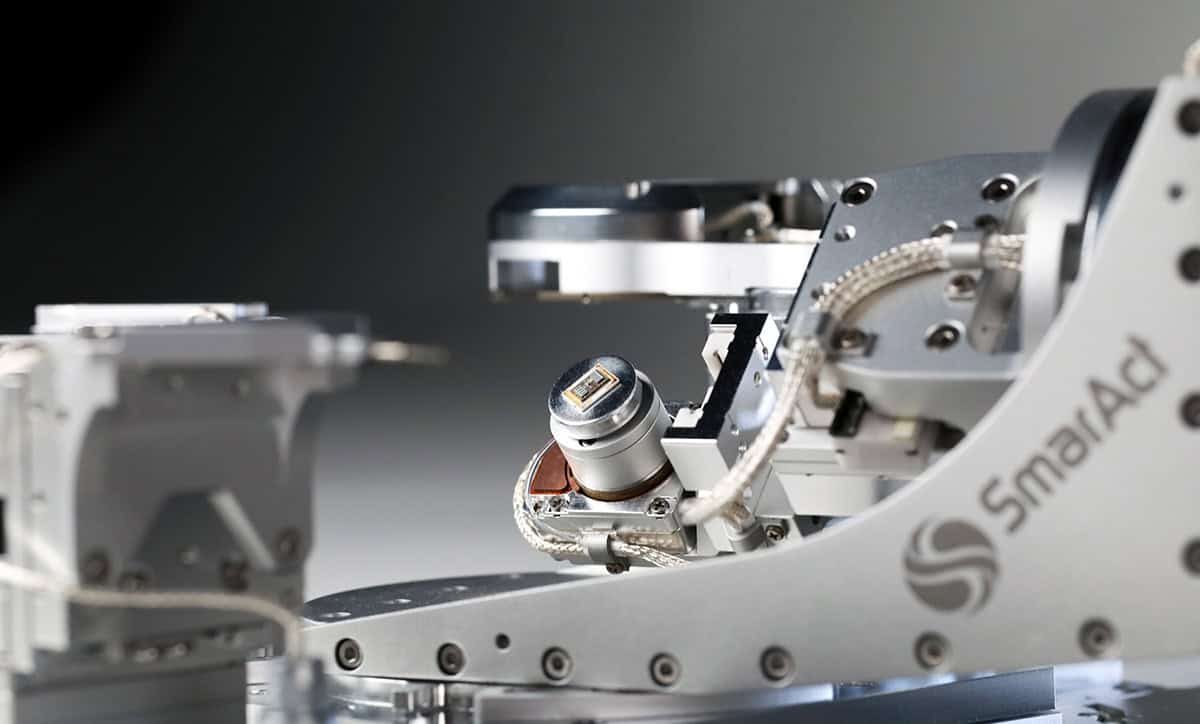
Using SmarAct's customizable SEM platform and related positioning solutions as examples, the webinar discussed practical approaches to integrating precise sample motion into advanced microscopy and characterization workflows. Applications include SEM, STEM, TEM, spectroscopy, tomography, and in-situ experimentation. The focus is not on any single technique but on the sample manipulation itself. Precise, adaptable manipulation systems help researchers investigate the same specimen across complementary measurements, yielding a more complete picture of its structure and properties.
Multimodal characterization is becoming essential in materials science, where a single technique often provides only a partial view. For instance, electron microscopy can reveal morphology and crystallographic structure, while spectroscopy identifies chemical composition. Nanoindentation measures mechanical properties, and nanoCT offers three-dimensional internal structure. Combining these methods on the same sample can reveal correlations that would otherwise remain hidden. However, each technique may require different sample orientations, vacuum conditions, or probe geometries, making precise repositioning critical.
The webinar highlighted that sample positioning systems must offer high precision, stability, and repeatability. They also need to accommodate various sample sizes and shapes, and integrate seamlessly with existing microscope platforms. SmarAct's modular solutions are designed to meet these needs, providing multi-axis motion that can be customized for specific instruments and experiments. This flexibility allows researchers to switch between techniques without manually remounting the sample, reducing the risk of contamination or damage and saving time.
In-situ experimentation, where samples are observed under controlled conditions such as heating, cooling, or mechanical loading, further benefits from precise manipulation. Researchers can track changes in real time across multiple modalities, gaining insights into dynamic processes like phase transformations or crack propagation. The ability to correlate data from different techniques at the same location is particularly valuable for understanding complex materials, including nanocomposites, thin films, and biological specimens.
While the webinar did not present new experimental results, it underscored the growing importance of sample manipulation as a foundational technology for advanced microscopy. As researchers push the limits of resolution and sensitivity, the ability to precisely control sample position and orientation will become even more critical. By enabling seamless transitions between complementary techniques, precision positioning systems help scientists maximize the information they can extract from each sample, accelerating discovery in materials science, biology, and nanotechnology.
The event was organized by Physics World and is available for on-demand viewing. It is aimed at researchers, engineers, and technicians involved in nanoscale characterization who are looking to enhance their workflows through better sample handling. More information about SmarAct's positioning solutions can be found on the company's website.
13