The discovery of a nearly complete fossil in southeastern China is challenging long-held assumptions about how and why birds evolved their distinctive anatomy. The new species, named Yuezhuornis yangyuanensis, lived roughly 148 million to 150 million years ago during the Late Jurassic period and appears to have been flightless, according to researchers at the Chinese Academy of Sciences.
The fossil was unearthed in August 2024 near Yangyuang village in Fujian Province. When alive, the bird stood about half a metre tall and weighed just over 800 grams — roughly the size of a large crow. Min Wang, who led the research, suspects the creature inhabited a swampy environment and was likely a strong runner. Its anatomy most closely resembles modern ground-dwelling pheasants, which have forelimbs shorter than their hindlimbs. While pheasants can manage short bursts of flight, they are effectively ground birds.
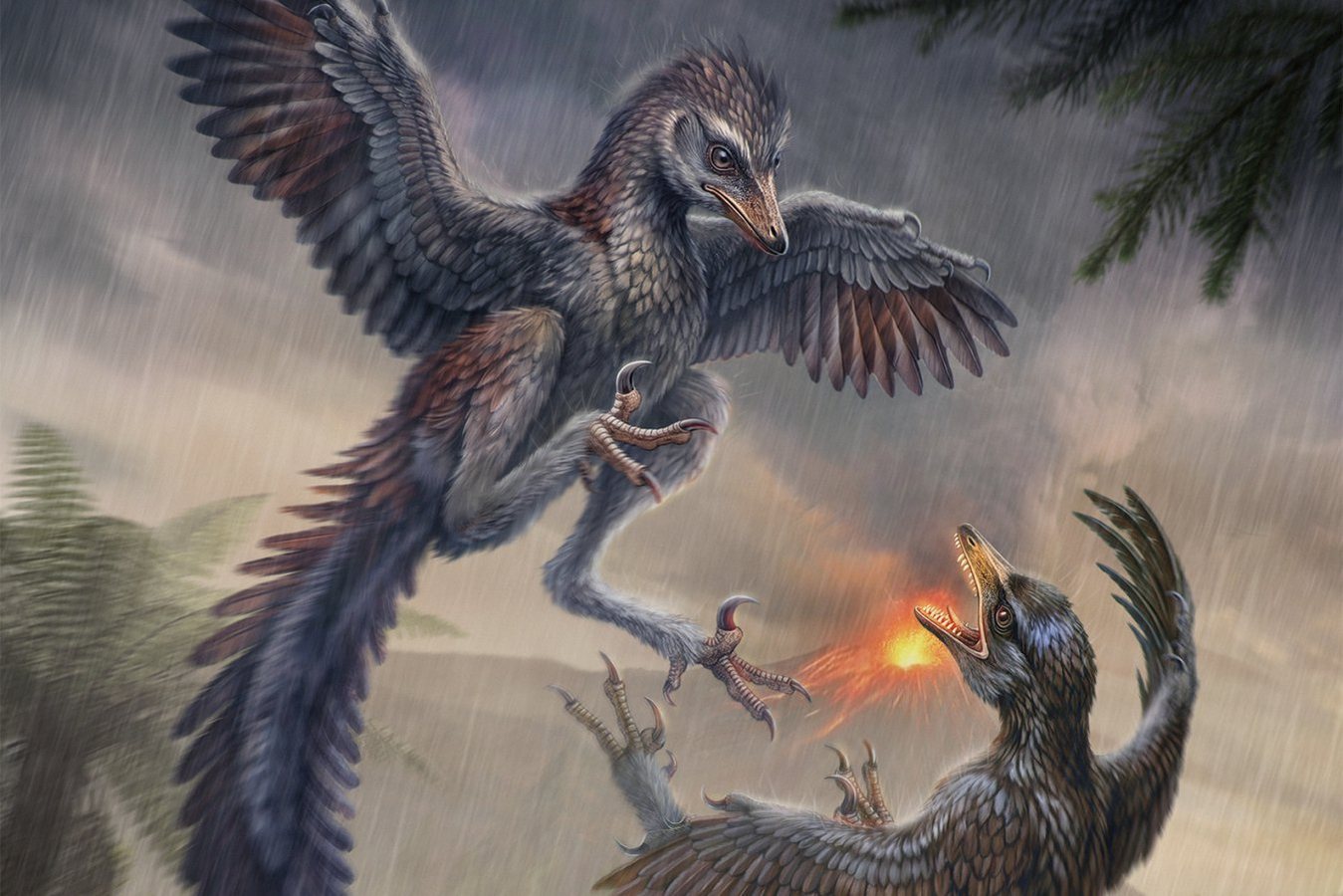
What makes Y. yangyuanensis particularly striking is its mosaic of features. It possessed a long tail similar to Archaeopteryx, closely packed serrated teeth typical of deinonychosaur dinosaurs, and a distinctive sickle-shaped claw on its second toe that was, in Wang's words, «highly functional» and probably used for capturing prey. That claw closely resembled those of distant relatives including Velociraptor. Modern birds have lost these claws entirely. Yet in other respects — its hip bones and fibula — the fossil mirrors later Cretaceous birds.
The findings, published in the journal Nature, suggest that powered flight may not have driven the evolution of birds' unique body plan at all. «This new fossil changes our assumption about what a Jurassic bird looked like,» Wang said. The research team compared the ancient bird's anatomy with nearly 400 living species to reach their conclusions.
Adding to the complexity, the analysis indicates that Archaeopteryx, generally considered a stronger flier, was actually more primitive than Y. yangyuanensis. This upends the notion that bird evolution progressed in a straight line toward flight optimisation. Instead, the researchers argue, early bird species rapidly explored different ecological niches and specialisations — including lifestyles that did not involve flying at all.
«[Y. yangyuanensis] exhibits a striking 'mosaic' of primitive and derived features — blending classic avian traits with distinct characteristics inherited from non-avian dinosaurs,» Wang said. The fossil is named after Yuezhuo, a mythological Chinese bird.
The discovery adds to a growing body of evidence disrupting the traditional view of avian evolution. Another recently announced bird-like dinosaur, also found in China, had evolved to fly but emerged from a completely different lineage. Together, these finds paint a picture of bird evolution as a more complex and rapid process than previously thought, with early species diversifying almost immediately after the emergence of the avian body plan.
Wang and his colleagues say the mix of dinosaur and bird features in Y. yangyuanensis demonstrates that the bird body plan was not a steady progression toward flight optimisation. Rather, it saw early species exploring different niches and specialisations, including flightless lifestyles, very early in their evolutionary history. The research was published in Nature.
89