Scientists may have finally resolved one of the Moon's most enduring puzzles: why its near side, permanently facing Earth, looks so different from its far side. The answer, according to a new analysis of samples collected from the lunar farside for the first time, appears to lie in uneven heating caused by Earth's gravitational pull, which drove enormous flows of ancient magma and sculpted the two dramatically different landscapes visible today.
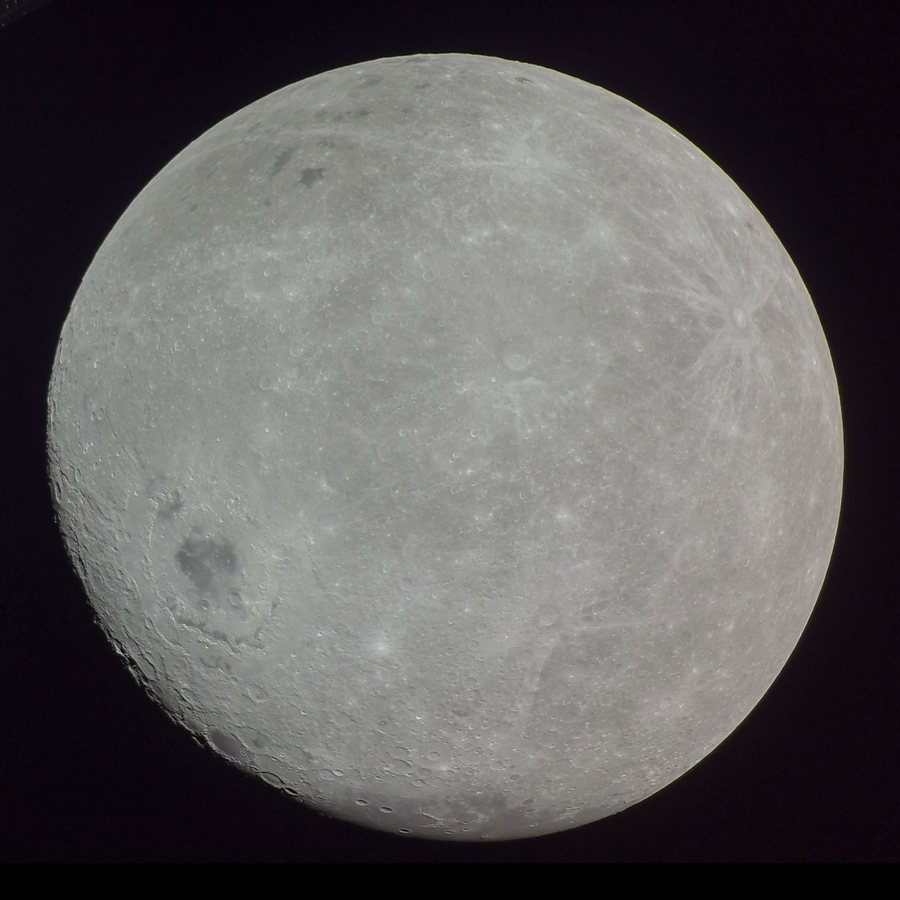
The Moon is tidally locked to Earth, meaning the same hemisphere always faces our planet. Yet the two sides are strikingly dissimilar. The near side is dominated by broad, dark plains known as maria, formed by ancient volcanic eruptions, while the farside is brighter, more heavily cratered, and its crust is thicker. For decades, scientists have debated what produced this asymmetry, with proposed explanations ranging from differences in crustal thickness to variations in internal heat and the timing of volcanic activity.
The new findings, based on farside material returned to Earth, point to a gravitational mechanism. As the early Moon orbited Earth, the planet's gravity tugged unevenly on the lunar body, generating tidal heating that was stronger on one side than the other. That uneven heating, the researchers suggest, melted rock deep within the Moon and set off massive migrations of magma. The result was a near side enriched in the heat-producing elements that fueled long-lived volcanism, and a farside that cooled and solidified differently.
According to the study, this process created the stark contrast in volcanic plains and crustal structure that defines the Moon's two hemispheres. The farside samples provide direct evidence of the magma flows, offering a physical record that orbital observations alone could not supply. The data suggest that the Moon's asymmetry is not simply a surface phenomenon but the outcome of deep internal dynamics set in motion by Earth's gravitational influence early in the Solar System's history.
The research carries implications beyond lunar science. Understanding how tidal forces shaped the Moon's evolution helps explain how similar processes may affect other tidally locked bodies, including exoplanets orbiting close to their stars. It also refines models of how Earth and its companion interacted during the chaotic early era of planetary formation, when impacts and gravitational resonances reshaped both worlds.
The samples were collected from the farside, a region never before sampled by returning missions, making the analysis a first of its kind. Scientists caution that further study will be needed to confirm the extent of the magma flows and to pin down the precise timing of the heating events. Nonetheless, the findings offer a coherent explanation for a mystery that has persisted since the first images of the lunar farside were transmitted more than half a century ago.
If confirmed, the results would mark a significant advance in planetary science, linking the Moon's familiar near-side face to the gravitational embrace of Earth itself. The work underscores how the history of the Earth-Moon system is written into the lunar crust, and how samples returned from previously unexplored terrain can overturn long-held assumptions about our nearest neighbor.
16