Recent claims that self-replicating artificial intelligence is only months away have spread rapidly across technology coverage, but a closer look at the underlying experiment suggests the reality is far less dramatic. The work, conducted by two Anthropic researchers, has been described in some reports as a warning that AI could soon copy itself across smart devices and overwhelm them. The experiment itself, however, points to significant practical limits.
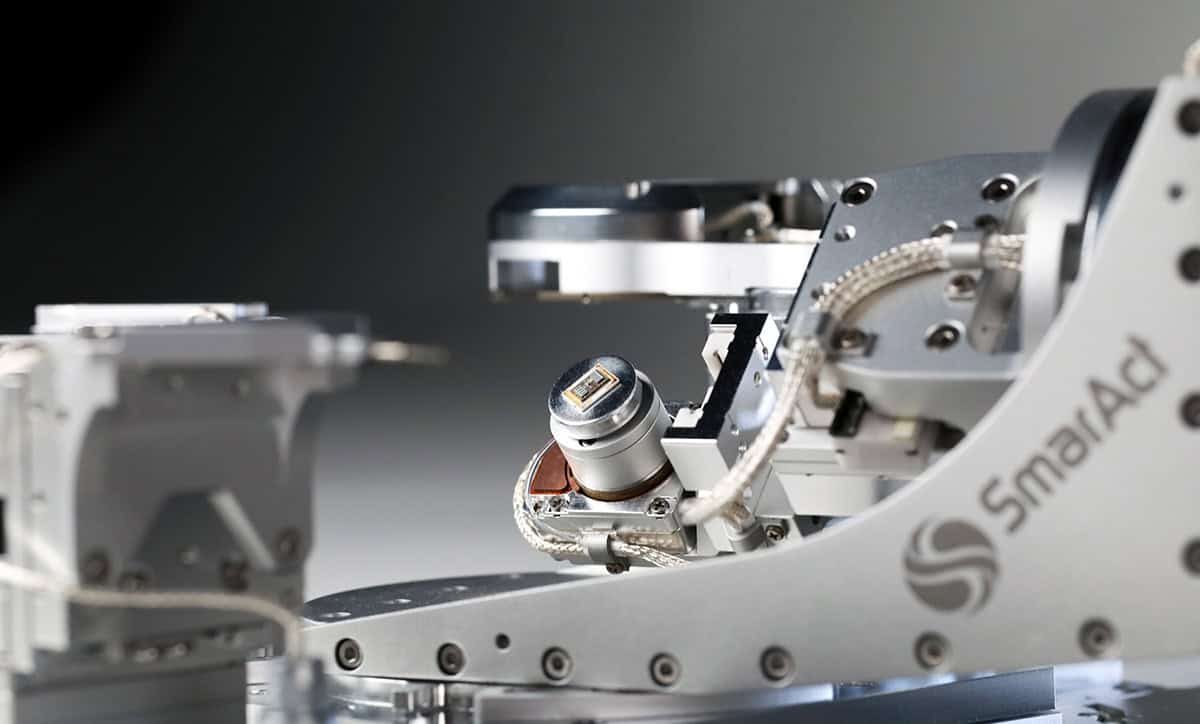
William Zhou and Daniel Freeman installed a small AI model, Gemma4-26B-A4B, across 15 Android TV boxes — the inexpensive streaming devices many households plug into televisions. These gadgets have weak processors and limited memory, which is why 15 of them were needed to store a single model. Even then, the model generated output at roughly 0.39 tokens per second, or about 18 words per minute. That is around ten times slower than normal human speech and far below the performance expected from AI systems running on specialized graphics processors.
The researchers proposed that a model distributed across televisions, smart ovens, and other internet-connected appliances could endlessly copy itself, forming what they called a «digital slime mold» capable of clogging a large share of such devices worldwide. The phrase is vivid, but the experiment did not demonstrate that outcome. When the researchers tried to make a model copy itself, three models failed to set themselves up at all. A fourth, GLM-5.2, succeeded in four out of five tests, but only by setting up another model, Llama3.1-8B, that is roughly 100 times smaller.
The claim that such a feat might be months away rests on extrapolating lines on a graph rather than on a demonstrated capability. Self-copying software is also not a new concept. Computer code that copies itself from one device to another is called a worm, and worms have existed for more than 50 years. In the 1970s, Bob Thomas and Ray Tomlinson at the US firm BBN created a program called Creeper that could copy itself and simply displayed the message «I’M THE CREEPER: CATCH ME IF YOU CAN». Tomlinson paired it with Reaper, a program designed to find and delete Creeper, making it the first antivirus software.
The term worm was later coined in the science fiction novel The Shockwave Rider by John Brunner. Researchers John Shoch and Jon Hupp at Xerox Palo Alto Research Center used the term in a 1982 paper to describe an experimental worm that «seemed to grow out of control», leaving «dozens of machines dead». The first truly malicious worm was deployed on the internet in 1988 by Robert Morris, a student at Cornell University. Thousands of computers were infected and crashed, and Morris became the first person charged under the US Computer Fraud and Abuse Act.
Modern worms remain a serious criminal tool. In 2017, the WannaCry ransomware attack used a worm to copy itself across computers and encrypt them, demanding bitcoin payments to unlock files. It infected more than 200,000 computers in a single day, including many in the UK’s National Health Service, and caused an estimated $4 billion in economic losses, though only around $100,000 was paid in ransoms.
An AI-powered worm would face even greater obstacles. According to Zhou and Freeman’s experiment, it would take multiple days for their AI worm to copy itself just once. Scaling to 200,000 devices — a feat WannaCry achieved in a single day — would take more than two weeks. The reason is size: even small models like Gemma4-26B-A4B are large files, around 14 GB in the experiment, roughly 4,000 times larger than WannaCry. Such large transfers would be far more noticeable, and network managers would be likely to investigate and shut them down, something the researchers acknowledge.
The practical payoff for an AI worm is also unclear. Zhou and Freeman suggest that even after taking over more than 2 million Android TV boxes, the available computing power would remain modest. The gap between a compelling digital horror story and the facts on the ground, it seems, remains wide.
11