Ancient Indigenous people in what is now New Mexico endured extreme climate change roughly 23,000 years ago, according to a new study that adds to the growing evidence of a human presence in North America during the last Ice Age. The research suggests that these early inhabitants not only survived but adapted to dramatic environmental shifts, including periods of severe drought and cooling.
The study, reported by Live Science, focuses on the Tularosa Basin in southern New Mexico, where fossilized human footprints were previously discovered at White Sands National Park. Those footprints, dated to between 21,000 and 23,000 years ago, have been at the center of a scientific debate about when people first arrived in the Americas. The new analysis examines climate conditions during that period and concludes that the region experienced extreme swings between wet and dry conditions, yet people continued to live there.
Researchers reconstructed past environments using geological and paleoclimate data, including sediment layers and ancient pollen. They found that the basin alternated between periods of abundant water and severe aridity. During the drier phases, lakes and wetlands shrank, forcing inhabitants to adapt their hunting and gathering strategies. The fact that human footprints appear in multiple sediment layers across these changing conditions indicates a sustained presence, not just a brief passage.
The findings challenge the idea that early migration routes were blocked by impassable ice sheets or that people only moved through the continent after the climate stabilized. Instead, the study supports a model in which Indigenous peoples were already well established in diverse North American environments, including arid interior regions, long before the end of the Pleistocene.
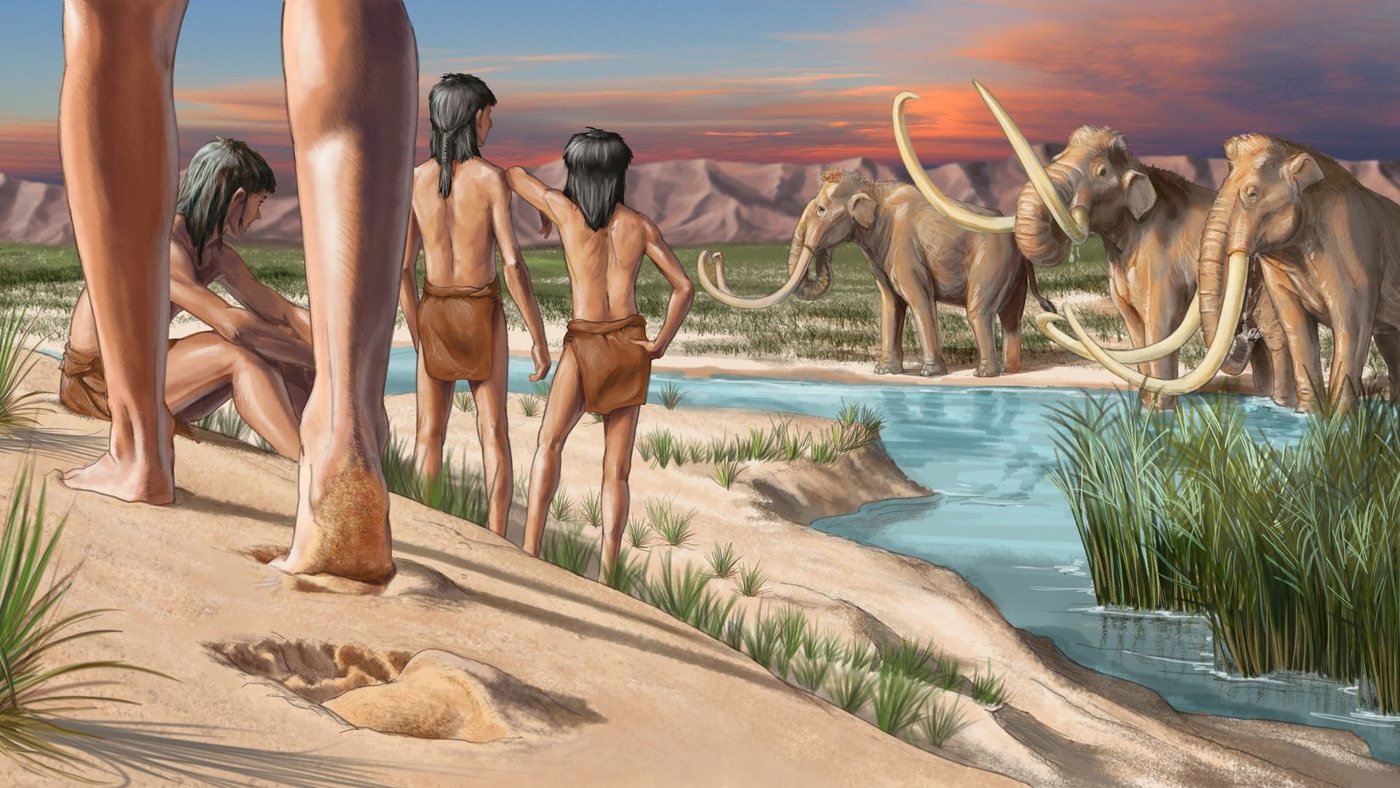
According to the study, the ability to cope with extreme climate change may have been a key factor in the success of these early populations. The Tularosa Basin would have offered resources such as fresh water, plants, and game during wetter intervals, while drier periods demanded flexibility and perhaps seasonal movement. The footprints themselves—left by adults and children—suggest family groups going about daily activities, not just exploratory hunting parties.
The research also has implications for understanding how ancient societies responded to environmental stress. While the climate changes 23,000 years ago were natural, their magnitude and speed were comparable to some modern projections. The study’s authors note that the resilience shown by these early New Mexicans does not diminish the challenges posed by today’s human-caused warming, but it does highlight the long history of human adaptation.
Archaeologists and paleoanthropologists have debated the timing of the first peopling of the Americas for decades. The White Sands footprints, first announced in 2021, pushed back the likely arrival date by thousands of years. Some researchers questioned the dating methods, but subsequent studies have reinforced the original timeline. The new climate analysis adds context by showing that people were not just present but thriving in a region that experienced dramatic environmental fluctuations.
The study team included researchers from multiple institutions, and their work was published in a peer-reviewed journal. They combined stratigraphic data from the Tularosa Basin with regional climate records to build a detailed picture of conditions between 23,000 and 21,000 years ago. The results indicate that the basin was not a barren desert at the time but a mosaic of wetlands, grasslands, and dunes.
For Indigenous communities in the Southwest, the findings resonate with oral traditions that speak of ancestors who lived through great changes. Some tribal representatives have been involved in the research, helping to ensure that the footprints and surrounding sites are treated with respect. The study underscores the deep connection between Indigenous peoples and the landscapes they have inhabited for millennia.
As scientists continue to investigate the earliest chapters of human history in the Americas, the New Mexico evidence suggests that adaptation to climate extremes was not a barrier but a defining feature of early life on the continent. The next steps include further excavations and dating to refine the timeline and to learn more about how these ancient people lived.
14