Researchers have demonstrated a new optical sensing technique that can detect two gases simultaneously using a single detector, an advance that could simplify environmental monitoring and industrial fault diagnosis. The team from the Harbin Institute of Technology in China used light-induced thermoelastic spectroscopy, or LITES, combined with a signal-processing innovation called orthogonal phase modulation to separate the fingerprints of methane and acetylene in real time.
Conventional sensitive gas sensors typically require separate detectors for each gas or measure gases sequentially, which means they cannot capture truly simultaneous changes in gas concentrations. That limitation matters in settings where multiple gases shift together, such as natural-gas leaks or electrical faults inside transformers.
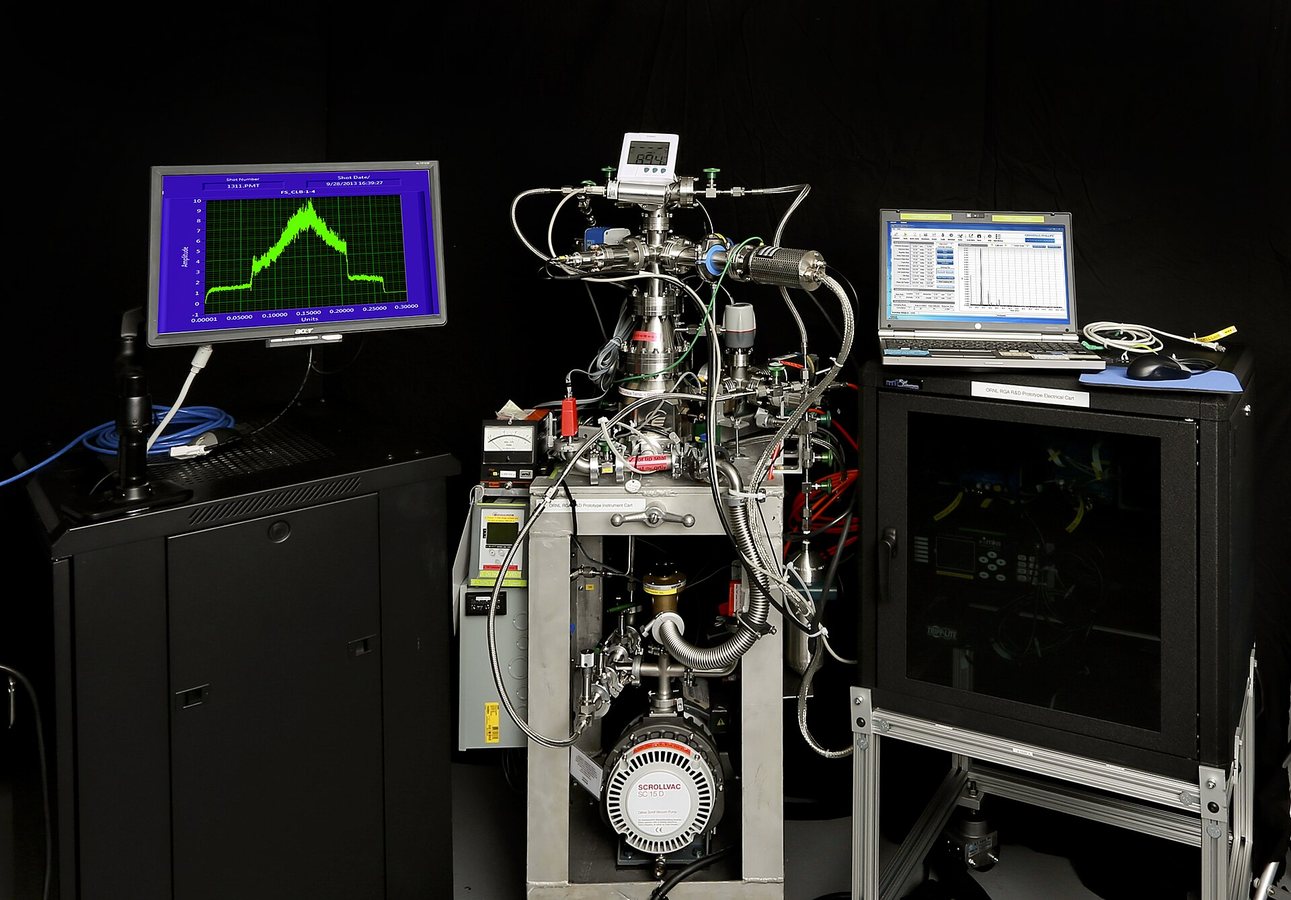
In the LITES approach, gas molecules absorb modulated laser light, producing a tiny amount of heat. That heating causes minuscule mechanical vibrations in a quartz tuning fork, which are then converted into an electrical signal. The new work modulates two lasers so that their effective signals act orthogonally to each other in signal space. A lock-in amplifier can then split the combined tuning-fork signal into two independent outputs, one for methane and one for acetylene.
The signal separation is described using Lissajous figures, the patterns produced when two vibrations combine. When the two signals are exactly orthogonal, unwanted mixing between channels remains very low. After averaging, the detection limits reached 0.32 parts per million for methane and 0.29 parts per million for acetylene. According to the researchers, this is good sensitivity but not record-breaking.
The significance of the work lies not in the detection limit but in the method itself. If the phase-separation approach can be extended beyond two gases, future instruments might monitor several chemical species with fewer detectors, fewer demodulation channels and less hardware complexity. That could have consequences for industrial safety, greenhouse-gas monitoring, transformer health, combustion diagnostics and enclosed-space gas alarms.
Methane is a key indicator of natural-gas leakage, while acetylene can signal high-temperature faults such as arcing in transformer oil. Detecting both at once could give operators a more complete picture of conditions in real time.
The next step would be showing that the method remains stable outside controlled laboratory conditions and in more complex gas mixtures. The research is described in the journal Reports on Progress in Physics.
10