Digital security usually proves who a device is or what secret it knows. Proving where it physically is can be harder. Researchers have now demonstrated a quantum position-verification experiment in which two stations separated by about two kilometres authenticated a target location with an accuracy better than 75 metres.
The idea combines two foundations of modern physics. Relativity limits how fast information can travel, while quantum mechanics limits what an adversary can copy or predict about properly prepared quantum states. If verifiers at known positions send challenges timed so that a legitimate device can answer only from a particular region, the response can provide evidence of location rather than merely identity.
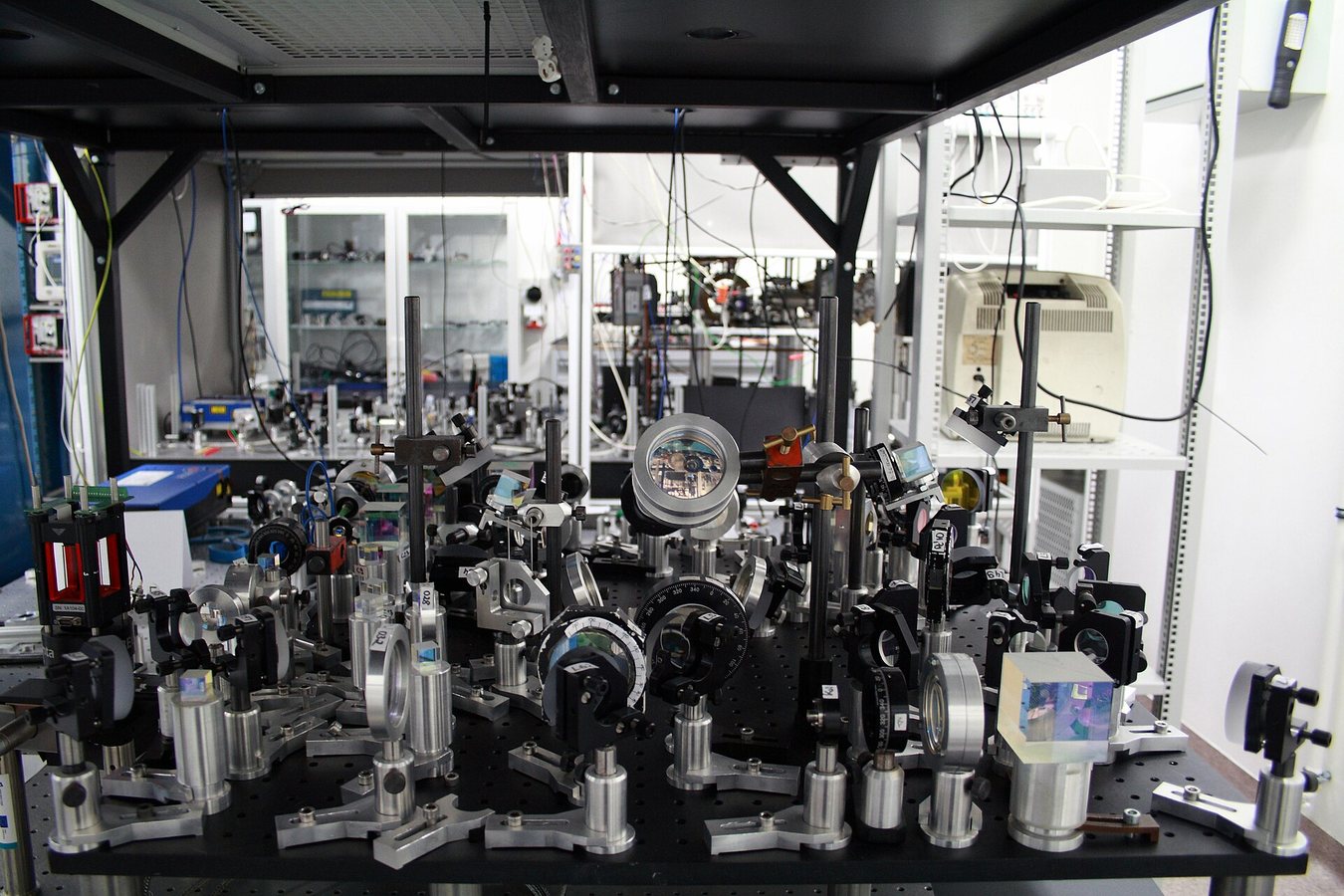
In the experiment, the researchers used phase-randomized weak coherent states, a practical form of light that can be generated with technology related to quantum-communication systems. The verifier stations coordinated their challenges and analyzed response timing and quantum information to determine whether the prover behaved as if it occupied the authorized position.
Position verification has a long theoretical history, and idealized versions face powerful attacks if adversaries are allowed unlimited pre-shared entanglement or other unrealistic resources. Practical protocols therefore define a threat model and ask whether security can be achieved against attackers with bounded capabilities. The new experiment is important because it moves the concept out of purely theoretical analysis and into a real, kilometre-scale optical setup.
Potential applications include secure access to infrastructure, authenticated control of remote equipment and systems in which a command should be accepted only from a physically authorized place. A location credential based on physics could complement GPS, which can be jammed or spoofed, and conventional network measurements, which can be manipulated by relaying traffic.
The demonstration does not yet provide a universal anti-spoofing technology. Seventy-five metres is precise enough for some large facilities but not for room-level authentication. Real deployments would have to contend with loss, weather, fibre routing, moving users and adversaries using sophisticated relay networks. The security guarantees also depend on assumptions about the attackers' quantum resources.
Still, the experiment shows that location itself can be treated as a cryptographic property. Instead of trusting a device to report coordinates, verifiers can challenge it in a way constrained by both the speed of light and quantum information. Improving distance, accuracy and robustness will determine whether that principle becomes an engineering tool. The result is an early step toward security systems in which physical position is not metadata supplied by a device but something the laws of physics help to authenticate.
119