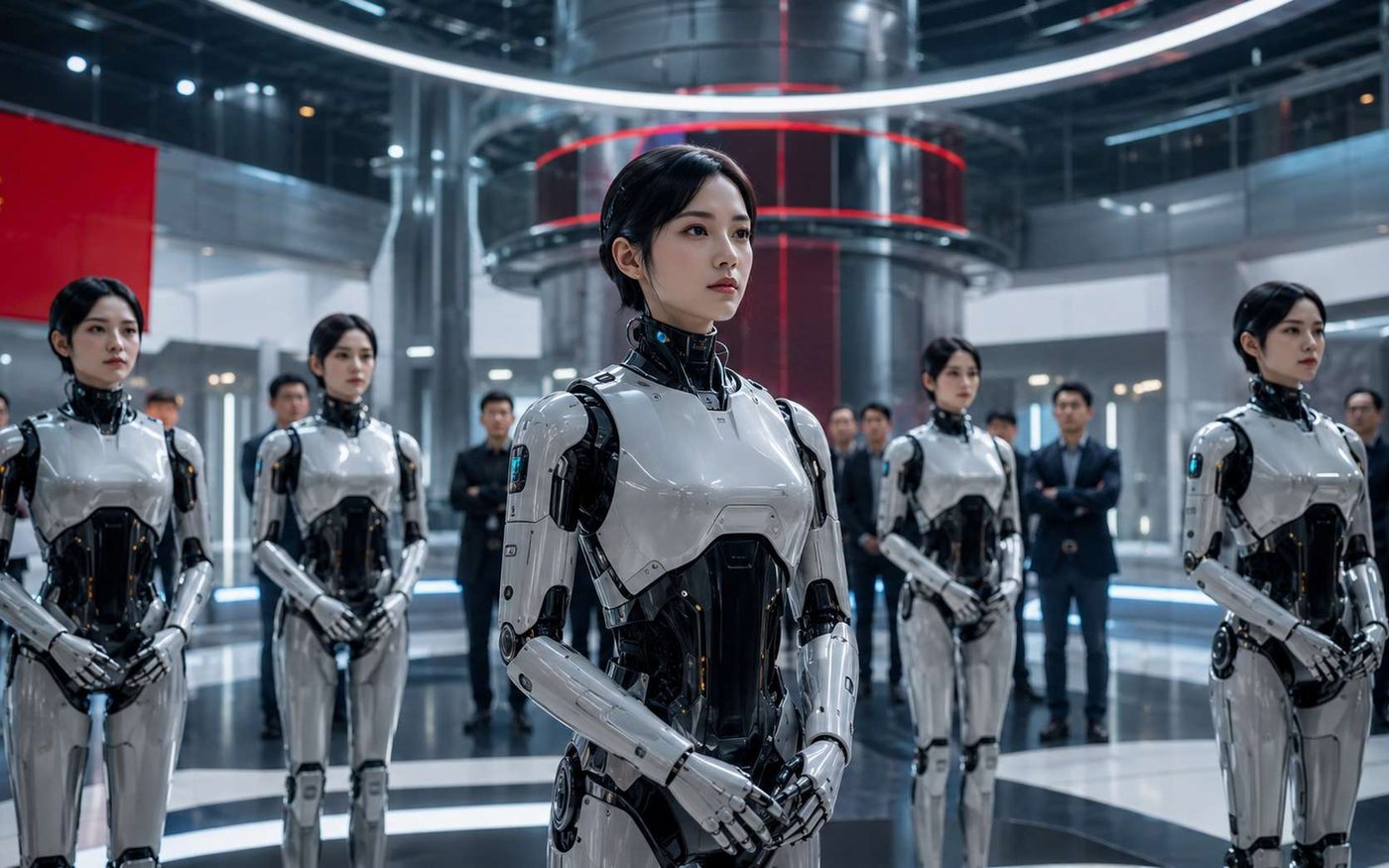
The Chinese robotics specialist UBTech has unveiled a new generation of hyper-realistic humanoid robots designed to serve as « companions », combining soft synthetic skin, fine hair, a reassuring voice and an artificial intelligence system capable of learning to know the people it interacts with.
The company presented the new machines as a step toward more natural human-robot relationships. Unlike conventional service robots with mechanical exteriors, these humanoids place emphasis on lifelike appearance and social presence. Details of design, from the texture of the skin to the shape of the face, aim to make the robots feel less like machines and more like reassuring presences in daily life.
The artificial intelligence embedded in the robots is one of the central features. According to the announcement, the systems are designed to learn about the user over time, adapting their behavior, tone and responses as the relationship develops. This moves the machines beyond simple task execution toward something closer to companionship, a positioning that UBTech has made central to this generation of products.
The realism of the robots also brings up the « uncanny valley », the well-known phenomenon in which machines that look almost human can trigger discomfort. UBTech appears to have concentrated on the most visible and tactile details, including skin, hair and voice, precisely to overcome that hurdle and make extended interaction feel comfortable.
UBTech is one of the best-known players in China's humanoid robotics sector. The company, based in Shenzhen, has built its reputation with humanoid machines such as the Walker series, which have been demonstrated in homes, research laboratories and public events. With this new generation, the company is pushing further into consumer and companion markets, betting that advances in materials and artificial intelligence have reached a point where humanoids can take a meaningful place in everyday life.
The announcement reflects a broader trend in the global robotics industry. Companies in China, the United States, Japan and Europe are developing humanoid robots for a range of roles, from factory work to healthcare and personal assistance. Companion robots, in particular, have drawn increasing interest as aging societies and changing social structures create demand for machines that can offer presence, conversation and emotional support rather than practical help alone.
The move also fits into a wider industrial context. China has identified humanoid robotics as a strategic area for development, with government support for research, manufacturing and adoption across multiple sectors. UBTech, as one of the country's leading robotics companies, is well placed to benefit from that momentum as it brings its latest machines closer to the market.
Open questions remain about how lifelike robots should become. The closer machines get to human appearance and behavior, the more they raise ethical and psychological questions about attachment, dependence and the boundaries between human beings and machines. UBTech's announcement does not address those debates directly, but the realism of its new robots places the company at the center of them.
For now, UBTech has positioned the new generation as an answer to a simple observation: many people want technology that feels less like a tool and more like a companion. With soft skin, fine hair, a calm voice and an artificial intelligence that remembers and learns, the robots represent an attempt to make that idea tangible.