The US military has given Elon Musk’s SpaceX access to restricted space tracking data, a move that gives the company an advantage in monitoring objects in orbit. The decision has prompted a new round of questions about whether the Trump administration is handing control of traffic in Earth’s orbit to a company led by a politically prominent donor.
Industry observers say the access also raises new national security questions. Tracking data on satellites and other objects in orbit is sensitive, and the ability to see that information before or alongside other operators could shape how space activity is managed and who is able to act on it. Critics have expressed concern about the growing dependence of government space operations on a single private firm.
The concerns come at a time when SpaceX is expanding its operations on several fronts. According to a NASA Spaceflight report, the company is preparing to fly its Starship Flight 15 in November, after a successful static fire test at Starbase in Texas. It is also pushing to launch Flight 16 from Launch Complex 39A at NASA’s Kennedy Space Center in Florida as soon as possible.
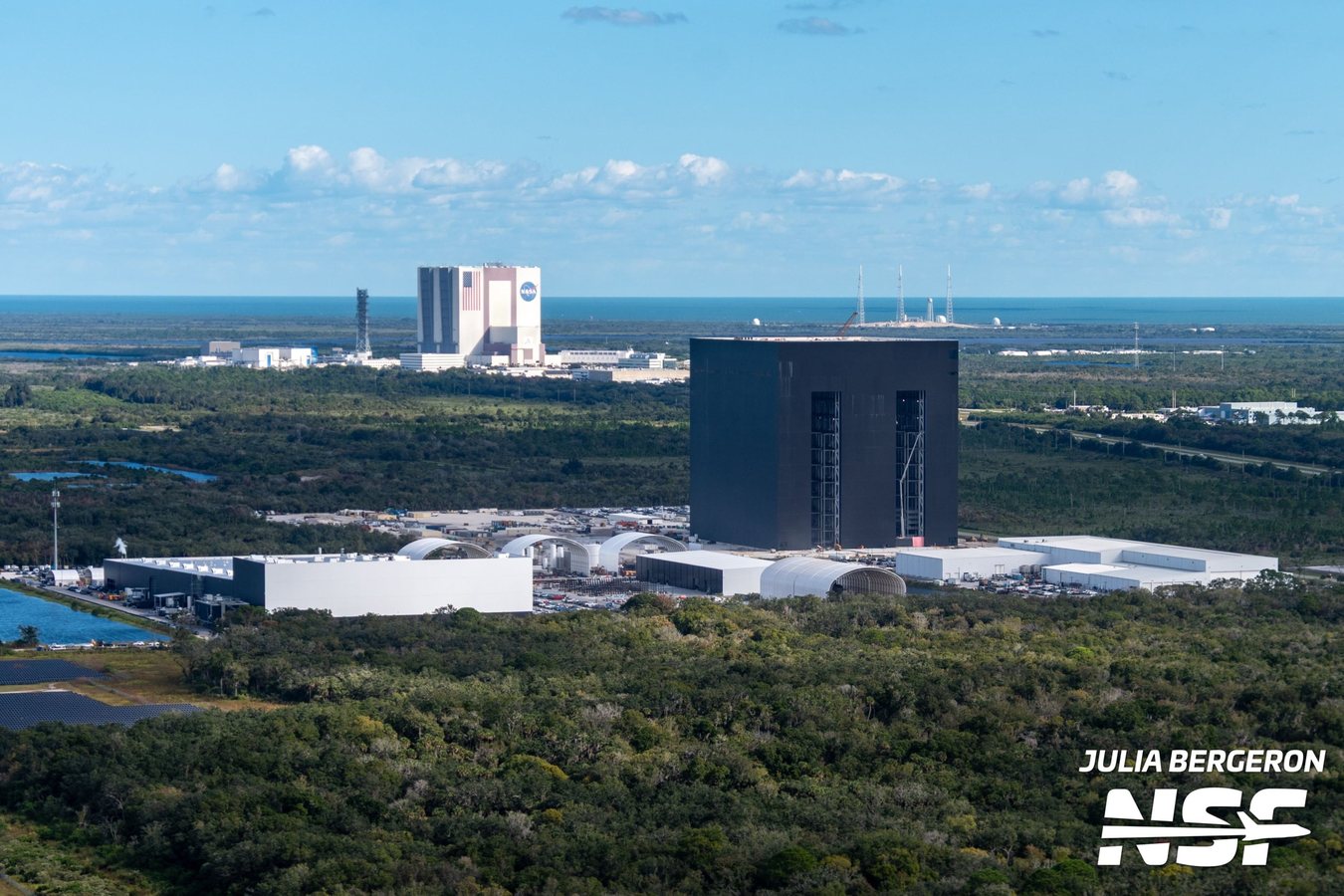
To support that schedule, SpaceX has applied, together with NASA, to expand its Roberts Road campus at Kennedy Space Center from 167 acres to nearly 400 acres. The draft Programmatic Environmental Assessment for the project describes new Starship ship static-fire stands, a road linking Roberts Road to NASA Parkway, and a payload processing facility, along with possibly several more Gigabay assembly buildings. The document is still in draft form and must go through a public comment period and final approvals before construction begins.
At Launch Complex 39A, SpaceX has added two more liquid methane storage tanks, which would bring its methane capacity at the pad to nearly 5,000 metric tons, and has installed a reinforced roof on the tower to protect it during ship catches. Booster 23 completed cryo-proof testing on October 15 and is slated for static fire testing in late November, while Ship 43 completed its cryo-proof testing on October 23 and is expected to be ready for static fire in mid-December. Ship 43 must be fully finished before it can be sent to Florida, because SpaceX has no ship-testing capability at Kennedy Space Center.
The combination of expanded military access to sensitive tracking data and rapid growth of SpaceX’s launch and manufacturing infrastructure is likely to keep the company at the center of debate over the role of private firms in national security and civil space activity. The source material does not indicate how the military access was granted or what safeguards apply to its use.
16