The most useful way to understand the K3 Scout camera incident is to start with the packet itself. Public reporting describes cameras on the British unmanned surface vessels sending “heartbeat” messages to an internet address in China. A heartbeat is ordinarily a very small status transmission. Its job is to tell another system: this device exists, it is reachable, and it is still running.
That is not the same as a video feed. The Telegraph, The Wall Street Journal and The Times have reported the China-directed traffic, while Britain’s Ministry of Defence says its investigation found no evidence that sensitive data or systems were accessed, compromised or transmitted externally. The ministry removed the cameras’ internet connectivity after the issue was found during a cyber-vulnerability assessment.
Why, then, is a heartbeat important? Security is not determined only by the sensitivity of a message’s content. It also depends on where a connection goes, how often it occurs and what it reveals about the system producing it. Repeated status traffic can expose device availability and timing. More importantly, an undocumented outbound path proves that a component can reach an external network destination, which means engineers must understand exactly how that capability is implemented and constrained.
This is a familiar problem in the Internet of Things. Commercial cameras often include vendor diagnostics, remote management, update checking or cloud services. Those functions are convenient in homes and businesses, where the manufacturer assumes persistent connectivity. A military integration reverses the priorities. The safest sensor is often one that cannot communicate outside the approved mission architecture at all.
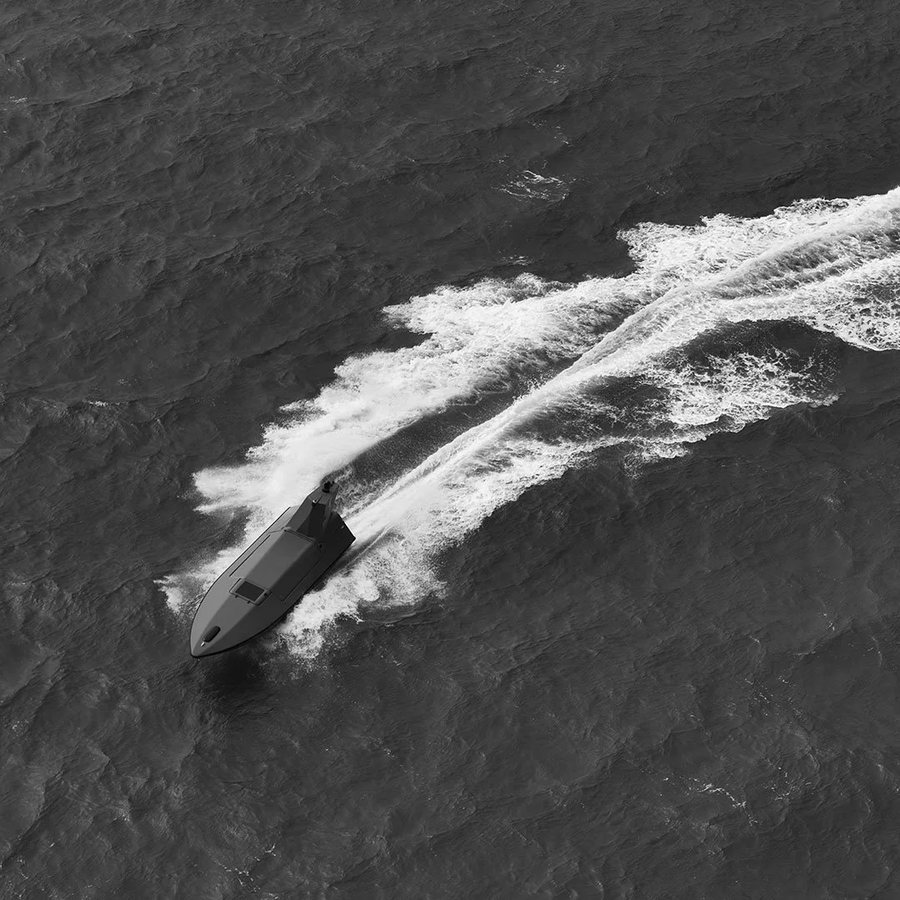
K3 Scout illustrates the integration challenge because it is designed for rapid, distributed operations. Britain acquired 20 under Project Beehive. The Royal Navy says the craft can support surveillance, force protection and precision strikes and recently demonstrated airborne deployment. QinetiQ has said the boats were being prepared for potential use near the Strait of Hormuz.
The scientific and engineering issue is therefore one of system boundaries. A mission platform may be secure at the level of its autonomy software and encrypted command link while still inheriting network behavior from a camera module. Engineers increasingly need a software and hardware bill of materials that reaches down to firmware libraries, communications chips and vendor services, not just a list of major components.
The industrial context makes that requirement more urgent. Kraken Technology Group says K3 Scout series production began at Rheinmetall’s Blohm+Voss facility in Hamburg in April. It also announced a U.S. Special Operations Command agreement worth up to $49 million in May. A component behavior found on one customer’s configuration can therefore become relevant to several certification regimes.
Britain had already treated Chinese-linked surveillance technology as a security concern. The Ministry of Defence has acknowledged Chinese-manufactured products in its wider supply chain and described enhanced scrutiny for surveillance equipment. The government has also been removing certain Chinese-linked camera systems from sensitive sites.
The Telegraph cited an unnamed source alleging that some cameras remained active even after the boats were powered down. That assertion has not been independently substantiated in public reporting. If it were confirmed, engineers would need to determine whether auxiliary power, standby circuitry or a separate power domain allowed the camera to continue operating. For now, it should remain an allegation rather than an established technical feature.
The confirmed lesson is already valuable. Autonomous military systems are not just vehicles with software added; they are networks of networks. A small sensor can create a communication path that the main platform designer never intended. As defence systems adopt more commercial components, continuous traffic inspection, firmware analysis and hardware provenance will become as fundamental to testing as range, endurance and navigation accuracy.
86