Archaeologists working in the ancient city of Apollonia ad Rhyndacum, in northwestern Turkey, have discovered a cremation tomb dating to the first century A.D. among the seats of the city's theater. The grave lies within a venue that once held some 5,000 spectators, and its location has puzzled the excavation team because the city had its own dedicated necropolis. The find was reported by the Turkish outlet Türkiye Today and is among the site's most unexpected discoveries to date.
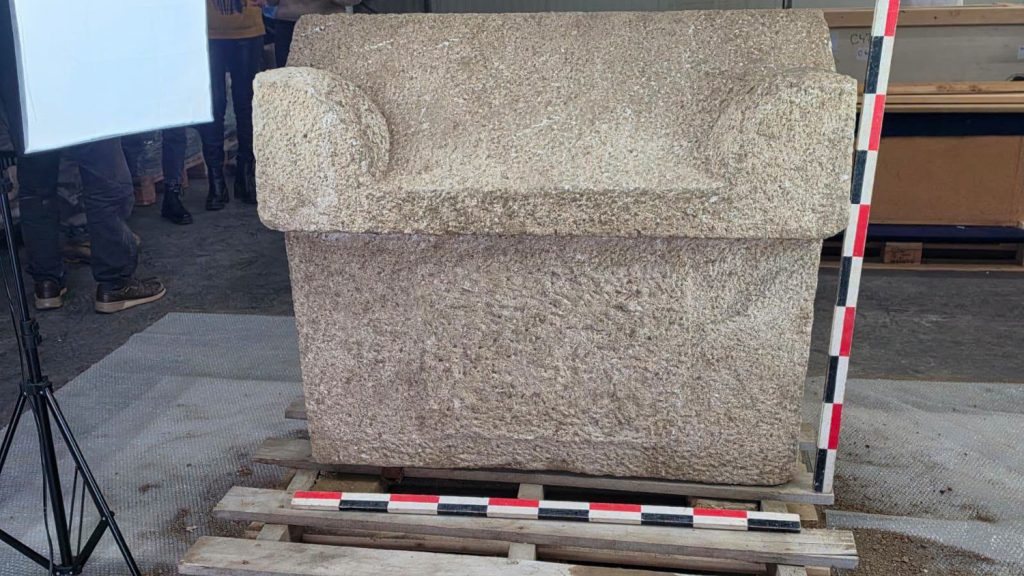
The tomb consists of a mudbrick chest covered by a gabled roof made of terracotta tiles. Its placement in a space associated with public performance, rather than in the burial grounds used by the wider community, has led researchers to consider that the person interred there may have held a special status. Derya Şahin of Bursa Uludag University raised the central question directly: « What was a tomb doing in a theater area when the city had its own necropolis? » She reasoned that « the grave must be a special one » and « must carry some meaning, perhaps a trace of sacredness or heroism ». Her interpretation, offered so far as a working hypothesis, points to the possibility that the burial was tied to the civic or ceremonial life of the theater itself.
The excavation has also refined what is known about the building. The team has so far uncovered and reconstructed 42 of the theater's seating steps, a substantial portion of the seating area. Researchers believe the venue was divided into two levels separated by a walkway about three feet wide, an arrangement that would have organized audiences by tier. An inscription found at the site indicates that the theater was completed in the early second century A.D. Because the tomb dates to the first century, it predates the completed building, meaning the burial was made before the theater took its final form and was later absorbed into the structure.
That sequence is significant for understanding how the city changed over time. A burial that predates a monumental public building raises questions about whether the spot held a prior function, whether the tomb was marked or remembered when the theater was planned, and how builders chose to incorporate an existing grave into new construction. The team has not yet published a final interpretation of the occupant's identity or the reasons for the tomb's location, and further study of the surrounding deposits is expected to clarify those points.
The find also places Apollonia ad Rhyndacum within a broader pattern of cultural life in Anatolia. Theaters in the region hosted a wide range of cultural activities, from drama and public assemblies to ceremonies that brought the community together. The discovery at Apollonia ad Rhyndacum offers a rare physical record of how a burial and a public venue could coexist in the same urban space, and it gives researchers a concrete case to weigh against the textual and architectural evidence that has shaped scholarly views of such sites.
16