A new genetic study of medieval burials in Sweden has upended long-held assumptions about early Christian burial customs, revealing that infants and adults laid to rest together were not biologically related. The findings, published by archaeologists and geneticists, raise significant questions about how early Christian communities organized their cemeteries and what social or spiritual bonds may have guided the placement of the dead.
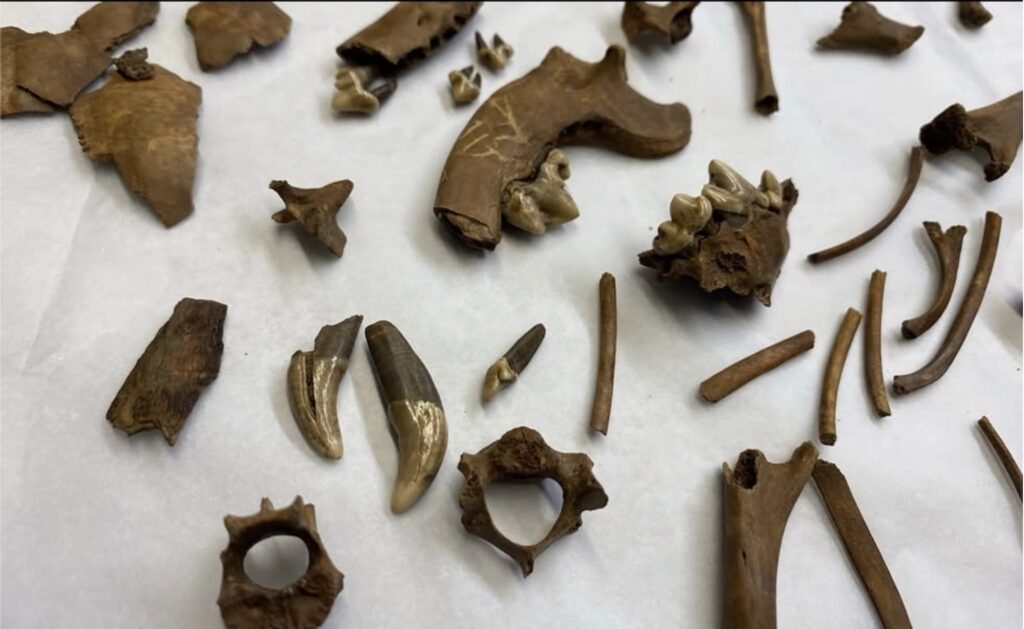
Researchers analyzed ancient DNA from skeletal remains unearthed at a medieval cemetery in Varnhem, Sweden, a site that dates to the 11th and 12th centuries, a period when Christianity was becoming established in Scandinavia. The team examined the genomes of 25 individuals, including adults and infants buried in close proximity, often within the same grave or adjacent plots. To their surprise, the genetic data showed no close familial ties between the adults and the children buried alongside them.
«We expected to find that infants buried with adults were their biological children, but the DNA told a different story,» said lead author Dr. Maja Krzewińska, a researcher at Stockholm University. «This suggests that the organization of early Christian cemeteries was not simply based on biological family units.»
The study challenges the common interpretation that medieval churchyards were arranged around nuclear families, with parents and their children interred together. Instead, the findings indicate that other factors—such as godparent relationships, household membership, or spiritual kinship—may have determined who was buried next to whom. In early Christian theology, the concept of spiritual family often carried as much weight as biological ties, and the new evidence suggests this may have been reflected in burial practices.
The Varnhem cemetery is one of the best-preserved early Christian burial sites in Sweden, with hundreds of graves arranged in rows near the ruins of a stone church. Previous archaeological work had documented the close physical association between adult and infant remains, leading researchers to assume these were family plots. However, the ancient DNA analysis revealed that none of the 10 adult-infant pairs tested shared a mother-child or father-child relationship. In some cases, the adults and infants were not related at all, even to a distant degree.
«This forces us to reconsider what we thought we knew about early Christian communities,» said co-author Dr. Jan Storå, an osteologist at Stockholm University. «Burial proximity clearly meant something important, but it was not necessarily about blood ties.»
The study also found that the individuals buried at Varnhem were genetically diverse, with some showing ancestry from different parts of Europe. This suggests that the early Christian population in the region was not isolated but included migrants or travelers who were integrated into the local community. The presence of non-local individuals in the cemetery further complicates the picture, as it implies that burial location was not strictly determined by family lineage or local origin.
Archaeologists have long debated the social organization of early medieval Scandinavia, particularly during the transition from Norse pagan traditions to Christianity. Pagan burial practices often involved cremation and grave goods, while Christian burials emphasized inhumation in consecrated ground, typically in churchyards. The new findings suggest that even within the Christian framework, there was considerable flexibility in how communities arranged their dead.
«Early Christian burial practices were not as rigid as we sometimes imagine,» Krzewińska said. «People were making choices about where to bury their dead based on a range of social and spiritual considerations, not just biology.»
The research team plans to expand their analysis to other medieval cemeteries in Sweden and across Scandinavia to see if the pattern holds. They are also investigating whether the non-biological relationships observed at Varnhem might reflect practices such as fosterage, adoption, or the burial of servants or dependents alongside household heads. In medieval Scandinavian society, it was common for children to be raised by families other than their biological parents, and such arrangements may have been reflected in burial customs.
The study has broader implications for understanding how early Christian communities formed and maintained social bonds. In an era before written records were widespread, burial patterns offer one of the few windows into the social structure of everyday life. The discovery that biological kinship was not the primary organizing principle of these cemeteries suggests that early Christian communities in Scandinavia were bound together by ties that went beyond the nuclear family.
«This is a reminder that our modern assumptions about family and burial do not necessarily apply to the past,» Storå said. «We need to let the evidence speak for itself, even when it challenges our expectations.»
The findings were published in the journalCurrent Biologyand have already sparked discussion among medieval archaeologists and historians. Some experts have called for re-examining other early Christian cemeteries with ancient DNA analysis to test whether the Varnhem pattern is widespread or unique to this site.
For now, the study leaves open the question of what exactly bound the adults and infants buried together at Varnhem. Whether they were godparents and godchildren, masters and servants, or members of a spiritual community, the graves themselves testify to a form of connection that was meaningful enough to transcend death—even if it was not written in their genes.
124