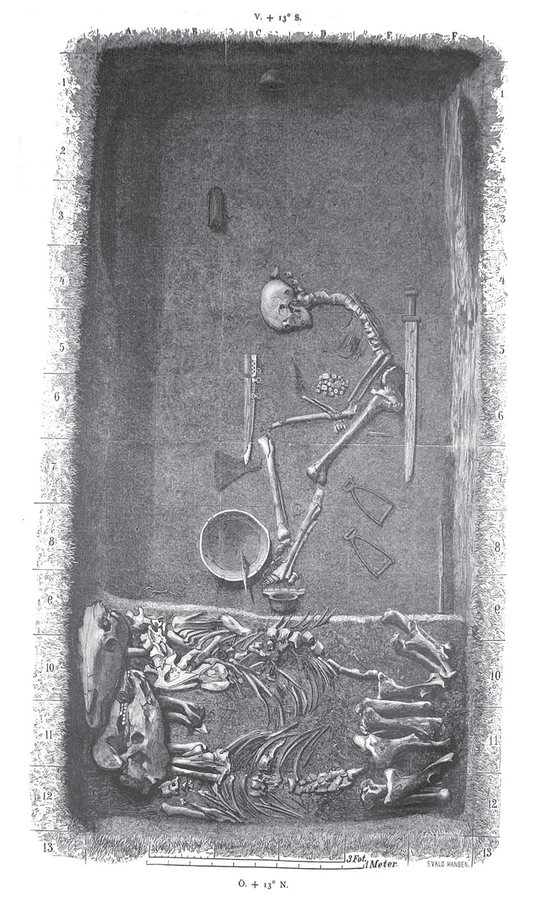
Ancient DNA recovered from medieval graves in Sweden has upended a long-standing assumption about how people in the past organized their dead. Adults and children buried together in the same grave were frequently not members of the same immediate family, according to a new analysis, indicating that burial choices were shaped by social relationships, community ties, and cultural practices rather than biological kinship alone.
The research, which examined genetic material from medieval burials, found that many of the individuals interred side by side shared no close genetic connection. That result challenges the intuitive reading of such graves as family plots. Instead, the findings suggest that medieval communities may have grouped the dead according to other criteria — perhaps household affiliation, servitude, apprenticeship, or spiritual association — that left no trace in the skeleton but shaped who was laid to rest with whom.
The study also identified early evidence of gender-based burial customs. Distinct patterns in how men and women were interred point to formalized rituals that differentiated the sexes, a practice that appears to have been established earlier than previously documented in the region. These customs likely carried symbolic meaning about status, role, or the afterlife, and they add a new dimension to understanding how medieval Scandinavian societies structured both life and death.
Among the most striking individual findings is the story of a young woman whose remains suggest she may have completed a pilgrimage across Europe. The genetic and contextual evidence points to a life that involved long-distance travel, a remarkable detail for the medieval period when most people lived and died within a narrow geographic radius. Her burial, and the journey it implies, offers a rare personal window into mobility, devotion, and the networks that connected medieval communities across the continent.
The broader implication of the DNA analysis is that archaeologists and historians should be cautious about inferring family structure from grave groupings alone. Kinship was clearly important in medieval Sweden, but it was not the only force determining how the dead were arranged. Social organization, religious practice, and perhaps economic relationships all played a role in shaping burial assemblages that, on the surface, looked like families.
The research contributes to a growing body of work in which ancient DNA is used to test assumptions that were once based solely on grave goods, skeletal positioning, and spatial proximity. By adding genetic evidence, scientists can distinguish between biological relatives and people who were connected through other bonds. In this case, the distinction is significant: it recasts medieval cemeteries as places where community identity, not just lineage, was expressed.
For scholars of medieval Scandinavia, the findings open new questions about how households were formed, how children were integrated into communities, and how gender shaped daily life and ritual. The young woman's possible pilgrimage further suggests that some individuals moved across Europe in ways that challenge static portraits of medieval society. Together, the results paint a more complex picture of a period often reduced to simple narratives about family, faith, and locality.
The study underscores that burial was an active social statement. Medieval communities made deliberate choices about who would be placed together, and those choices reflected a web of relationships that genetics alone cannot capture. As ancient DNA continues to be applied to cemetery populations, researchers expect more cases in which the biological record and the archaeological record tell different, complementary stories about how past people understood belonging, kinship, and the dead.
14