Researchers have identified a rare strain of leprosy in the remains of a man buried in a boat during the fifth century, a discovery that marks the first case of its kind found in Europe. The grave, at the Fallward burial ground near the North Sea coast in Germany, was examined by a team from Kiel University working with the IKMB.
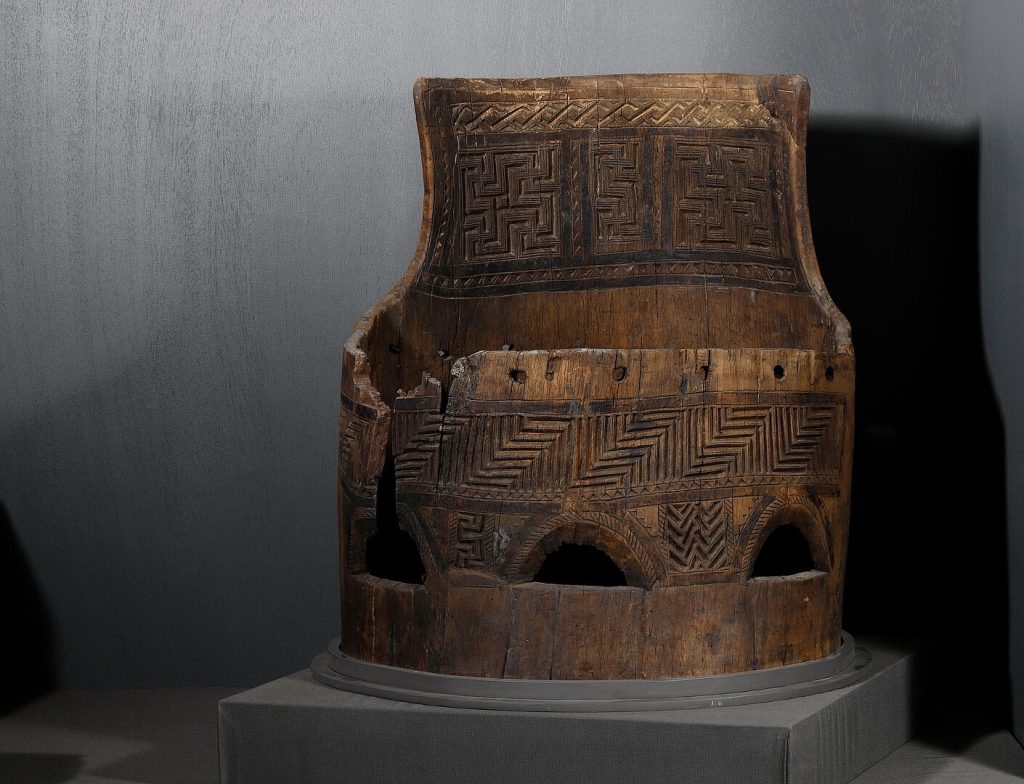
The burial is site-specific in its richness. The grave held wooden, pottery and metal objects, along with an elaborately carved chair made of alder wood. A late Roman military belt was also present, a detail that points to a person whose life connected him with distant regions rather than only the local community around the Elbe River mouth.
Genetic analysis linked the man to the Danube region, with further ties to southeastern Europe and the Mediterranean. The strain of the pathogen he carried was previously known in Egypt, where it has been dated to between the fourth and second centuries BCE. Its appearance in a fifth-century burial in northern Germany shows that the bacterium traveled across a much wider network than was previously documented for Europe.
Significant questions remain open. The skeleton shows no bone damage, so it is not clear whether the infection caused visible symptoms, whether the man was asymptomatic, or whether the disease affected only soft tissue. The researchers also have not settled whether he was a mercenary soldier or a long-distance trader, leaving his identity and the circumstances of his travels unresolved.
Credit. Based on reporting by Jessica Esther Saraceni for Archaeology Magazine. Is this your work? Write to us.
4