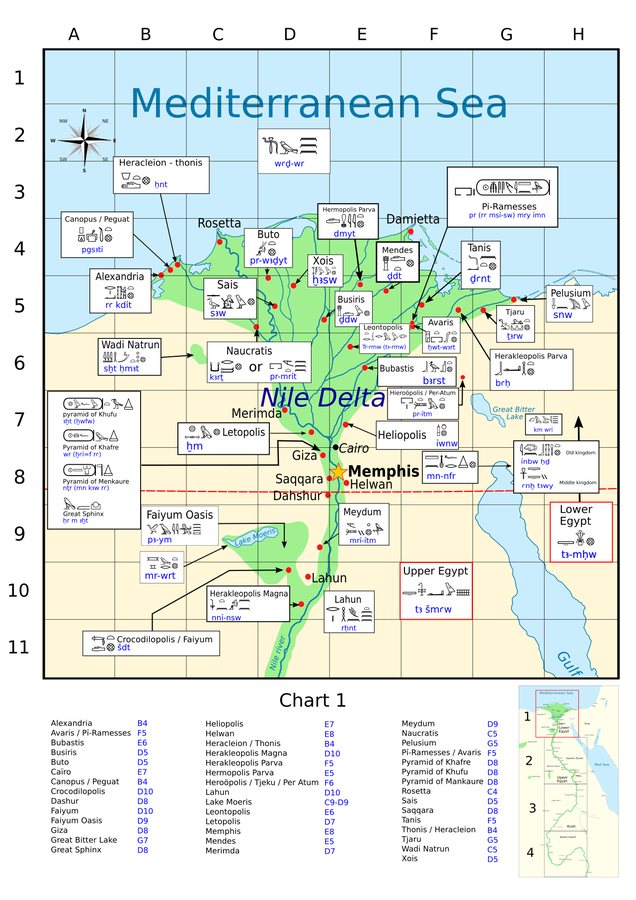
Archaeologists working in Egypt's eastern Nile Delta have uncovered traces of a Roman camp and a series of rock-cut tombs at Tell el-Yahudiya, the site of the ancient city of Leontopolis, according to an announcement by Hisham El-Leithy of Egypt's Supreme Council of Antiquities.
The discovery is notable not only for the Roman military presence it documents but for the unusual geology of the burials. Rock-cut tombs are rarely found in the clay soil characteristic of this part of the delta, making the find at Tell el-Yahudiya an exception to the region's typical burial record.
The tombs were excavated in layers beneath the Roman camp, indicating that the site was used for funerary purposes long before the Roman military established itself there. Many of the tombs feature one of two distinct architectural layouts. Some have an entrance staircase that descends to a hall containing burial niches, while others consist of a rectangular shaft leading to two separate burial chambers.
Artifacts recovered from within the tombs allowed researchers to date the burials to a broad span running from the New Kingdom through the Late Period. That range covers roughly a millennium of ancient Egyptian history, from the era of imperial expansion and monumental temple building through the periods of foreign rule and internal fragmentation that preceded the Ptolemaic and Roman eras.
The Roman camp above the tombs adds a later chapter to the site's long occupation. Leontopolis, known in antiquity as a center of Jewish settlement and temple worship as well as an Egyptian cult site, sat in a strategically significant position in the eastern delta. A Roman military presence there fits the broader pattern of Roman installations along Egypt's eastern approaches, where forces were positioned to secure routes toward the Levant and the Sinai.
The excavation layers tell a story of continuous or repeated use. The rock-cut tombs were carved into the subsurface, and the Roman camp was later established over them, suggesting that the earlier funerary landscape was either forgotten, repurposed, or simply built upon as the settlement's needs changed. Such stratification is common at long-occupied Nile Delta sites, where generations of construction and burial accumulate in dense archaeological deposits.
Tell el-Yahudiya has drawn archaeological attention for well over a century, and its identification with Leontopolis has made it a reference point for scholars studying the intersection of Egyptian, Jewish, and Greco-Roman life in the delta. The current work by the Supreme Council of Antiquities continues that tradition of investigation, though the announcement focused on the newly revealed structures rather than on broader interpretive claims.
The rarity of rock-cut tombs in the region's clay soil makes the find particularly valuable for understanding local burial practices. In areas where stone is scarce or the ground is unsuitable for carving, ancient communities often turned to other forms of interment, including pit graves, mud-brick structures, or above-ground monuments. The presence of carved staircases, halls, and shafts at Tell el-Yahudiya suggests that at least some residents commanded the resources and labor to undertake substantial subterranean construction.
Details about the number of tombs, the specific artifacts used for dating, and any human remains recovered were not fully elaborated in the initial announcement. Further study of the site is expected to clarify how the funerary complex related to the surrounding settlement and how the Roman occupation altered the use of the area.
For now, the discovery adds a new layer to the archaeological record of the eastern delta, linking a Roman military installation to an earlier burial ground and extending the known history of one of the region's most persistently occupied ancient cities.
9