Italian officials have unveiled a monumental wall mosaic and a vivid fresco that lay hidden beneath the Baths of Trajan for nearly two millennia, marking the first public display of the artworks since their discovery three decades ago. The mosaic, which experts believe is the largest of its kind ever found in the Roman world, measures 33 feet high and 52 feet long, though its full extent remains unknown.
The artworks were first uncovered in the 1990s during excavations within the Baths of Trajan, the Roman Empire's largest bath complex, built in the early second century A.D. The emperor Trajan constructed the sprawling facility on top of the Domus Aurea, the opulent palace of the emperor Nero, which dates to between A.D. 65 and 68. It is still not known whether the newly displayed works originally belonged to Nero's palace or to the later bath complex.
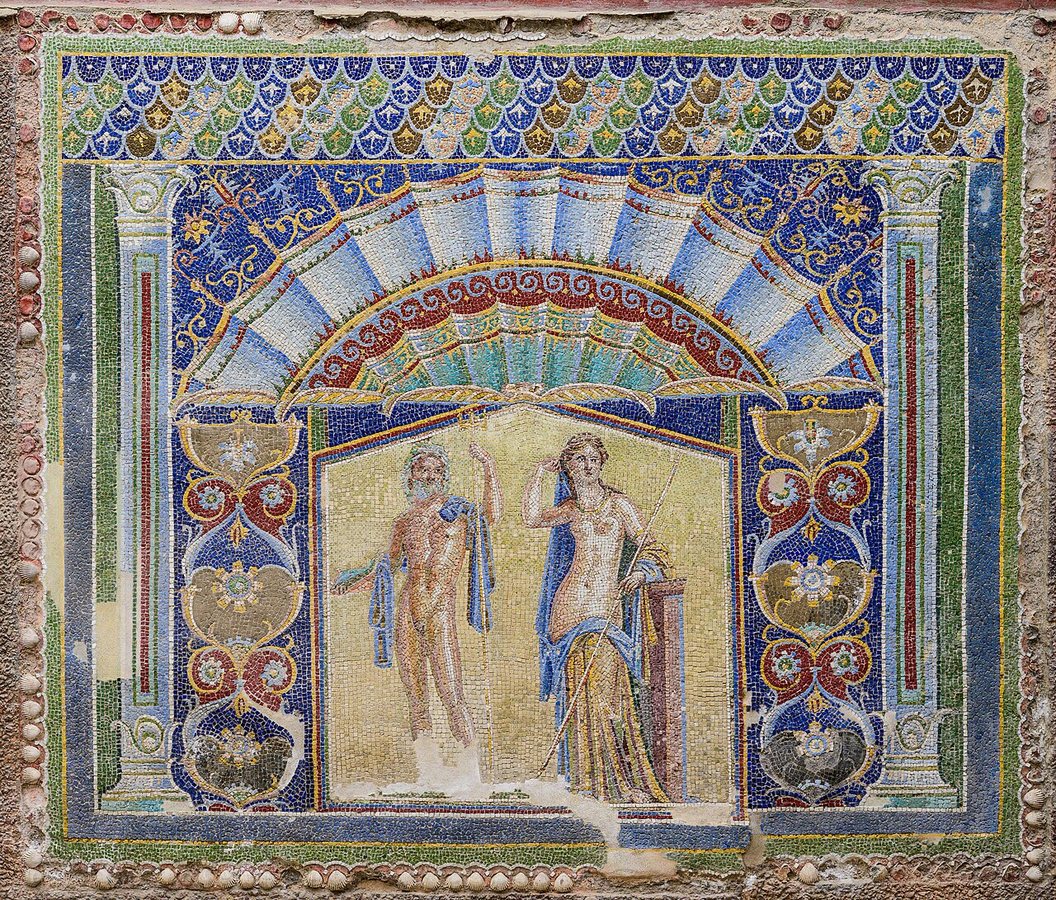
The 108-square-foot fresco, known as the «Painted City,» depicts a waterfront walled city complete with roads, a theater, and a temple. Scholars remain uncertain whether the metropolis represents an actual place or an idealized utopian port. The «Great Mosaic» similarly features scenes set within a walled city, along with theatrical motifs and human characters, including a bearded philosopher and a young poet.
Parts of the mosaic were crafted from blue and white marble and gemstones, materials that mimic the effect of sunlight shining on the sea. Archaeologist Francesco Pacetti said the team estimates the work is the biggest wall mosaic ever found in the Roman world and that excavations are continuing to determine where it ends.
The display offers the public a rare window into the artistic ambitions of imperial Rome and the layered history of the site, where one emperor's pleasure palace was buried beneath another's monumental public baths. The artworks' scale and elaborate materials suggest they were commissioned for an important setting, though their exact original context remains a subject of ongoing research.
Officials have not announced how long the display will remain open or whether further excavation will continue at the site. For now, the unveiling brings to light a pair of works that had been known only to archaeologists and specialists, adding a major chapter to the understanding of Roman decorative art and urban imagery.