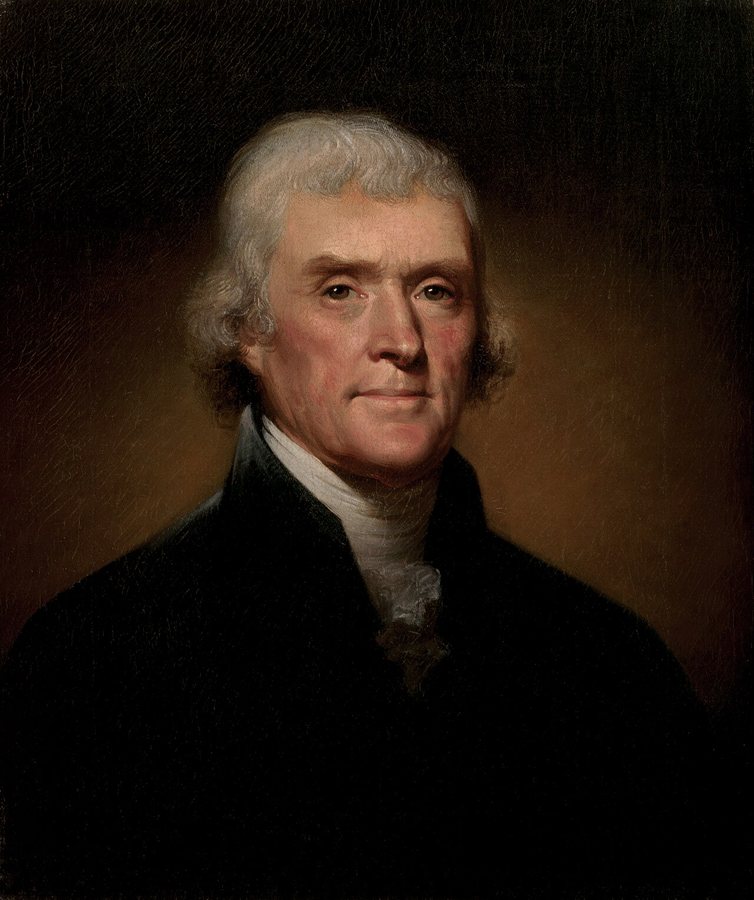
Geneticists have sequenced the genome of Thomas Jefferson from a lock of hair preserved after his death and compared it with DNA from living descendants of Sally Hemings, a finding that strengthens the case that the third U.S. president fathered children with an enslaved woman he owned. The work adds molecular evidence to a historical question that has divided scholars, descendants, and the public for more than two centuries.
The hair sample, taken shortly after Jefferson died in 1826, provided enough intact genetic material for researchers to reconstruct key portions of his genome. That sequence was then set against DNA from people who trace their ancestry to Hemings, allowing scientists to look for shared genetic markers that would indicate a direct paternal link. The comparison supports the conclusion that Jefferson was the biological father of at least some of Hemings's children.
The findings build on a landmark 1998 DNA study that examined the Y chromosome, which is passed from father to son. That earlier analysis found a match between Jefferson's male-line relatives and a male-line descendant of Hemings's son Eston, but it could not prove definitively that Thomas Jefferson himself, rather than one of his male relatives, was the father. The new genome-wide approach draws on a broader set of genetic markers and a sample tied directly to Jefferson, narrowing the field of possible fathers.
Historians have long debated the relationship between Jefferson and Hemings, who was owned by Jefferson and lived at his Monticello plantation in Virginia. Oral histories passed down through Hemings's family held that Jefferson was the father of her children, a claim that many of Jefferson's biographers and defenders rejected for generations. The 1998 Y-chromosome study shifted scholarly opinion, and a 2000 report by the Thomas Jefferson Foundation concluded that the evidence strongly supported the paternity claim.
The new DNA analysis does not rewrite the historical record on its own, but it reinforces the genetic case at a time when the subject remains contested in public memory. Monticello has since incorporated the Hemings family story into its interpretation of Jefferson's life, and descendants of both Jefferson and Hemings have met in recent years to acknowledge their shared ancestry.
Researchers involved in the work emphasize that genetic evidence speaks to biological relationships, not to the moral or historical meaning of those relationships. The power imbalance between Jefferson and Hemings, who was his property and had no legal ability to consent, remains central to how historians frame the story. The DNA findings are expected to be cited in ongoing discussions about how American history is taught, how historic sites present slavery, and how descendant communities are recognized.
The study also demonstrates how advances in ancient and historical DNA analysis are opening new windows onto figures from the past. Hair, teeth, and bone fragments preserved in archives and museums can now yield genetic information that was unreadable even a decade ago. For historians, that means questions once thought settled by documents alone may be revisited with molecular tools.
For the Hemings descendants, the genetic confirmation is both a scientific result and a personal one. Members of the family have long argued that their oral tradition deserved the same weight as written records, and the new analysis adds independent evidence to that claim. The findings are likely to be discussed in classrooms, museums, and family gatherings for years to come.
7