Paleontologists have identified a giant fossil turtle from Peru that ranks among the largest freshwater turtles ever known, a discovery that sheds light on the rich aquatic ecosystems of ancient northern South America. The extinct species, Chelus colombiana, inhabited vast wetlands in what is now the region roughly 10 to 15 million years ago, during the Miocene epoch.
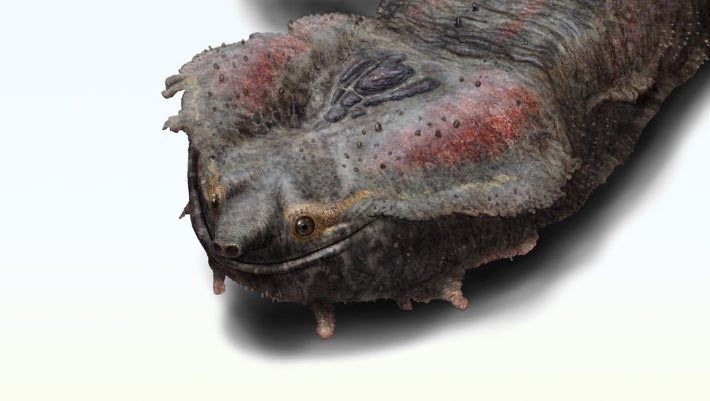
The turtle belongs to the side-neck group, a lineage distinguished by the way it folds its neck sideways into its shell rather than retracting it straight back. Modern relatives include the matamata, a highly camouflaged freshwater turtle found in the Amazon and Orinoco basins. Like its living cousins, Chelus colombiana likely ambushed prey in slow-moving waters, using a specialized feeding strategy that relied on sudden suction rather than active pursuit.
Its size is the most striking feature. The fossil remains indicate an animal substantially larger than any freshwater turtle alive today, placing it in the same rarefied category as a handful of prehistoric giants. Freshwater turtles rarely reach such dimensions because their shell structure and metabolism constrain growth, making the discovery significant for understanding how large these reptiles could become under favorable conditions.
The wetlands that once covered northern South America were expansive and productive, supporting a diverse community of reptiles, fish, and mammals. During the Miocene, the region looked very different from the Amazon rainforest of today. A massive wetland system, sometimes called the Pebas mega-wetland, stretched across parts of modern Peru, Colombia, and Brazil. This environment provided abundant food and stable temperatures, conditions that may have allowed turtles like Chelus colombiana to grow to exceptional sizes.
The fossil was recovered in Peru, adding to a growing record of Miocene vertebrates from the region. Each new find helps researchers piece together how ancient ecosystems functioned before the modern Amazon River and its floodplain took shape. Turtles are particularly useful for this work because their shells preserve well and their body size reflects local environmental conditions, including water availability and food supply.
Chelus colombiana was first described from Colombian fossils, but the Peruvian material expands its known range and confirms that the species was widespread across northern South America. The genus Chelus survives today with a single recognized species, the matamata, which is far smaller than its extinct relative. The contrast highlights how much freshwater turtle diversity has been lost over millions of years.
Understanding why some prehistoric turtles grew so large, and why those lineages eventually disappeared, remains an open question. Climate shifts, changes in wetland extent, and competition with other animals likely played roles. The new fossil does not resolve those debates, but it provides a clearer picture of the upper limits of freshwater turtle body size and the kinds of habitats that could sustain them.
The discovery also underscores the value of paleontological fieldwork in South America, where Miocene deposits continue to yield new species. Northern Peru and neighboring regions have produced a steady stream of fossil reptiles, mammals, and fish that together document one of the most dynamic periods in the continent's biological history. As fieldwork continues, researchers expect more finds that will refine the timeline of when these giant turtles lived and how they interacted with their environment.
For now, Chelus colombiana stands as a reminder that the Amazon basin's past was populated by creatures that would seem alien today. A freshwater turtle the size of a small car once patrolled the wetlands of Peru, and its fossilized remains offer a rare glimpse into a lost world.
18