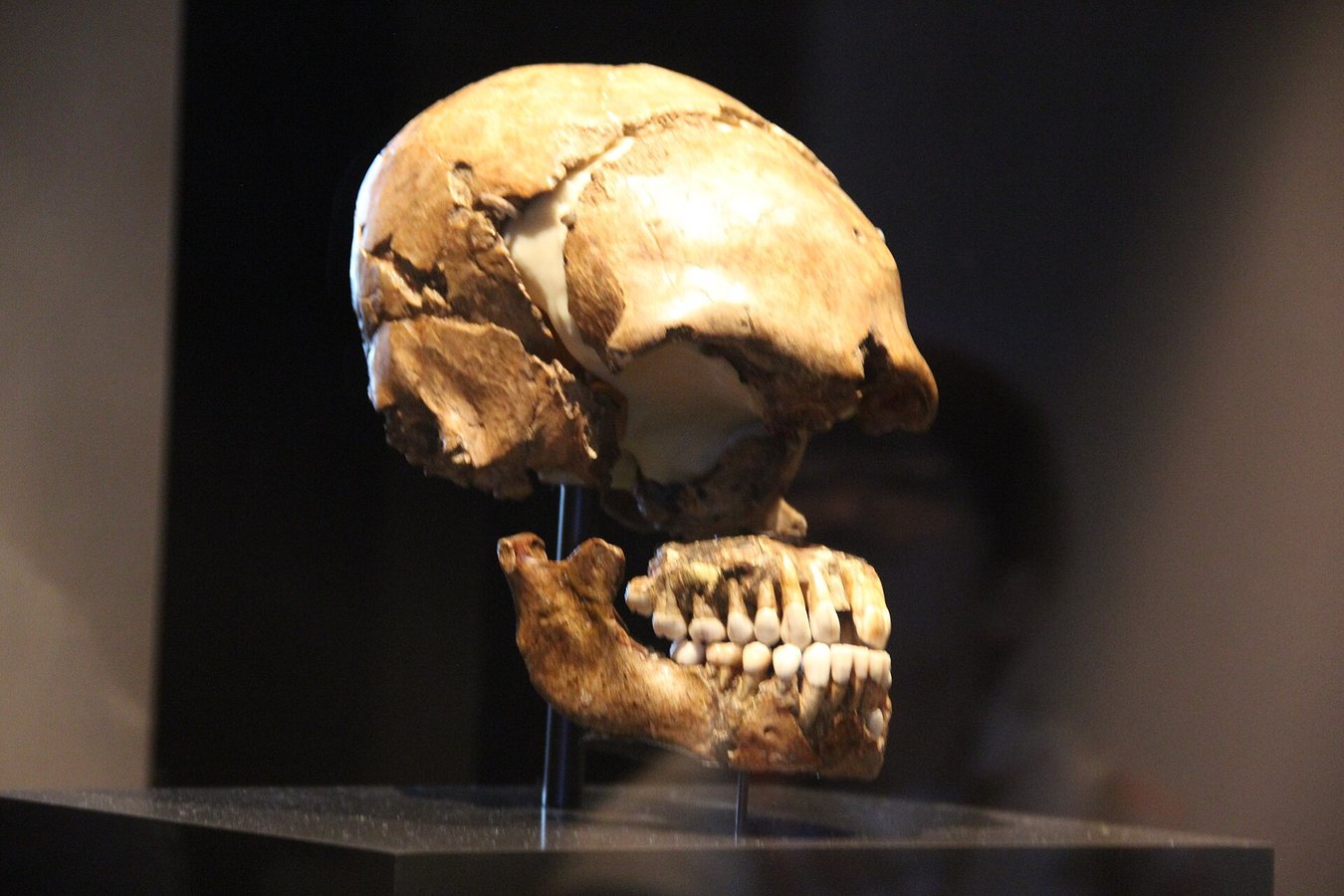
Ancient DNA has transformed the story of human evolution by showing that Homo sapiens interbred with Neanderthals and Denisovans. But ancient genomes are rare, and entire human populations may have vanished without leaving DNA that can be recovered from bone. A method called TRACE is designed to detect their genetic legacy even when no genome from the extinct population is available.
TRACE works with ancestral recombination graphs, statistical reconstructions of how segments of modern genomes relate to one another through time. By analyzing unusual branching patterns in those graphs, the method can identify DNA that appears to have entered a population from a deeply diverged lineage. Crucially, it does not require an archaic reference genome or an unadmixed modern outgroup.
When researchers applied TRACE to contemporary genomes, the method recovered major patterns of Neanderthal and Denisovan introgression that are already known from direct comparisons with ancient DNA. That provided an internal test that the approach can recognize real archaic ancestry. It then detected additional segments consistent with gene flow from unidentified, or ghost, hominin populations in both African and non-African genomes.
Some of those ghost segments appeared in regions previously described as deserts of Neanderthal and Denisovan ancestry. Such deserts have sometimes been interpreted as places where Homo sapiens genomes resisted archaic DNA generally. The new result complicates that picture: selection may have acted differently on ancestry from different archaic groups rather than simply purging all deeply diverged DNA from those regions.
The study also examined Oceanian genomes, which carry relatively high levels of Denisovan ancestry. Within Denisovan-derived segments, TRACE identified unusually deep lineages consistent with an even older, super-archaic contribution that may have entered modern humans indirectly through Denisovans. Some of these tracts overlap regions involved in immune function and vitamin D metabolism, although their functional effects remain uncertain.
Genomic inference cannot by itself tell researchers who those ghost populations were. A signal of introgression does not provide a skull, an archaeological culture or a geographic identity. Dating and demographic models also carry uncertainty. The new method is most powerful as a map of where to look and as a way to test models of population history that were previously inaccessible without ancient reference genomes.
The emerging picture is less like a clean evolutionary tree and more like a network. Modern humans, Neanderthals and Denisovans were not isolated branches, and the genetic evidence now points to additional branches whose bodies and genomes may never be found. TRACE offers a way to study those missing populations through the fragments of DNA they left in people alive today.
92