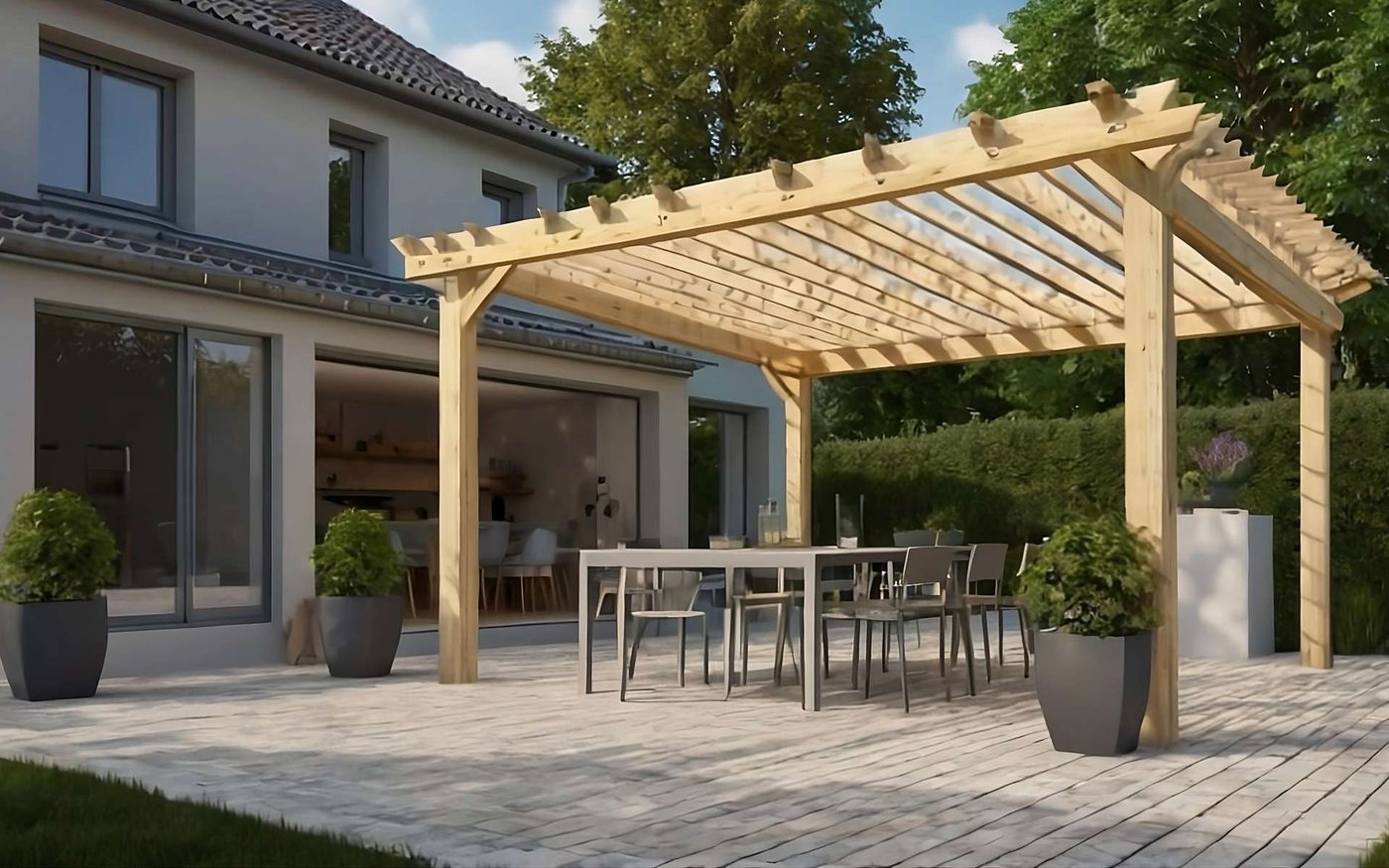
With summer heat becoming more intense, creating a shaded spot in the yard is becoming a practical priority for many households. A freestanding bioclimatic pergola can help regulate sun exposure while turning an empty stretch of lawn or patio into a true outdoor living space. A new buying guide highlights four of the best freestanding models for garden use, presenting them as « garden islands » that can be placed independently around the property.
The main characteristic of this type of pergola is that it does not need to be attached to the house. The French term « autoportée », meaning self-supporting, refers to a pergola with its own posts and framework, able to stand on its own wherever there is enough space. This makes it a flexible answer for homeowners who want shade in the middle of the yard, next to a pool, or on a patio that is not directly connected to the building. Because the structure is independent, it can be positioned to follow the sun over the course of the day rather than being locked into the orientation of the house.
What sets a bioclimatic pergola apart from a classic pergola is the way it manages sunlight. Instead of providing one fixed level of shade, a bioclimatic model is designed so that the roof can be adjusted to allow more or less light and air through. On hot days, the roof can be set to block direct sun while still letting breezes circulate, helping to keep the space underneath noticeably cooler. The result is a comfortable outdoor room that can be used for meals, rest, or entertaining even in the peak heat of the afternoon.
The rising interest in these structures is closely linked to warmer summers. Garden owners who once avoided the midday sun now have a practical way to stay outside without being exposed to intense heat. A well-placed freestanding pergola offers reliable shade from late morning through the afternoon, and the area below can be furnished with chairs, a table, or plants to make it feel like an extension of the home. Instead of a yard that is only pleasant in the evening, the pergola creates a space that can be enjoyed throughout the day.
Choosing a freestanding model is especially useful when the best exposure to sunlight is located away from the house. A wall-mounted pergola is limited to the facade, but a self-supporting structure can be centered in the garden, near a pool, or on a sunny patch of lawn. This flexibility is why these pergolas are sometimes described as garden islands: they create a destination within the outdoor space rather than simply extending the roofline of the home.
Before making a purchase, buyers should first decide where the pergola will go and how the ground will be prepared. A freestanding structure carries its own weight, so it can be installed on grass, gravel, pavers, or a wooden deck, provided the surface is level and stable. It is also worth considering how the pergola will be used day to day. A household that wants maximum light may prefer a more open roof, while those who eat outside regularly may want a model that can create dense shade quickly. Ease of adjustment is another point to compare, since models differ in how simply the roof position can be changed.
The four models selected in the guide illustrate the different ways manufacturers have answered this need for shaded, breathable outdoor space. They share a common goal: controlling exposure to the sun while keeping the area protected from uncomfortable heat. As high summer temperatures become more common in many regions, such a pergola is increasingly viewed not as a decorative extra but as a practical piece of everyday outdoor comfort.