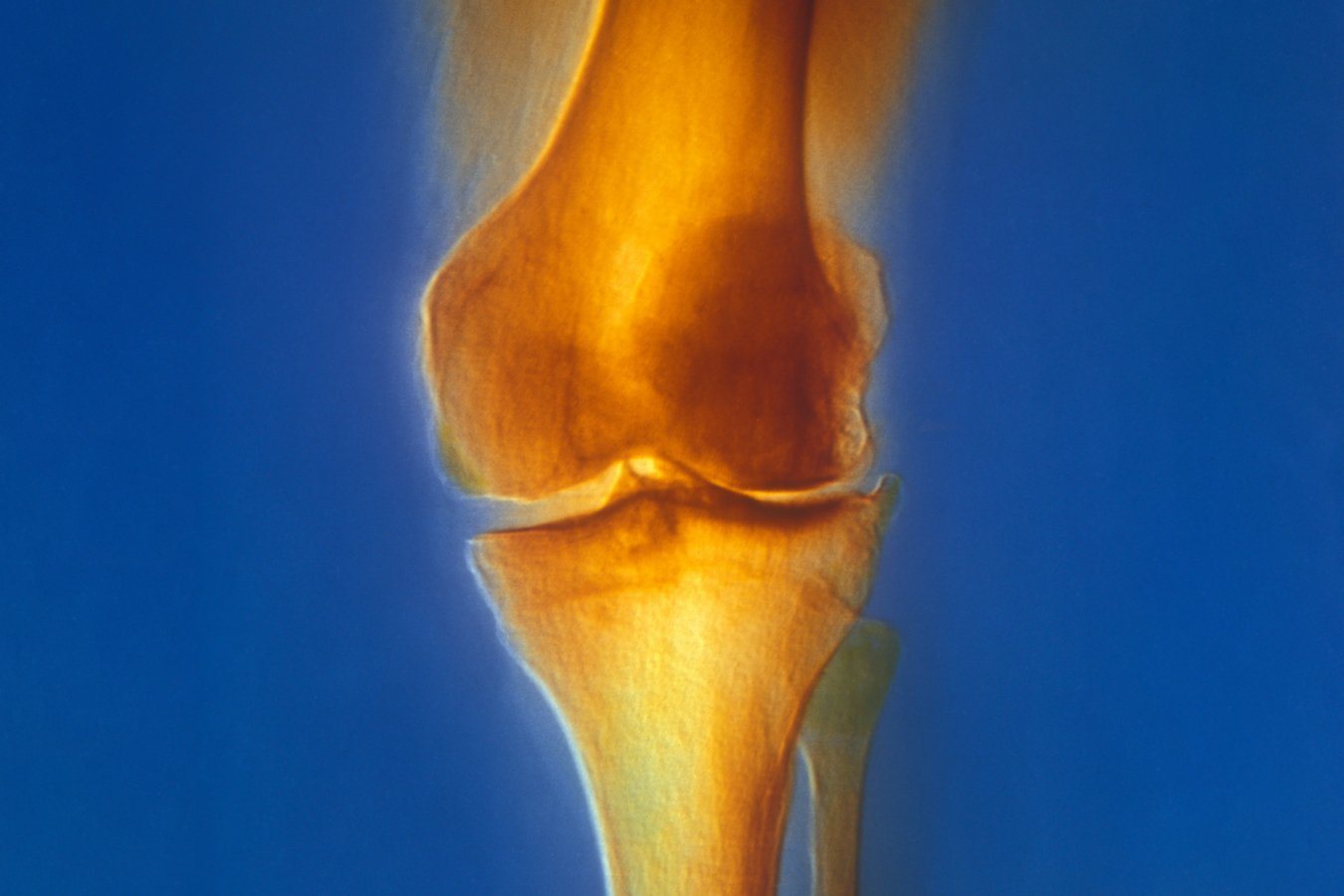
A medication long used to prevent blood clots may also protect the knee from osteoarthritis, the most common form of joint disease. In a study led by researchers at Yale, the drug dabigatran slowed the breakdown of cartilage and reduced pain-related stiffness in animal experiments, offering a new direction for a condition that currently has no approved treatment able to slow its progression.
The team tested the drug in mice and rhesus monkeys. In the monkeys, the researchers removed cartilage from the left knee to imitate the wear seen in people with the disease. The treated animals received dabigatran mixed into their daily food. After seven months, the cartilage in their knees was about 60 percent thicker than in untreated animals, and their knees moved about 15 percent more freely. In mice, the drug reduced knee inflammation by roughly 60 percent.
The findings matter because osteoarthritis affects more than 500 million people worldwide, and treatment has largely focused on easing symptoms rather than halting damage. Earlier attempts to target inflammation through drugs blocking the proteins TNF-alpha and IL-1-beta failed in clinical trials. The researchers suggest that dabigatran's benefit may come from its anti-clotting action rather than an anti-inflammatory one, a possibility that differs from previous approaches.
Significant questions remain. It is not yet known whether the drug can reverse cartilage damage that already exists, rather than only slow further loss. Bleeding is also a concern, since dabigatran is an anticoagulant and people taking it face a risk of hemorrhage. The results come from animal models, and the researchers say further replication will be needed before the approach can be tested in people.
Credit. Based on reporting by Carissa Wong for New Scientist. Is this your work? Write to us.
47