Cancer cells are more likely to break away from a tumor and begin spreading through the body when the tissue surrounding them is geometrically disordered, according to a new biophysics study that combines microfluidic experiments with computer simulations. The finding, published in Science Advances, offers a physical explanation for how the local microenvironment can drive metastasis independently of genetic factors.
Researchers led by Michael Sixt, head of the Cellular Morphodynamics Group at the Institute of Science and Technology Austria (ISTA), and Edouard Hannezo, who leads the Physical Principles in Biological Systems Group at the same institution, worked with scientists from the Francis Crick Institute in the United Kingdom. They set out to understand how the physical structure of tissue influences whether individual cancer cells detach from a tumor collective and invade healthy tissue.
Metastasis occurs when cells separate from the primary tumor and travel to other parts of the body, a process that depends on both genetics and the local microenvironment. That environment includes blood vessels, immune cells, signaling molecules, and connective tissue. To replicate the tight spaces cancer cells must squeeze through, the team built forests of microscopic pillars on microfluidic chips. Some forests were arranged in an orderly square lattice with 9-micrometer-diameter pillars spaced 9 micrometers apart. Others were deliberately disordered, with each pillar shifted from its ordered position by a random angle and distance.
Creating those precisely defined patterns required new software. Saren Tasciyan, a biotech data science consultant who designed the microfluidic devices during his PhD with the Sixt Group, said no suitable tools existed for designing mathematically defined disorder, so he wrote new software to define the patterns and translate them into designs that could be manufactured using standard semiconductor lithography techniques.
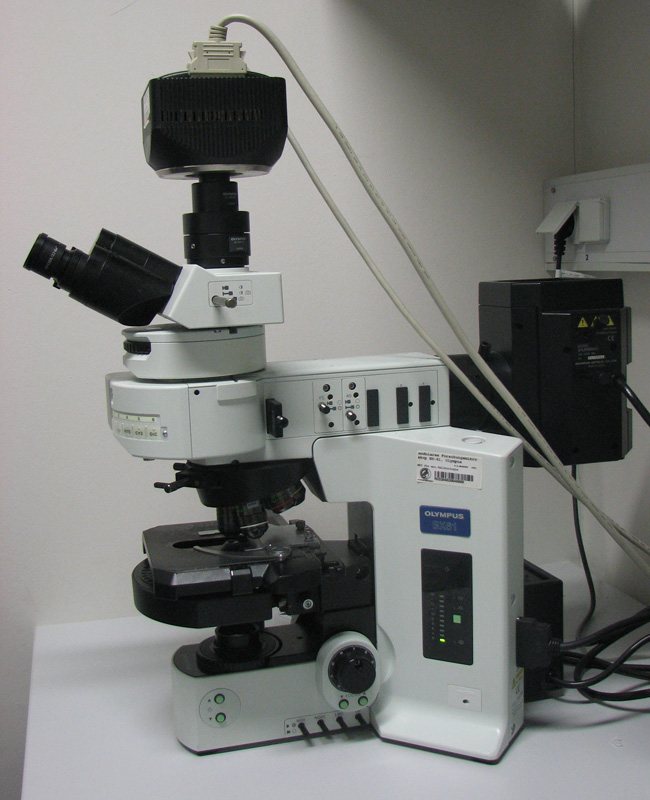
The team then introduced cancer cells into the center of each pillar forest and tracked their behavior for up to eight days using fluorescence imaging and light microscopy, keeping the cells alive with cell culture medium. In the disordered environments, the tumor cell collective was more likely to break apart than in the regular geometry. Sixt said the first cells detached exactly as happens in a cancer metastasis. The researchers also observed that the pillars increasingly roughened the surface of the spreading cell interface, producing finger-like protrusions from whose tips cells were more likely to detach.
To verify the experimental results and study the process over longer periods than the cells could survive, Hannezo created computer simulations. Zuzana Dunajová, a postdoc in Hannezo's group and a computational scientist specializing in biological physics, built the model. Each cell was represented as a bead moving through environments that mimicked the microfluidic geometries, with beads attracted to one another. Dunajová said she kept seeing the same behavior: beads detached from the collective more often in the disordered environment than in the ordered one.
She noted that the result is exciting from a physics perspective because it does not appear to be limited to a particular cell type or system. Instead, it suggests a more general principle in living, or active, systems. The roughness of cancer-cell invasion follows the same kind of universal behavior seen in other systems, such as the combustion of paper, the spreading of fires, or the drying of coffee drops.
Sixt hopes the insights will help researchers developing new cancer therapies. He plans to study whether cell detachment in a disordered microenvironment leads to epigenetic modifications, which are heritable changes that do not alter the DNA code, and later to genetic modifications. He said he wants to consider whether the detachment process can drive the evolution of a single cell into something malignant.
The work adds to a growing body of research at the intersection of physics and oncology, where the mechanical and geometric properties of tissue are increasingly recognized as active participants in cancer progression rather than passive bystanders. By showing that disorder alone can tip the balance toward detachment, the study points to a general physical principle that may one day inform treatments aimed at keeping tumor cells contained.
17