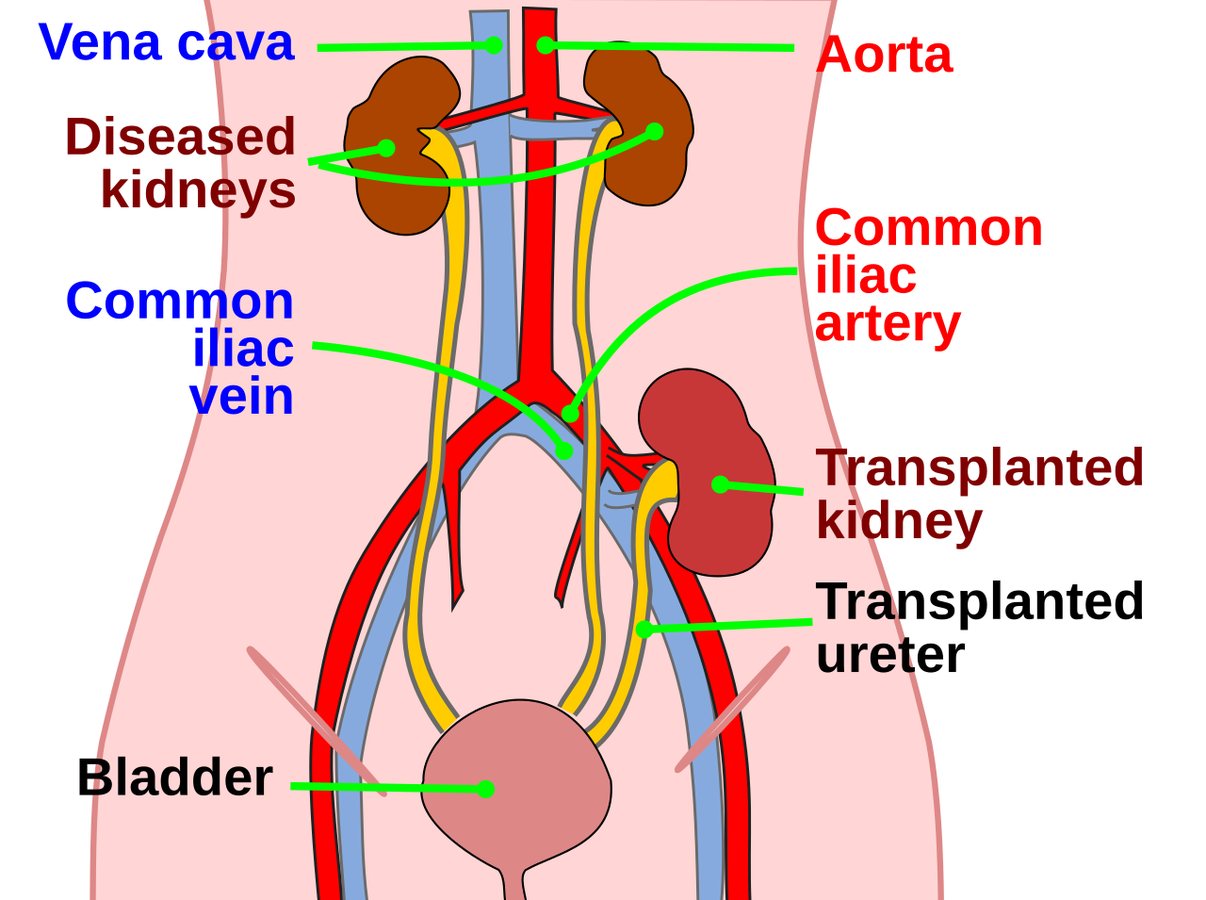
A genetically modified pig kidney kept a man with end-stage kidney failure off dialysis for nine months while he waited for a suitable human donor organ, in what researchers describe as a world first. The case suggests that animal organs could serve as a temporary bridge for patients facing lengthy transplant waiting lists, and possibly one day as a permanent replacement.
Tim Andrews, a 66-year-old man, received the kidney in January 2025 at Mass General Brigham hospital in Boston. The organ came from a Yucatan miniature pig and was genetically modified to improve compatibility with the human immune system, including the removal of certain sugars that trigger antibody responses and the addition of seven human genes. Andrews also received immunosuppression drugs to prevent rejection.
The transplant was initially successful. Andrews came off dialysis and resumed a normal life. However, after about six months, he was admitted to hospital with a methicillin-resistant Staphylococcus aureus (MRSA) infection, which most antibiotics cannot kill. His medical team reduced the immunosuppression drugs, but damage then developed in the kidney's blood vessels. The damage progressed to organ failure, and the kidney was removed a record 271 days after transplantation.
Leonardo Riella at Mass General Brigham, who led the team, described the outcome as remarkable. He noted that Andrews went back onto dialysis for about three months before finally receiving a suitable human kidney in January 2026. This marks the first time a pig kidney has been used as a temporary bridge to a human transplant.
Riella said such transplants may allow patients to avoid dialysis, which causes significant wear and tear on the body. He suggested that pig kidneys could eventually compete with human kidney transplants, though he estimated that could take around 15 years. The procedure remains experimental, and Riella could not provide an estimate of its cost. In the US, about 600,000 people are on dialysis, which can cost roughly $100,000 per year per individual.
The case follows a series of experimental xenotransplant procedures. In January 2022, a pig heart was transplanted into a person for the first time, but the recipient died several months later, possibly due to a pig virus. A pig liver transplant occurred last year. In 2024, a pig kidney was transplanted into a living person for the first time; that recipient, Richard Slayman, aged 62, died 52 days later from cardiac-related causes. Three people in the US received genetically modified pig kidneys in 2024.
Riella said his team has now performed five such transplants, and two additional case reports will be published this year, including one of a person who has already surpassed Andrews's record of nine months with a functioning pig kidney.
Michelle Willicombe at Imperial College London, who was not involved in the work, called the achievement incredible in terms of the science behind it. She said such procedures will likely be carried out more widely in the future, but added that their probable high cost remains a barrier. Willicombe also said scientists should continue researching artificial kidneys, as well as ways to regenerate damaged organs and optimise donated ones.
The case was published in The Lancet.
88