A rare point of agreement runs through the American debate over daylight saving time: many lawmakers, voters and sleep specialists would like the twice-yearly clock change to disappear. The disagreement begins with the next question — which time should become permanent?
The U.S. House chose permanent daylight saving time on July 14, passing the Sunshine Protection Act by 308 votes to 117. The bill reached the Senate the next day and was referred to the Committee on Commerce, Science, and Transportation. It has not become law.
The American Academy of Sleep Medicine takes the opposite position on the permanent clock. It supports ending seasonal time changes but recommends permanent standard time, saying that standard time aligns more closely with human circadian biology. The American Medical Association has also endorsed permanent standard time.
Why would one hour matter if the total amount of sunlight in a day does not change? The answer is timing.
Human circadian rhythms are synchronized by environmental cues, and light is the most important of them. Morning light tends to advance the body clock and helps anchor sleep and wake timing to the natural day. Bright light later in the evening can push the system in the opposite direction, encouraging later sleep.
Daylight saving time shifts social schedules relative to the sun. Under permanent DST, the clock would remain one hour ahead of standard time through winter. That produces later sunsets, which many people enjoy, but also later sunrises. In parts of the United States, winter mornings would remain dark well into the period when children are traveling to school and adults are commuting.
The evidence should be described carefully. Research is strongest on the acute disruption associated with the seasonal transition, especially the spring advance when people lose an hour of clock time overnight. The AASM has cited evidence connecting those transitions with sleep loss and changes in health and safety outcomes. Evidence about the chronic effects of living on permanent DST is less complete, but the academy’s recommendation rests on circadian alignment as well as the available literature.
That distinction matters because supporters of the House bill sometimes cite the health costs of changing clocks as an argument for permanent DST. Sleep specialists can agree that switching is disruptive while still rejecting the conclusion that summer clock time should become the year-round choice.
The House legislation would repeal the temporary daylight-saving period in federal law and advance standard time by one hour for most of the country. Current federal rules allow states to opt out of daylight saving time but do not allow them to choose permanent DST without congressional action.
The debate also has a historical control case. The United States experimented with year-round daylight saving time during the 1970s energy crisis, then changed course in 1974. Dark winter mornings became a major public concern. That history is not a clinical trial and should not be treated as one, but it illustrates the social consequences of moving light away from the morning.
From a sleep-medicine perspective, the choice is therefore not between inconvenience and convenience. It is between two permanent schedules with different relationships to solar time.
Congress has now taken a major step toward choosing permanent DST. The medical organisations most closely identified with sleep and circadian health are asking lawmakers to choose the other clock.
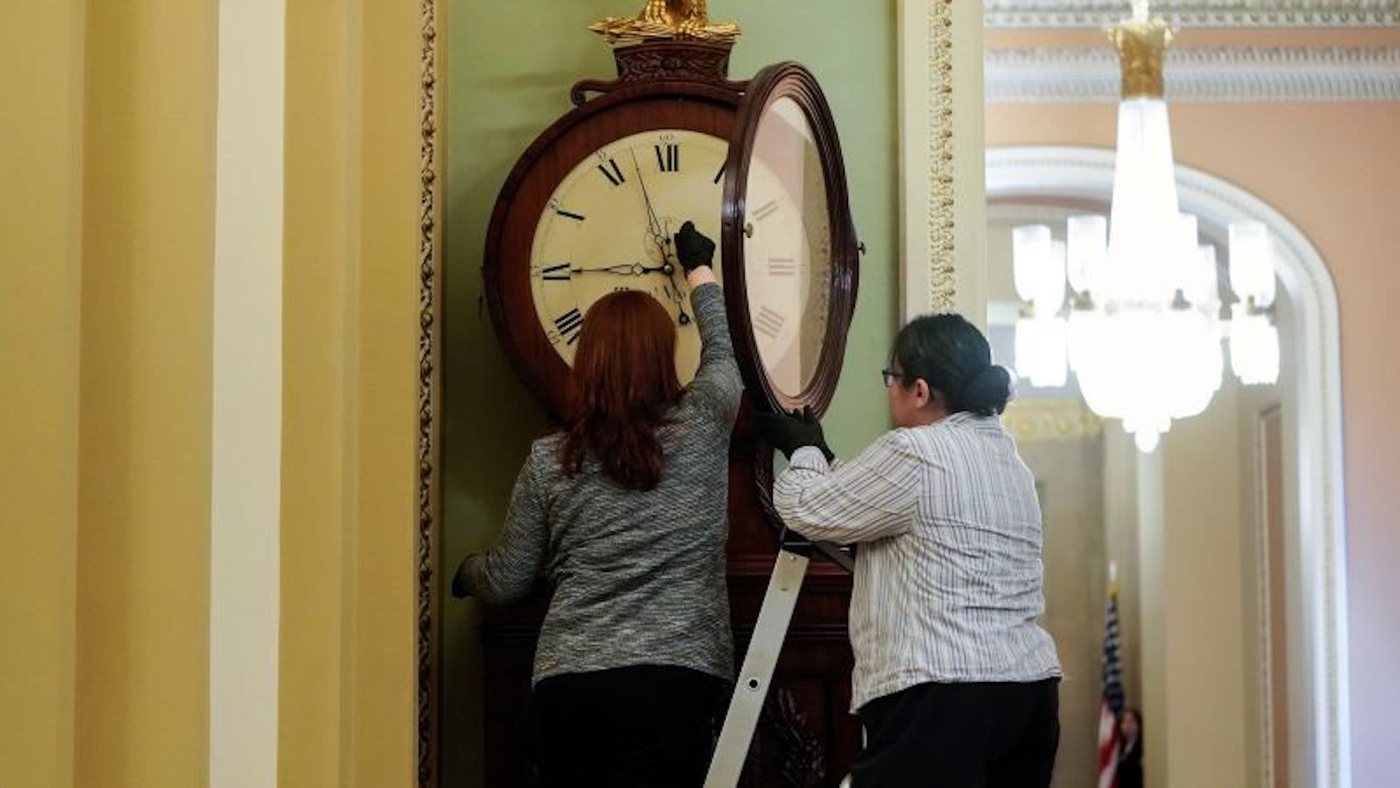
Image: Capitol staff adjust a clock for a seasonal time change. Image source: CNN.
71