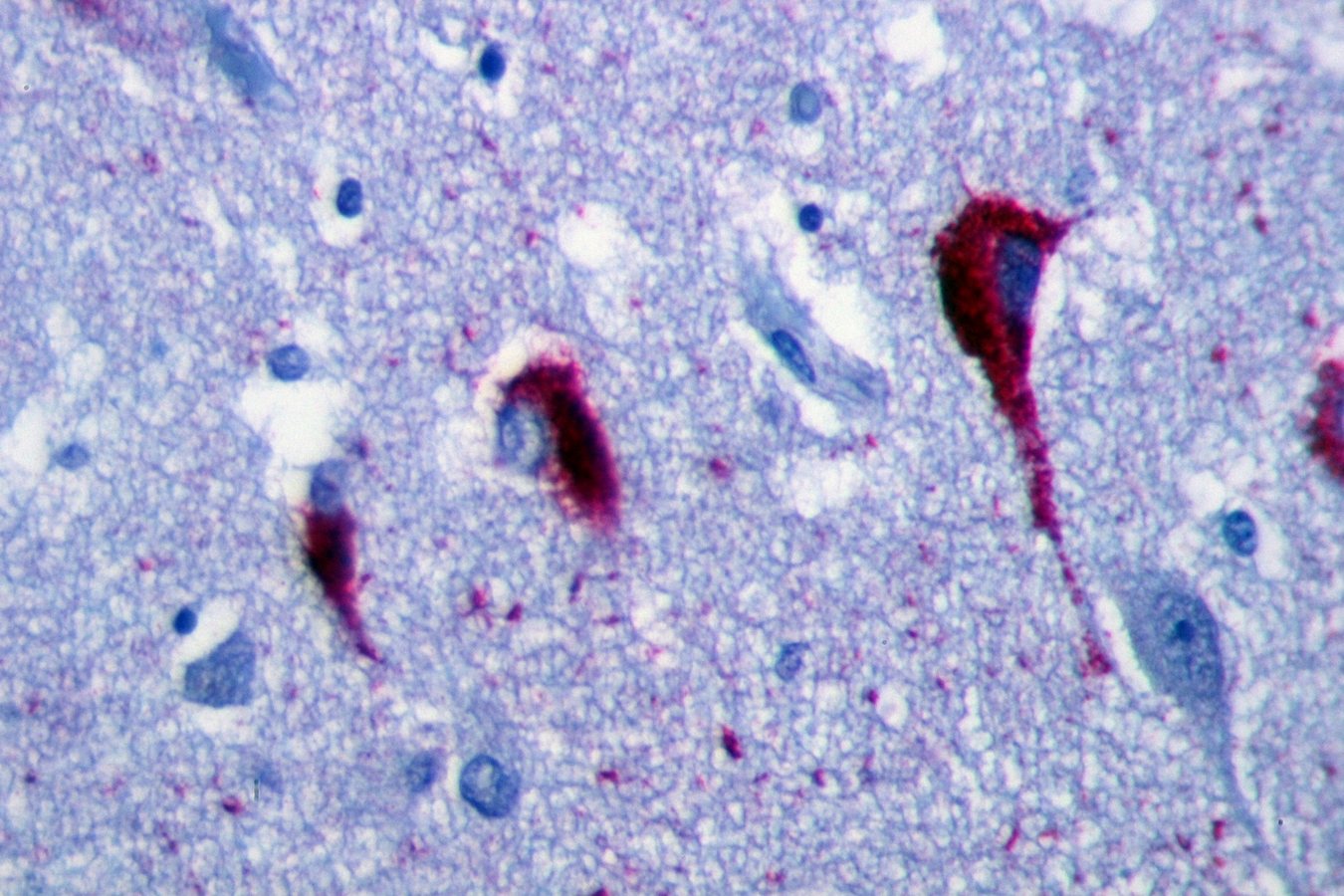
Tau is best known as one of the proteins that accumulates abnormally in Alzheimer's disease and other neurodegenerative conditions. New work suggests that its damage may be tied directly to an unusual mode of mitochondrial electron flow, creating a self-reinforcing cycle of oxidative stress inside neurons.
The study focuses on pathological, phosphorylated tau and mitochondrial complex I, a large protein machine that normally helps cells convert nutrients into usable energy. Researchers found evidence that disease-associated tau interacts with a complex I component called NDUFS3 and promotes reverse electron transport. Instead of electrons moving through the respiratory chain in the usual direction, the altered conditions can drive them backward through complex I and generate reactive oxygen species.
Those reactive molecules can damage cellular components when produced in excess. In the proposed mechanism, tau increases the conditions that favor reverse electron transport, which increases oxidative stress and in turn can aggravate tau pathology. That creates a feedback loop: abnormal tau impairs mitochondrial behavior, and mitochondrial stress helps sustain the environment in which tau becomes more harmful.
The team tested the idea across several experimental systems, including flies, mice and human induced pluripotent stem-cell-derived models. Interfering with reverse electron transport reduced damage in those models, making the pathway more than a descriptive observation. It becomes a potential therapeutic target: rather than trying only to remove tau, a treatment might also disrupt the mitochondrial process through which tau injures neurons.
That does not mean a new Alzheimer's drug is close. Mitochondria are central to normal cell function, and complex I is essential for energy metabolism. Any intervention has to suppress a pathological mode of electron flow without compromising the ordinary respiratory activity neurons need to survive. Neurodegenerative diseases also develop over many years and involve multiple interacting processes, including protein aggregation, inflammation, synaptic dysfunction and vascular changes.
The work nevertheless helps connect two longstanding features of neurodegeneration. Abnormal tau has been studied for decades, and mitochondrial dysfunction is also repeatedly observed in diseased brains. A molecular bridge between them could explain why each problem worsens the other and why therapies aimed at only one component sometimes have limited effects.
Further research will need to establish when the reverse-electron-transport loop appears during disease, whether it is present in human brain tissue across different tauopathies and whether it can be selectively interrupted in living patients. If those steps hold, the mitochondrion may prove to be not merely collateral damage from tau accumulation but an active participant in the progression of neuronal injury.
84