Arctic sea ice may drift and spread in ways that have long puzzled scientists because individual ice floes are constantly colliding and exchanging energy, according to new research. The finding suggests that a straightforward mechanical process at the scale of single ice chunks can account for several unexplained patterns in the movement of the frozen ocean surface.
The research focused on how energy is transferred when separate pieces of floating ice bump into one another. Rather than treating the ice as a continuous, uniform sheet, the scientists examined the behavior of individual floes. They found that these collisions can drive the overall motion and dispersion of the ice pack, offering a physical explanation for why Arctic sea ice sometimes moves faster or spreads more widely than conventional models predict.
Sea ice in the Arctic is not a single solid plate. It is a mosaic of floes of varying sizes, separated by cracks and leads, that jostle and grind against each other as winds and ocean currents push them around. This fragmented structure means that the way the ice responds to forces is far more complex than the behavior of a solid sheet. The new work indicates that the constant collisions between floes act as a mechanism for redistributing energy through the pack, which in turn influences how quickly the ice travels and how far it spreads.
Several long-standing mysteries about Arctic sea ice have centered on discrepancies between observed movement and what models based on continuous ice mechanics would suggest. The study points to floe-scale collisions as a missing ingredient that could close that gap. By accounting for the energy exchanged when floes meet, researchers may be able to better reproduce the actual drift and expansion of the ice cover.
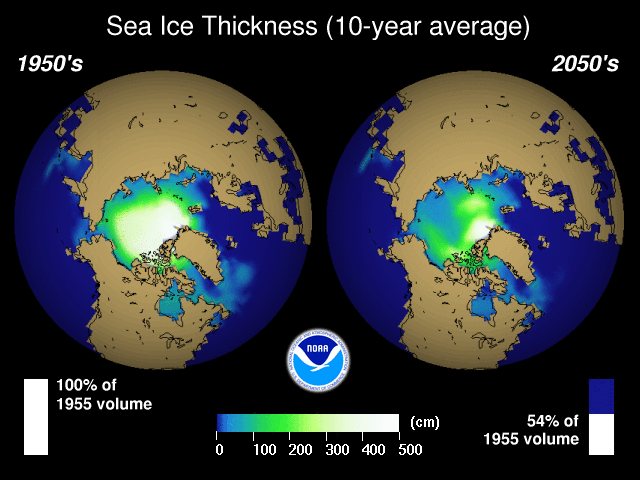
The implications extend beyond explaining past observations. Arctic sea ice plays a central role in the region's climate system, reflecting sunlight, insulating the ocean, and shaping the habitat of wildlife that depends on the frozen surface. Improved understanding of how the ice moves and spreads could sharpen projections of how the pack will respond as the climate warms and the ice cover continues to change.
The research was described as showing that a simple process — individual floes colliding and transferring energy — can explain multiple puzzling features of sea ice behavior at once. That simplicity is notable because it suggests the complex large-scale patterns may emerge from straightforward interactions at the smallest scales of the ice pack.
Scientists who study the Arctic have long sought to reconcile the patchwork nature of sea ice with the large-scale movement observed from satellites and field instruments. The new findings add to a growing body of work that treats the ice pack as a granular, interacting system rather than a uniform slab. Such an approach could improve forecasts of ice conditions that matter for shipping, indigenous communities, and climate research.
The study does not claim to resolve every question about Arctic sea ice dynamics, but it identifies a concrete physical mechanism that had been largely overlooked. By focusing on what happens when floes collide, the researchers provide a new lens for interpreting the restless, shifting surface of the Arctic Ocean — a surface that continues to surprise scientists even as it changes rapidly.