A climate scientist is warning that an unprecedented El Niño event, forecast to reach 4C in the equatorial Pacific later this year, will trigger a string of weather catastrophes around the world through 2027 and that governments are far from ready for the upheaval.
Bill McGuire, professor emeritus of geophysical and climate hazards at University College London, said the ocean warming now under way could mark one of the biggest global weather disruptions in a millennium. El Niño events that reach or exceed 2C are conventionally defined as «super», but this one is so much larger that McGuire argues the term «hyper» would be more appropriate.
El Niño involves a heating of the central and eastern equatorial Pacific Ocean. It occurs every few years as part of a natural cycle called the El Niño southern oscillation, which alternates between warm El Niño and cool La Niña phases. The current event is being strengthened by the broader climate crisis, according to McGuire, who published his assessment in a commentary.
The consequences are expected to unfold across the remainder of this year and into 2027. McGuire said the event will spawn a series of weather catastrophes globally and that there is no reason to think any country, including the United Kingdom, will be immune. He called for leaders who make things better rather than worse, framing the coming period as a test of political preparedness.
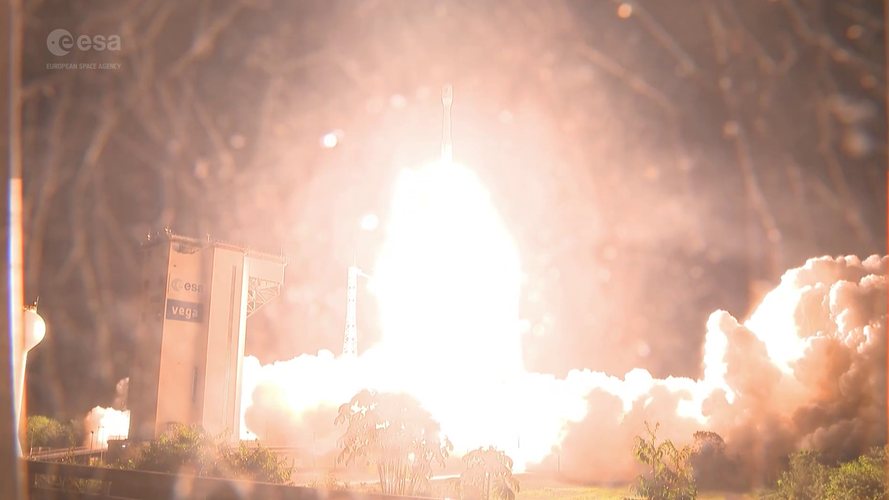
The warning comes as Europe expands its capacity to monitor exactly these kinds of planetary changes from orbit. On 15 September, the European Space Agency launched its FLEX Earth Explorer satellite together with the Copernicus Sentinel-3C satellite aboard a Vega-C rocket from Europe's Spaceport in French Guiana. The flight was the first dual launch for Vega-C, using a secondary payload adapter called Vespa.
FLEX is designed to detect a phenomenon invisible to the human eye: the faint fluorescence emitted by plants as they photosynthesise. Its Fluorescence Imaging Spectrometer will measure that extremely weak signal from orbit. Because the fluorescence varies with plant health and environmental conditions, the data will give scientists new insight into photosynthetic activity and vegetation stress on a global scale.
Sentinel-3C, the third satellite in the Sentinel-3 series, carries a suite of instruments that will continue systematically measuring Earth's oceans, land, ice and atmosphere. The mission is intended to monitor and help understand large-scale global dynamics, and it provides essential information in near-real time for ocean and weather forecasting.
Together, the two satellites add to the observational tools available as researchers track the ocean-atmosphere interactions that drive El Niño. The equatorial Pacific warming at the heart of the current event is precisely the kind of large-scale dynamic that ocean and weather monitoring systems are built to follow.
McGuire's assessment places the coming months in a broader pattern of climate-driven extremes. He described the situation in the equatorial Pacific as jaw-dropping and said the world is going to hear much more about the growing «super» El Niño. His latest book is The Fate of the World: A History and Future of the Climate Crisis.
The core concern is not only the magnitude of the ocean warming but the timing. With the event expected to peak later this year and its effects extending into 2027, the window for preparation is short. McGuire's argument is that the response will depend on political leadership, and that current levels of readiness fall well short of what the forecast implies.