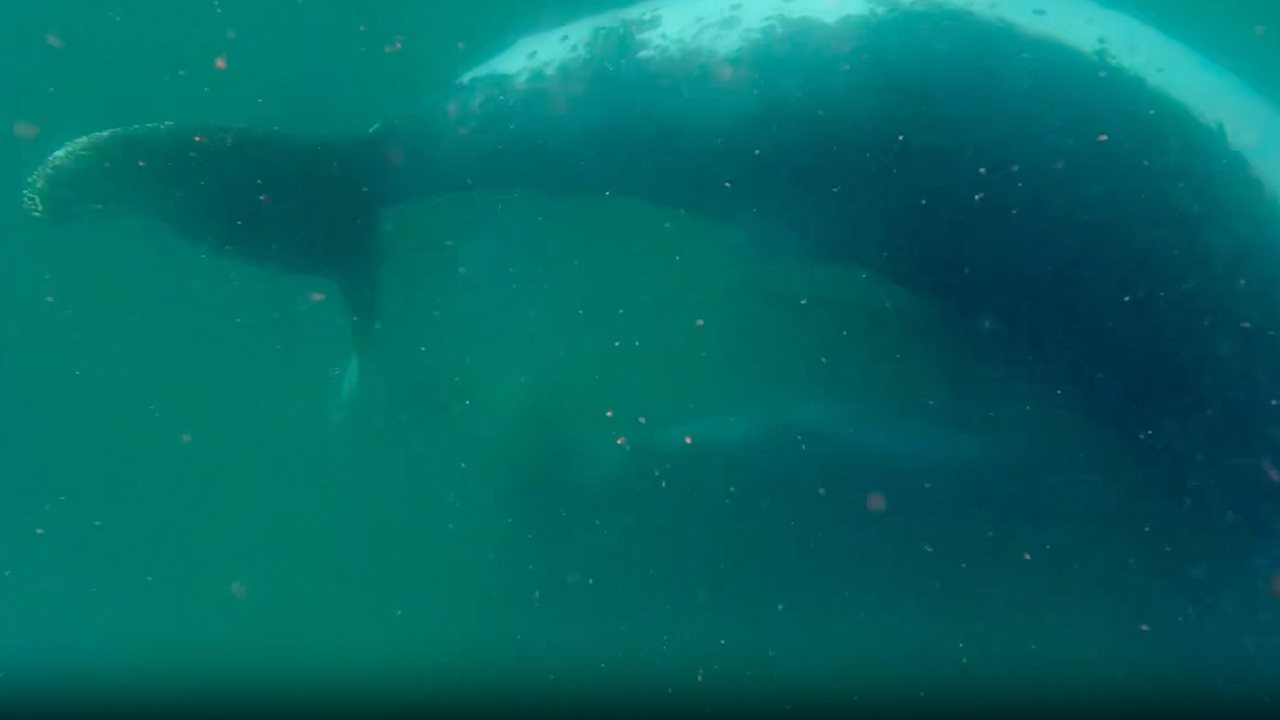
Underwater cameraman Ken O'Sullivan has journeyed into the dark, cold depths of the North Atlantic Ocean, documenting a surprising abundance of marine life in one of the world's least explored ocean regions. His footage, presented in a new 4K ultra-high-definition production from BBC Earth, captures species ranging from delicate jellyfish drifting through the water column to powerful orcas patrolling the open sea.
The North Atlantic is among the most productive marine ecosystems on the planet, yet much of its deeper water remains poorly studied. O'Sullivan's work adds to a growing body of visual evidence showing that the region supports a wider diversity of life than surface observations alone would suggest. The documentary highlights how advances in camera technology are allowing filmmakers and researchers to observe deep-water species in their natural environment without disturbing them.
Jellyfish, which appear early in the footage, are among the most ancient and adaptable animals in the ocean. They thrive across a wide range of temperatures and depths, and their populations can expand rapidly when ecosystems shift. Orcas, by contrast, sit at the top of the marine food web. The North Atlantic hosts several distinct populations of killer whales, each with its own feeding habits and social structure. Documenting them in open water is difficult because they travel long distances and spend much of their time below the surface.
The production is part of BBC Earth's long-running natural history catalog, which spans five decades of wildlife filmmaking. The organization has increasingly invested in high-resolution formats that reveal animal behavior in greater detail, from the translucent structures of gelatinous plankton to the coordinated movements of marine mammals. Such footage serves both public education and scientific outreach, giving audiences a direct view of habitats that are otherwise inaccessible.
O'Sullivan's dive also underscores the logistical challenge of filming in the North Atlantic. The waters are cold, frequently rough, and often low in visibility, conditions that demand specialized equipment and experience. Extended time underwater requires careful planning, and encounters with large animals like orcas must be handled with caution. The resulting images depend as much on patience and seamanship as on camera gear.
For viewers, the documentary offers a reminder that the ocean's most dramatic scenes are not always found in tropical reefs or shallow coastal waters. The North Atlantic, long treated as a harsh and forbidding stretch of sea, supports a complex community of organisms that remains only partly understood. As underwater imaging improves, scientists and filmmakers are likely to keep finding new details in these dim, cold waters — and new reasons to pay attention to what lies below.