Two separate research teams have pushed tests of Albert Einstein's weak equivalence principle into the quantum realm, using cold atom interferometry to confirm that the cornerstone of general relativity holds under conditions never before probed. One experiment, conducted aboard China's space station, achieved the most precise quantum test of the principle to date, while the other measured an object's quantum phase in freefall in a laboratory setting.
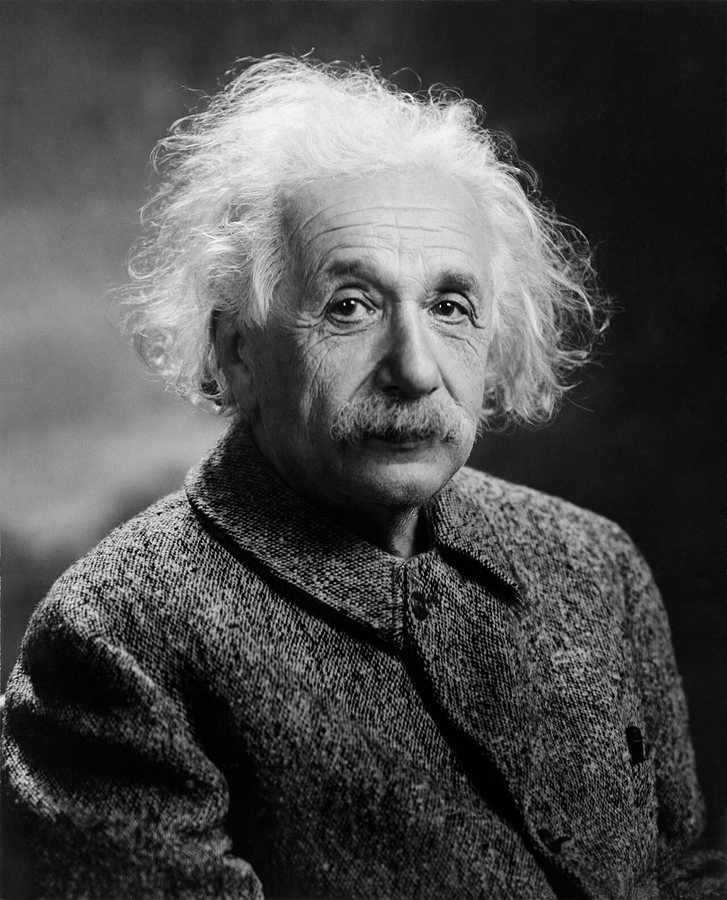
The weak equivalence principle, also known as the universality of freefall, states that in the absence of other forces, all objects fall with the same acceleration regardless of their mass or composition. It equates gravitational mass with inertial mass, a pillar of Einstein's general theory of relativity. Any detected violation could point to new physics beyond the current framework, which remains fundamentally incompatible with quantum mechanics.
In the space-based experiment, physicists led by Mingsheng Zhan of the Chinese Academy of Sciences, Hefei National Laboratory, and the Wuhan Institute of Quantum Technology installed a cold atom interferometer on the High Microgravity Level Research Rack of the China Space Station. The instrument contains clouds of billions of rubidium-85 and rubidium-87 atoms that interfere when probed with counterpropagating Raman lasers reflected by a piezo tilt mirror. By exciting and detecting the fluorescence of the isotopes sequentially at slightly different times, the researchers obtained two sets of symmetric interference images.
After suppressing residual acceleration of the space station and vibration effects, the team calculated the difference in acceleration between the two isotopes in the vertical, freefalling direction. Over 280 days of operation, they acquired more than 9,700 pairs of interference fringes, yielding a test result of approximately –2.7 x 10⁻⁷ with an uncertainty of 2.8 x 10⁻⁸. The result, detailed in Science Advances, represents the most precise quantum test of the weak equivalence principle to date.
«We believe that our technique will have a significant impact,» Zhan said. «First, it demonstrates that an integrated interferometer meeting the requirements of in-orbit operation is possible, giving the community confidence to continue with even more technically demanding space-based interferometry experiments that aim for ever increasing precision.» He added that the technology developed could also advance atom-interferometry-based instruments such as inertial navigation systems.
Conventional tests of the weak equivalence principle using macroscopic bodies have already reached extraordinary precision, at the 10-13 level on Earth and 10-15 in space. The new studies investigate the principle in the quantum realm, where cold atom interferometry offers a powerful tool. On Earth, gravity limits interference time to just a few seconds, but microgravity allows it to extend to minutes. Because resolution scales inversely with the square of interference time, even longer durations are needed to reach the precision of 10-17 or better, necessitating a permanent microgravity environment only available in space.
In a parallel effort, physicists at Ben-Gurion University of the Negev, the University of Ulm, and the University of Oxford used a novel cold atom interferometry technique called the Quantum Galileo Interferometer, named in honor of Galileo Galilei's discoveries regarding the laws of freefall. The experiment, carried out at Ben-Gurion University, also used clouds of rubidium-87 atoms cooled to just above absolute zero, placed 113 micrometers below the surface of an atom chip containing current-carrying wires.
By applying microwave pulses, the researchers measured the atoms' quantum phase in freefall and confirmed that the effect matches the prediction of Einstein's equivalence principle, which states that for an observer in freefall, gravity should locally disappear. This work, also published in Science Advances, provides independent confirmation that the principle holds in the quantum regime.
Together, the two experiments reinforce the validity of general relativity while highlighting the ongoing quest to reconcile it with quantum mechanics. Any future violation of the weak equivalence principle could open a window to new physics, making these precision tests essential for understanding the fundamental laws of nature.