Fifty years after NASA's Viking 1 spacecraft made history as the first successful American landing on Mars, a growing number of scientists are asking whether the agency overlooked evidence of microbial life in the data it collected. The anniversary, marked on 20 July 2026, has prompted a reexamination of the mission's findings and a broader discussion about how scientific breakthroughs often depend not on discovering something new, but on recognizing what was previously missed.
Viking 1 touched down on the Martian surface on 20 July 1976, a landmark achievement in space exploration. The lander, along with its twin Viking 2, conducted a series of experiments designed to detect signs of life. Among them was the Labeled Release experiment, which added nutrients to soil samples and measured the release of gases that could indicate metabolic activity. The results were initially puzzling: the samples produced a positive signal, but control tests suggested the reaction might be chemical rather than biological. NASA ultimately concluded that the evidence was inconclusive and did not confirm the presence of life.
However, a leading scientist now argues that the agency may have been too hasty in dismissing the findings. According to the researcher, the Viking data contained patterns consistent with microbial life, and subsequent studies of extreme environments on Earth have shown that organisms can survive in conditions similar to those on Mars. The scientist contends that the original interpretation was limited by the technology and assumptions of the 1970s, and that modern analytical tools could reveal a different story.
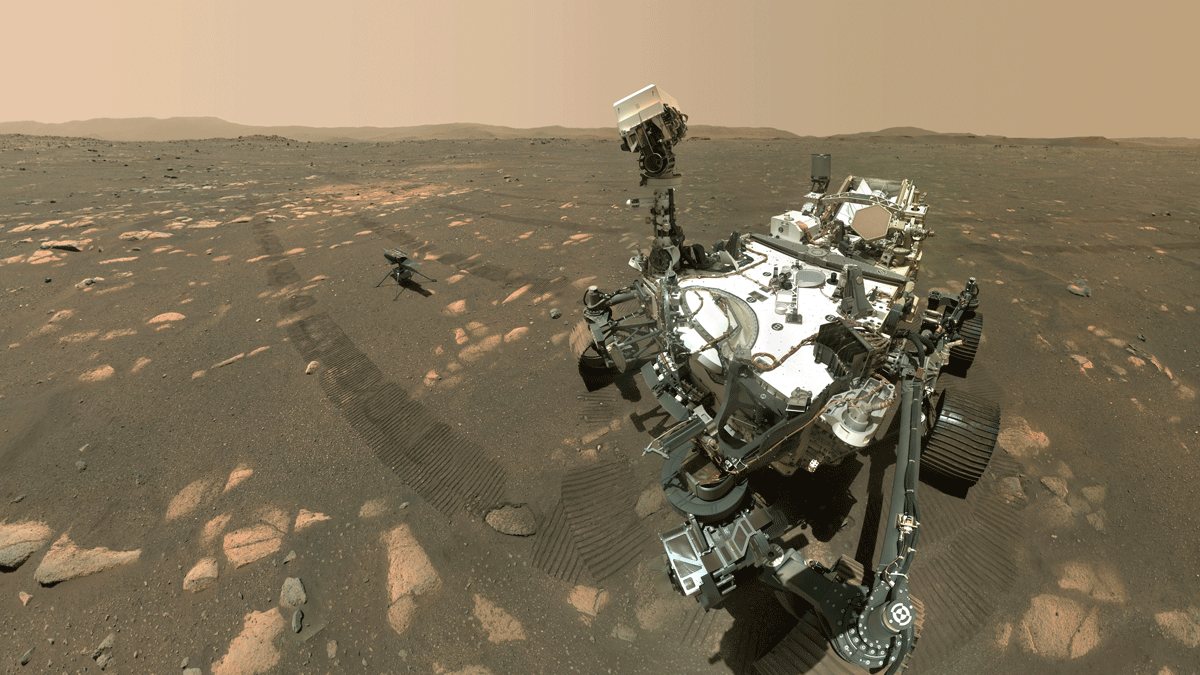
The debate over Viking's results has persisted for decades, with some researchers maintaining that the mission found strong evidence of biological activity, while others argue that the signals were caused by non-living chemical reactions. The anniversary has reignited interest in the question, particularly as NASA and other space agencies prepare new missions to search for life on Mars. The Perseverance rover, which landed in 2021, is collecting samples that could be returned to Earth in the 2030s, offering a fresh opportunity to settle the matter.
The broader implications of the Viking controversy extend beyond Mars. The scientist involved in the current reassessment emphasizes that scientific progress often requires revisiting old data with new perspectives. Breakthroughs, the researcher notes, increasingly hinge not on finding something new, but on recognizing what was missed in earlier observations. This principle applies across fields, from astronomy to medicine, where archived datasets can yield fresh insights when reanalyzed with advanced techniques.
The Viking missions were a monumental achievement in their own right, providing the first close-up images of the Martian surface and a wealth of data about its atmosphere and geology. But the question of whether they detected life remains one of the most tantalizing unresolved mysteries in space science. As the 50th anniversary is marked, the call to revisit the evidence has grown louder, with some scientists urging NASA to conduct a new analysis of the original data using modern computational methods.
In the years since Viking, our understanding of Mars has deepened considerably. Missions have found evidence of ancient water, organic molecules, and seasonal methane fluctuations, all of which could be linked to biological processes. The discovery of extremophiles on Earth—organisms that thrive in environments once thought uninhabitable—has also expanded the definition of where life can exist. These developments have made the case for reexamining Viking's results more compelling than ever.
The anniversary has also sparked public interest, with media coverage and online discussions highlighting the enduring fascination with the possibility of life beyond Earth. For many, the idea that NASA may have missed the first evidence of extraterrestrial life is both a cautionary tale and a source of hope. It serves as a reminder that the search for life in the universe is a long and iterative process, requiring patience, humility, and a willingness to challenge established conclusions.
As the scientific community reflects on the Viking legacy, the focus is shifting toward future missions that could provide definitive answers. NASA's Mars Sample Return campaign, a joint effort with the European Space Agency, aims to bring Martian soil and rock samples to Earth for detailed analysis. If successful, it could resolve the questions raised by Viking once and for all. Until then, the debate over whether life was detected 50 years ago will continue to fuel both scientific inquiry and public imagination.
106