Human brain organoids maintained in culture for five years exhibit epigenetic aging dynamics that closely mirror those seen in living brains, according to a study published in Nature Medicine. The finding suggests that these laboratory-grown models can serve as a powerful tool for investigating postnatal brain development and the molecular processes that shape the maturing brain.
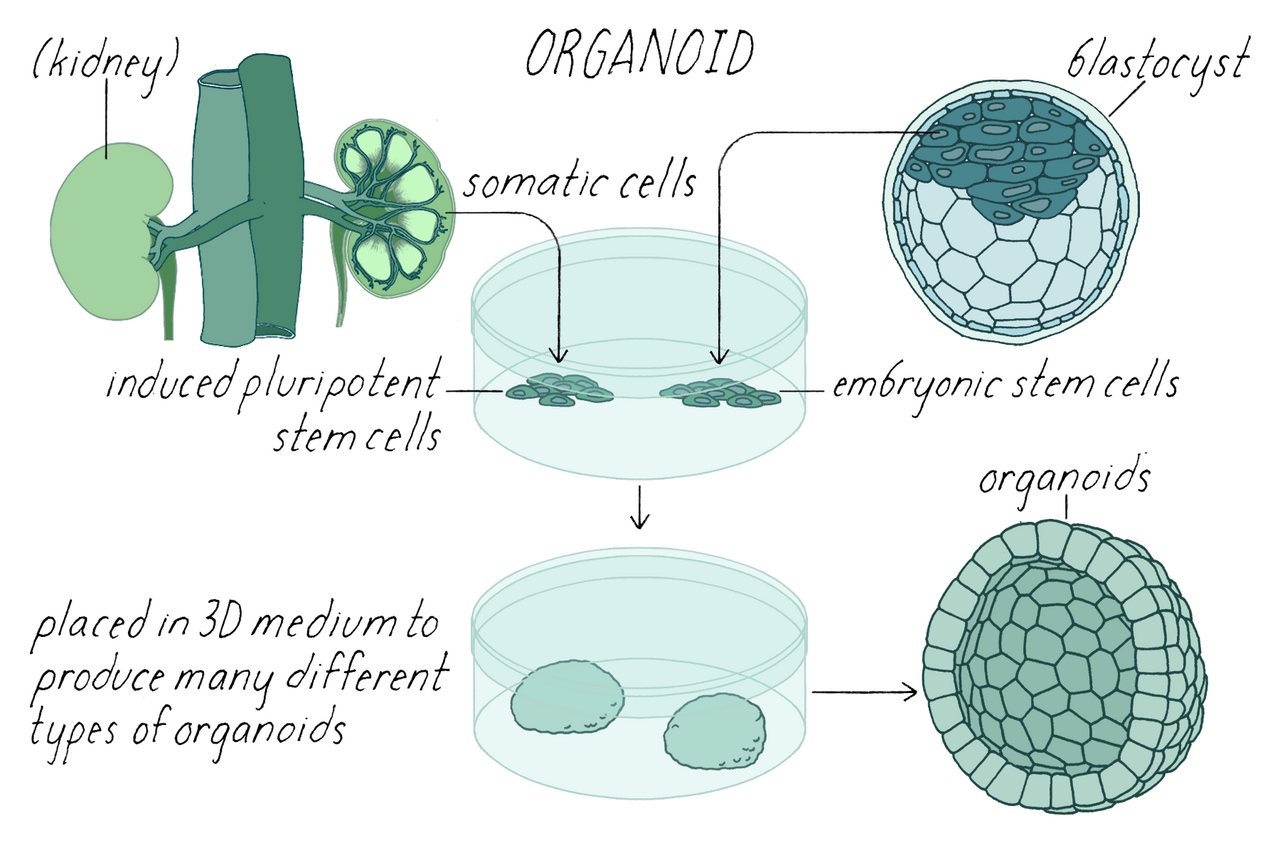
Brain organoids are three-dimensional cell cultures derived from human stem cells that self-organize into structures resembling early brain tissue. While most organoid studies focus on the first months of growth, the researchers behind this work maintained the cultures for half a decade, allowing them to observe changes that unfold over a much longer timescale. The team found that the organoids' epigenetic markers — chemical modifications to DNA that influence gene activity without altering the underlying sequence — progressed in a way that paralleled age-related changes documented in human brain tissue in vivo.
Epigenetic aging is a well-established concept in developmental biology. Patterns of DNA methylation, one of the most studied epigenetic modifications, shift predictably as organisms age, and these shifts have been used to construct so-called epigenetic clocks. The new study demonstrates that long-term cultured organoids follow a similar trajectory, at least in the aspects measured. This alignment between in vitro and in vivo aging dynamics is significant because it suggests that organoids can model not only early developmental events but also later stages of brain maturation that have been difficult to reproduce in the laboratory.
The implications for research are broad. Postnatal brain development involves complex processes such as synaptic pruning, myelination, and the refinement of neural circuits, many of which are poorly understood because they occur over years in humans. Traditional animal models offer limited insight into human-specific aspects of this maturation, and human tissue samples are scarce and typically available only post-mortem. Long-lived organoids could fill that gap, providing a renewable and experimentally accessible system for studying how the human brain ages at the molecular level.
The study also raises practical considerations for laboratories working with organoid cultures. Maintaining viable cultures for five years requires careful attention to nutrient supply, oxygenation, and structural integrity, and the researchers note that their long-term cultures developed features consistent with advanced maturation. Whether such extended culture periods become standard practice will depend on whether the added time yields insights that shorter experiments cannot provide.
While the findings are promising, the authors caution that organoids are not exact replicas of human brains. They lack vascularization, immune cells, and the complex connectivity of intact tissue, and they do not receive the sensory input that shapes real brain development. Nevertheless, the demonstration that epigenetic aging proceeds in parallel with in vivo patterns strengthens the case for using organoids as models of human neurodevelopment and age-related neurological conditions.
The research adds to a growing body of evidence that organoid technology is maturing beyond its initial applications. As culture methods improve and long-term maintenance becomes more feasible, these models may increasingly be used to study disorders that emerge during childhood and adolescence, when the brain is still undergoing significant remodeling. The five-year mark achieved in this study offers a new benchmark for what is possible in vitro.
101