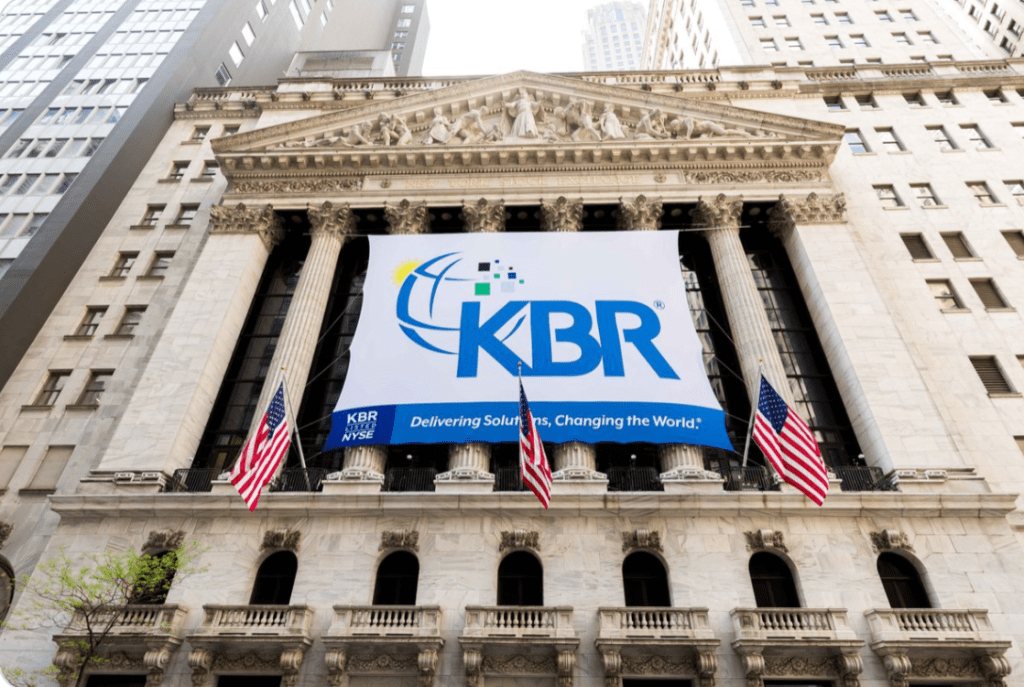
KBR, a major government services and technology contractor, has reorganized its defense technology business to pursue work on the Golden Dome missile shield program, a U.S. initiative to develop a layered defense against advanced missile threats. The company announced the restructuring on March 26, positioning itself to compete for contracts under the ambitious project, which aims to protect the homeland from ballistic, hypersonic, and cruise missiles.
The Golden Dome program, named after the protective dome over the U.S. Capitol, is a priority for the Department of Defense and is expected to involve significant investments in space-based sensors, ground-based interceptors, and advanced command-and-control systems. KBR's reorganization consolidates its capabilities in digital engineering, space tracking, and missile defense into a single business unit, allowing the company to offer integrated solutions for the program's complex requirements.
KBR's defense technology business already supports several key missile defense efforts, including the Ground-based Midcourse Defense system and the Terminal High Altitude Area Defense system. The company has also worked on space-based sensor programs, such as the Space-Based Infrared System and the Next-Generation Overhead Persistent Infrared system, which are critical for detecting and tracking missile launches. By organizing its resources around these capabilities, KBR aims to become a leading partner for the Golden Dome program.
The restructuring comes as the U.S. government accelerates efforts to counter emerging missile threats from nations like China, Russia, and North Korea. The Golden Dome program is part of a broader strategy to modernize the nation's missile defense architecture, which includes the development of new interceptors, sensors, and battle management systems. KBR's experience in digital engineering, which uses computer models and simulations to design and test systems, could be particularly valuable for the program, as it allows for rapid prototyping and cost-effective development.
KBR's move also reflects a broader trend among defense contractors to reorganize their businesses around high-priority programs. Companies like Lockheed Martin, Raytheon, and Northrop Grumman have similarly restructured their divisions to focus on missile defense, space, and hypersonic technologies. The competition for Golden Dome contracts is expected to be intense, with multiple companies vying for a share of the program's estimated multi-billion-dollar budget.
In addition to its missile defense work, KBR has a strong presence in space operations, including satellite tracking and space situational awareness. The company operates the Space Surveillance Telescope in Australia and provides engineering support for the U.S. Space Force's satellite constellation. These capabilities could be leveraged for the Golden Dome program, which will rely heavily on space-based sensors to detect and track missile launches.
The Golden Dome program is still in its early stages, with the Department of Defense expected to issue requests for proposals later this year. KBR's reorganization positions the company to respond quickly to these solicitations, leveraging its existing infrastructure and expertise. The company has also invested in new technologies, such as artificial intelligence and machine learning, to enhance its digital engineering capabilities and improve the performance of missile defense systems.
KBR's announcement has been met with cautious optimism by industry analysts, who note that the company's diversified portfolio and strong track record in missile defense make it a credible contender for Golden Dome work. However, they also caution that the program faces significant technical and budgetary challenges, and that competition for contracts will be fierce. KBR will need to demonstrate its ability to deliver innovative solutions at competitive prices to win a share of the program.
The restructuring is part of KBR's broader strategy to expand its defense technology business, which has grown significantly in recent years through acquisitions and organic investments. The company has acquired several small defense and technology firms, including Centauri and Honeywell's defense and space business, to bolster its capabilities. These acquisitions have given KBR expertise in areas like cyber security, electronic warfare, and space systems, which could be relevant for the Golden Dome program.
KBR's reorganization also aligns with the U.S. government's push to streamline the acquisition process for major defense programs. The Department of Defense has emphasized the need for faster and more agile development of missile defense systems, and KBR's digital engineering approach could help meet this goal. By using computer models and simulations, the company can reduce the time and cost of developing new systems, while also improving their performance and reliability.
As the Golden Dome program moves forward, KBR will face competition from established defense primes as well as smaller, specialized firms. The company's ability to integrate its diverse capabilities into a cohesive offering will be key to its success. With its recent reorganization, KBR has signaled its commitment to becoming a major player in the missile defense market, and the Golden Dome program represents a significant opportunity for the company to demonstrate its value to the U.S. government.
112