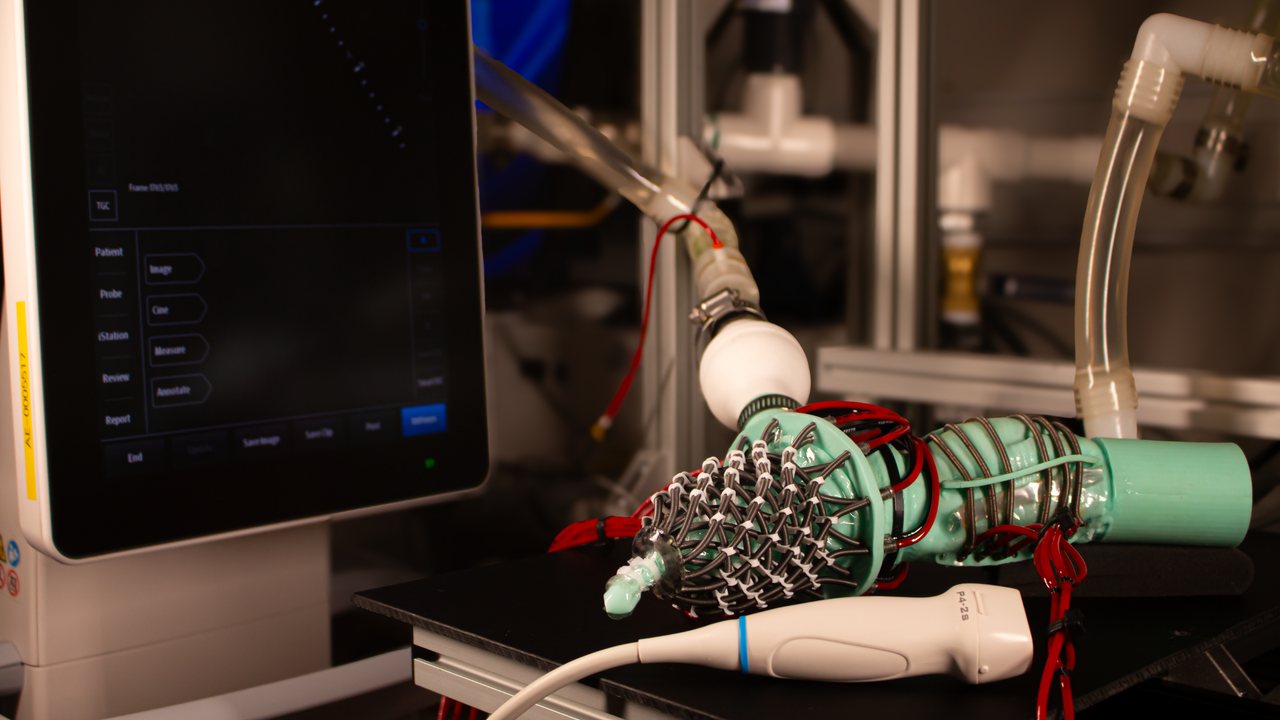
Researchers have created a robotic replica of the human heart that can simulate a common yet mysterious heart condition, providing a new platform for studying the disorder and testing potential therapies. The device, developed by a team of engineers and cardiologists, replicates the mechanical behavior of a heart affected by heart failure with preserved ejection fraction (HFpEF), a condition that affects millions worldwide but remains difficult to diagnose and treat.
HFpEF occurs when the heart's left ventricle becomes stiff and cannot relax properly between beats, leading to inadequate filling with blood even though the heart's pumping ability appears normal. This condition accounts for about half of all heart failure cases, yet its underlying mechanisms are not fully understood, and effective treatments are limited. The new robotic heart, described in a study published in the journalScience Robotics, aims to change that by offering a realistic, adjustable model of the disease.
The robotic heart is constructed from soft materials and powered by artificial muscles that mimic the contraction and relaxation of real heart tissue. By adjusting the stiffness of these materials, researchers can replicate the reduced compliance seen in HFpEF patients. The device also incorporates sensors that measure pressure and volume changes, allowing scientists to observe how the heart responds to different conditions in real time.
«This is a significant step forward in understanding HFpEF, because it gives us a physical model that we can manipulate and study in ways that are not possible with animal models or computer simulations,» said Dr. Ellen Roche, a biomedical engineer at the Massachusetts Institute of Technology and lead author of the study. «We can change one parameter at a time and see exactly how it affects heart function.»
The robotic heart is designed to be used as a testbed for new drugs, medical devices, and surgical techniques. For example, researchers can implant a pacemaker or a valve into the robotic heart and observe how it performs under HFpEF-like conditions. This could accelerate the development of treatments tailored to the specific mechanical abnormalities of the disease.
HFpEF is particularly challenging because its symptoms — shortness of breath, fatigue, and fluid retention — are similar to those of other heart conditions, and standard diagnostic tests often fail to detect it. The condition is more common in older adults, women, and people with high blood pressure, diabetes, or obesity. Despite its prevalence, no therapies have been proven to reduce mortality in HFpEF patients, highlighting the urgent need for better research tools.
The robotic heart builds on earlier work by the same team, which previously developed a soft robotic sleeve that wraps around the heart to assist its pumping. That device is still in early testing but has shown promise in animal studies. The new robotic heart represents a different approach, focusing on modeling disease rather than treating it.
«By creating a physical replica of a diseased heart, we can test hypotheses about what goes wrong at the mechanical level,» said Dr. Roche. «This could lead to new insights that translate into better diagnostics and therapies.»
The device is not intended to replace animal models or clinical studies but to complement them. Animal hearts differ from human hearts in important ways, and computer models rely on assumptions that may not hold true in reality. A physical model that accurately reproduces human heart mechanics offers a middle ground, allowing researchers to conduct experiments that are both realistic and controllable.
Looking ahead, the team plans to refine the robotic heart to incorporate more features of the human cardiovascular system, such as the interaction between the heart and blood vessels. They also hope to develop versions that mimic other heart conditions, including heart failure with reduced ejection fraction and valvular diseases. The ultimate goal is to create a suite of robotic models that can accelerate cardiovascular research and improve outcomes for patients.
«This is just the beginning,» said Dr. Roche. «We believe that robotic organs have the potential to transform how we study and treat diseases of the heart and other organs.»
89