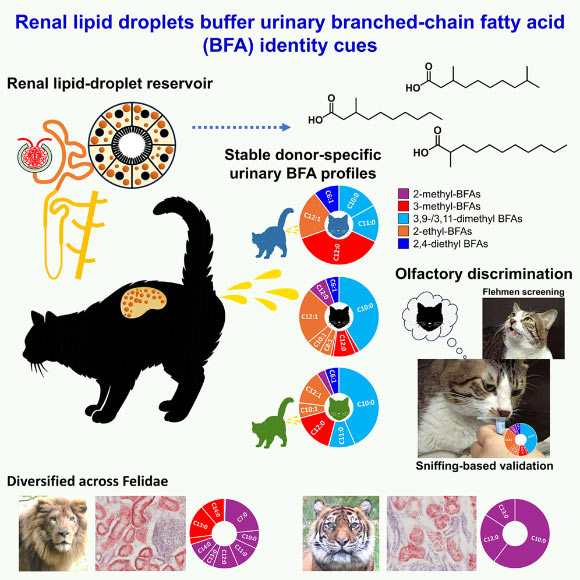
Biologists have finally solved a puzzle that has lingered for nearly 110 years: why the kidneys of domestic cats are packed with unusually large numbers of fat-storing structures called lipid droplets. The finding resolves a long-standing question in veterinary and comparative biology and may open new avenues for understanding feline kidney health.
Lipid droplets are cellular organelles that store fats and play roles in energy metabolism, cell signaling, and membrane production. In most mammals, these droplets appear in modest numbers within kidney cells. Domestic cats, however, stand out because their kidneys contain an exceptionally high density of these structures, a trait that has puzzled researchers since it was first observed more than a century ago.
The new research, reported by scientists studying feline biology, provides the first clear explanation for this anatomical quirk. The study reveals that the abundance of lipid droplets in cat kidneys is not a sign of disease or dysfunction but rather a normal, species-specific feature tied to the unique metabolic adaptations of domestic cats.
Cats are obligate carnivores, meaning their evolutionary history has shaped their metabolism around a diet rich in animal protein and fat, with very little carbohydrate. This dietary specialization has driven distinctive metabolic pathways that differ markedly from those of omnivores and herbivores. The researchers found that the lipid droplets in cat kidneys are linked to these adaptations, serving as a reservoir for fatty acids that the kidneys can draw upon for energy and cellular maintenance.
The study's authors examined kidney tissue from domestic cats and compared it with tissue from other mammalian species. They identified that the lipid droplets in feline kidneys are particularly enriched in specific types of fats, and that the enzymes responsible for breaking down these fats are also present in higher amounts. This suggests that the droplets are not merely stored passively but are actively involved in the kidney's energy balance and in protecting cells from stress.
Understanding the role of these lipid droplets could have practical implications for feline medicine. Kidney disease is a common and serious health problem in older cats, and knowing how healthy feline kidneys normally handle fat storage may help veterinarians better distinguish between normal physiology and early signs of pathology. The findings could also inform future research into dietary management and therapeutic strategies for cats with kidney conditions.
The resolution of this century-old mystery highlights how basic biological questions about familiar animals can still yield surprising insights. It also underscores the value of comparative anatomy and physiology, disciplines that examine how different species solve common biological challenges in their own ways.
For cat owners and veterinarians, the study offers reassurance that the lipid droplets seen in feline kidneys are a natural part of the species' biology rather than a red flag. For scientists, it provides a clearer picture of how a carnivorous diet has shaped organ function at the cellular level, and it raises new questions about whether similar adaptations exist in other obligate carnivores.
The research adds to a growing body of knowledge about the unique biology of domestic cats, animals whose physiology has been molded by thousands of years of coexistence with humans and by their evolutionary heritage as hunters. As the study demonstrates, even a structure as small as a lipid droplet can hold the key to understanding a species' entire metabolic strategy.
70