Physicists have long struggled to reconcile quantum mechanics with Einstein’s general theory of relativity, but a new theoretical framework suggests that some experimental signals thought to point toward quantum gravity may be an illusion. Researchers report that scenarios involving a supposed «superposition of gravity» can sometimes be described equally well as quantum particles moving through classical spacetime, raising questions about how such experiments should be interpreted.
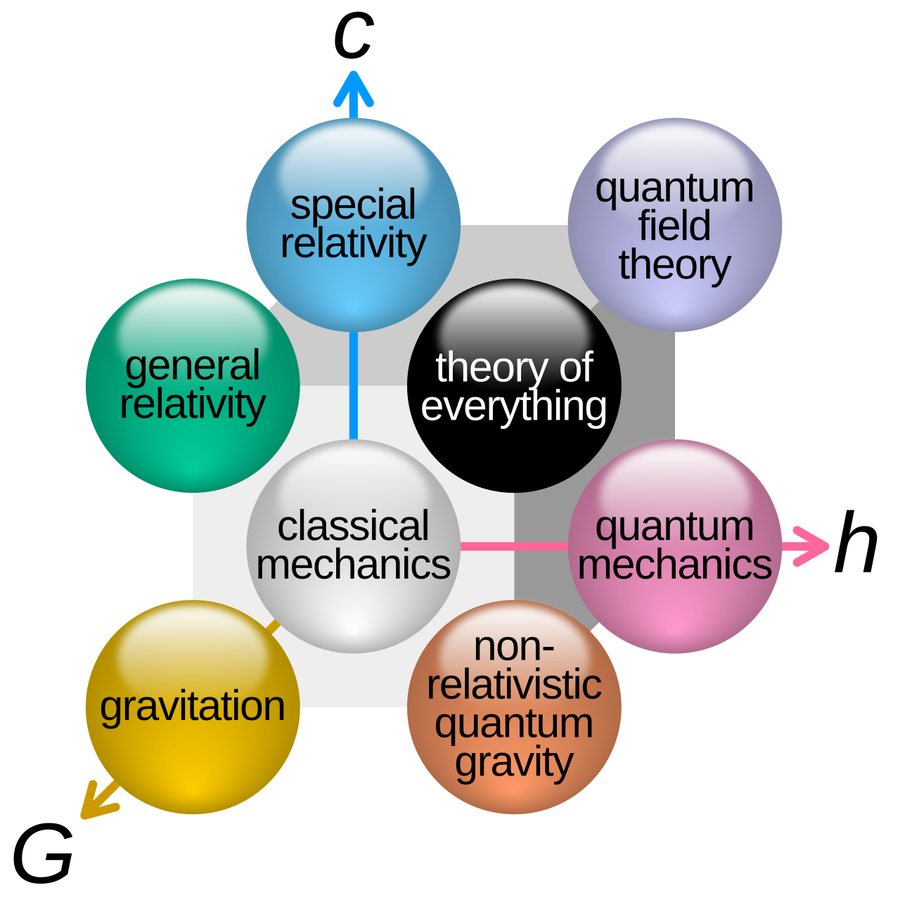
The study addresses one of the deepest open problems in modern physics: how to unite the two pillars of twentieth-century science. Quantum mechanics governs the behavior of particles at the smallest scales, while general relativity describes gravity as the curvature of spacetime. Both theories have been confirmed repeatedly in their respective domains, yet no single framework has successfully described situations where both are relevant, such as inside black holes or in the earliest moments of the universe.
In recent years, experimental proposals have emerged that aim to test whether gravity itself can exist in a quantum superposition, a state in which a system exists in multiple configurations at once. These experiments typically involve small masses whose gravitational fields might entangle with quantum states of nearby particles. If such entanglement were observed, it would be strong evidence that gravity is fundamentally quantum in nature.
The new theoretical work, however, suggests that some of these scenarios may not require quantum gravity at all. The researchers found that certain setups that appear to involve a superposition of gravitational fields can be reinterpreted as ordinary quantum particles moving through a classical, non-quantum spacetime. In this alternative description, the observed effects would not constitute evidence for quantum gravity but would instead be explained by the standard quantum behavior of matter in a classical gravitational background.
This finding does not rule out the possibility that gravity is quantum, but it complicates the interpretation of experiments designed to detect quantum gravitational effects. The authors argue that physicists must be cautious when designing and analyzing such tests, because the same experimental outcome could be explained by more than one theoretical framework. Distinguishing between these explanations may require more sophisticated measurements or new theoretical tools.
The framework builds on earlier work in quantum information and gravitational physics, where researchers have explored the boundary between quantum and classical descriptions of nature. The new results add to a growing body of literature suggesting that the transition between these regimes is more subtle than previously assumed. The study also highlights the importance of theoretical analysis in guiding experimental design, particularly for tests that push into regimes where established theories may not apply.
While the paper does not resolve the fundamental question of quantum gravity, it provides a clearer picture of what experiments can and cannot tell us. The authors emphasize that their framework is not a complete theory of quantum gravity but rather a tool for interpreting specific experimental scenarios. Further work will be needed to determine whether other proposed tests of quantum gravity remain unambiguous or whether they too can be explained by classical spacetime descriptions.
The research contributes to an ongoing debate in fundamental physics about the nature of spacetime and the possibility of quantizing gravity. As experimental techniques improve, the ability to distinguish between competing theoretical explanations will become increasingly important. For now, the new framework serves as a reminder that not every quantum-looking signal necessarily points to new physics.
123