The Defense Innovation Unit (DIU) has issued a new solicitation seeking commercial pathways to deliver electrical power from orbit, aiming to transition a concept studied for decades into a practical military capability by fiscal year 2030. The initiative, announced by the DIU, focuses on harnessing space-based solar power—a technology that involves collecting solar energy in space and transmitting it wirelessly to Earth—to provide reliable, on-demand electricity for defense operations.
The solicitation marks a significant step in moving space-based solar power from theoretical research and laboratory experiments toward operational deployment. The DIU, a Department of Defense organization tasked with accelerating the adoption of commercial technology for military use, is looking for industry partners to develop and demonstrate key components of a system capable of beaming power from orbit to receivers on the ground. The goal is to create a resilient energy source that could support remote military bases, disaster relief efforts, or other scenarios where traditional power infrastructure is unavailable or compromised.
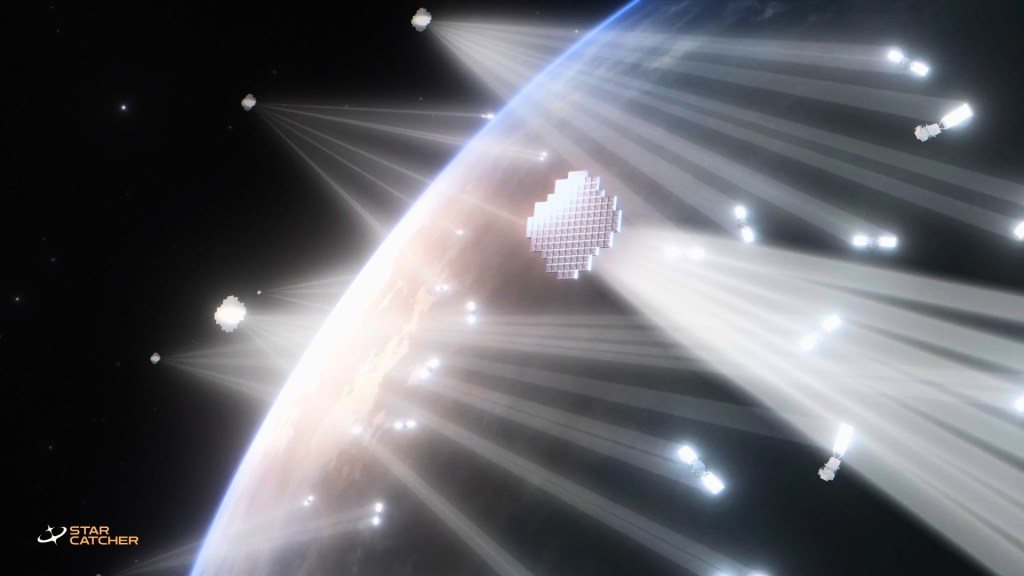
Space-based solar power has been a subject of scientific interest since the mid-20th century, with early studies by NASA and other agencies exploring its feasibility. The concept involves placing large solar panels on satellites in geostationary orbit, where they can collect sunlight continuously without interference from Earth's atmosphere or day-night cycles. The collected energy would then be converted into microwaves or lasers and transmitted to receiving stations on the ground, where it would be converted back into electricity. Despite its potential, the technology has faced significant technical and economic hurdles, including the high cost of launching large structures into orbit, the efficiency of wireless power transmission, and the safety of beaming energy through the atmosphere.
The DIU's solicitation seeks to address these challenges by leveraging advances in commercial space technology, including lower launch costs from reusable rockets, improvements in solar panel efficiency, and developments in wireless power transmission. The unit is specifically interested in proposals that can demonstrate a scalable, cost-effective approach to space-based power delivery, with an emphasis on rapid prototyping and iterative testing. The solicitation calls for systems that can deliver at least one kilowatt of power to a ground receiver, with a path to scaling up to megawatt-level capabilities in the future.
Military applications are a primary driver for the initiative. The Department of Defense relies heavily on fossil fuels for power generation at forward operating bases, which creates logistical vulnerabilities and supply chain risks. Space-based solar power could offer a secure, uninterrupted energy source that reduces the need for fuel convoys, which are often targeted by adversaries. Additionally, the technology could provide backup power for critical infrastructure, such as command centers and communication networks, in the event of grid failures or cyberattacks.
The DIU's effort aligns with broader interest in space-based solar power from other government agencies and private companies. In recent years, the U.S. Air Force Research Laboratory has conducted experiments on power beaming, and the Japan Aerospace Exploration Agency has demonstrated wireless power transmission in space. Private companies, including startups like Virtus Solis and Emrod, are also developing related technologies. The DIU solicitation aims to consolidate these efforts by providing a clear pathway for commercial partners to contribute to a military-grade system.
The timeline for the initiative is ambitious. The DIU expects to award contracts in the coming months, with initial demonstrations planned within two to three years. The goal is to have an operational system ready by fiscal year 2030, though the solicitation acknowledges that significant technical work remains. Key challenges include developing lightweight, high-efficiency solar panels that can withstand the harsh space environment, creating reliable wireless power transmission systems that can maintain beam focus over thousands of kilometers, and ensuring that the transmitted energy does not interfere with other satellites or pose risks to people and equipment on the ground.
Environmental and safety considerations are also part of the solicitation. The DIU requires proposers to address potential impacts of wireless power transmission on wildlife, aviation, and human health. The technology must comply with existing regulations on radio frequency emissions and laser safety, and proposers must outline plans for deorbiting satellites at the end of their operational lives to avoid contributing to space debris.
The solicitation represents a shift in how the Department of Defense approaches energy security. By tapping into commercial innovation, the DIU hopes to accelerate the development of space-based solar power without bearing the full cost of research and development. If successful, the technology could not only serve military needs but also provide a new source of clean energy for civilian use, potentially transforming the global energy landscape. For now, the focus remains on proving the concept in orbit and demonstrating that power can be delivered reliably and safely to Earth.
118