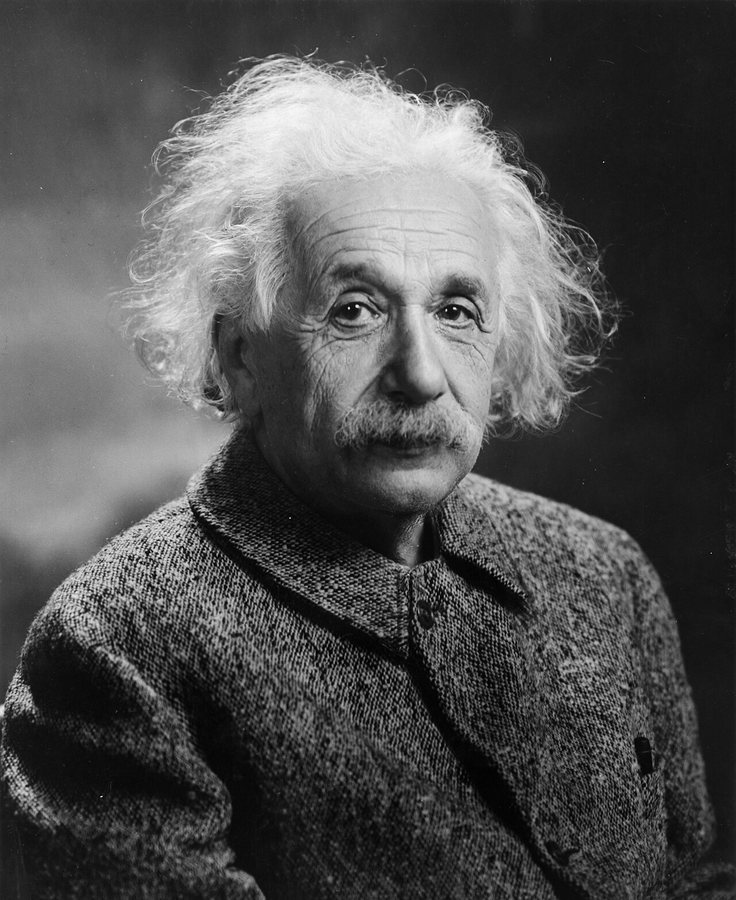
Physicists working at CERN's Large Hadron Collider have detected strong evidence that Z bosons, the heavy and fleeting particles that mediate the weak nuclear force, can become quantum entangled when they are produced in the decay of Higgs bosons. The finding indicates that quantum entanglement, the phenomenon Albert Einstein famously called «spooky action at a distance,» survives under some of the most extreme conditions ever created in a laboratory.
The result comes from an analysis of high-energy proton collisions at the LHC, where Higgs bosons are created and then decay almost instantly into pairs of Z bosons. Because these bosons are massive and short-lived, they offer a rare window into quantum behavior at energy scales far beyond those of ordinary tabletop experiments. The collaboration reports strong statistical evidence that the two Z bosons emerging from a single Higgs decay are correlated in ways that cannot be explained by classical physics.
Quantum entanglement links particles so that measurements on one instantly constrain the state of the other, no matter how far apart they are. Einstein regarded this as a sign that quantum mechanics was incomplete, but decades of experiments have confirmed that entanglement is real. Until now, most precision tests have involved photons, electrons, or other relatively light particles. Demonstrating entanglement between heavy Z bosons produced in Higgs decays extends the phenomenon into a new regime of mass and energy.
The observation is important for several reasons. It provides a fresh test of quantum mechanics in a setting where the particles are created and destroyed within a tiny fraction of a second, and where the surrounding environment is dense with other particles. If entanglement can be established there, it strengthens confidence that quantum theory applies consistently even in the violent conditions of high-energy collisions.
The result also has implications for future research. Entangled Z bosons could serve as a new tool for probing the Higgs boson and for searching for subtle deviations from the Standard Model of particle physics. Because entanglement is a sensitive indicator of how particles interact, any unexpected pattern in the correlations could hint at new physics beyond current theory.
Researchers caution that the finding is based on statistical evidence rather than a single event-by-event observation, and that further data will be needed to confirm the effect with greater precision. Nonetheless, the collaboration describes the evidence as strong, and the result is expected to stimulate both theoretical work and new experimental strategies at the LHC and future colliders.
The study adds to a growing body of research showing that quantum information concepts, once confined to small-scale laboratory systems, are now being applied to the most energetic processes available to science. For physicists, the survival of entanglement in Higgs decays is both a confirmation of quantum mechanics and a promising opening for exploring the universe at its most fundamental level.