Artificial intelligence has crossed the line from science fiction to operational reality in space. It is already at work, and in some cases already decisive. AI systems now help handle the flow of data produced by telescopes, guide rovers moving across the surface of Mars, and support astronauts aboard spacecraft in their daily tasks.
These are no longer isolated experiments. Across the space sector, machine intelligence is being designed into missions from the start. Instead of sending instructions and waiting for a response, controllers define goals and let the spacecraft work out how to reach them. That changes the nature of space operations and expands what robots and probes can do on their own.
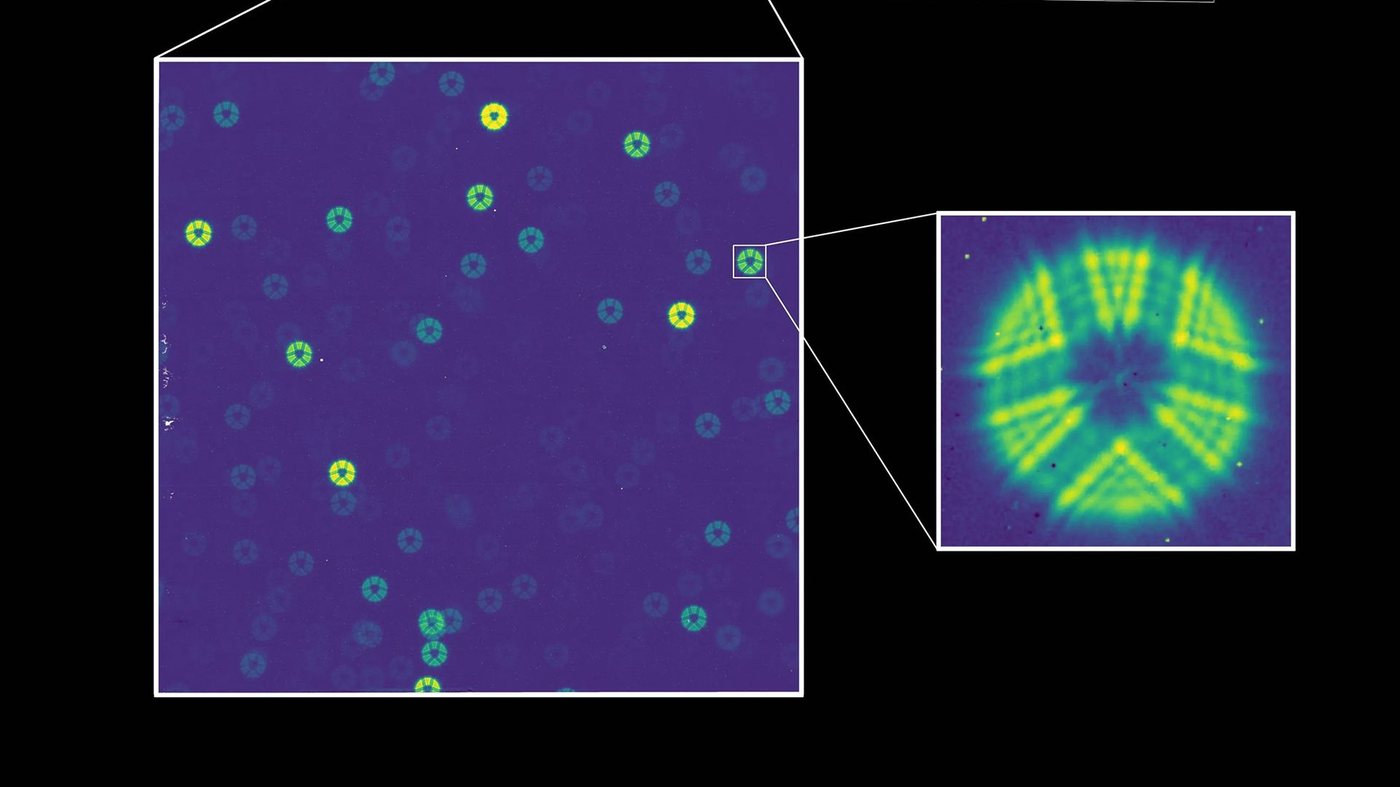
The most visible pressure point is data. Astronomical telescopes now generate petabytes of information every day. That volume is far too large for human teams to examine manually, so machine-learning tools are becoming a practical answer. By filtering incoming observations, flagging anomalies, and identifying the most useful signals, AI effectively decides which data deserve attention and which can be archived. Researchers can therefore move from raw observations to useful results more quickly than they could with manual analysis alone.
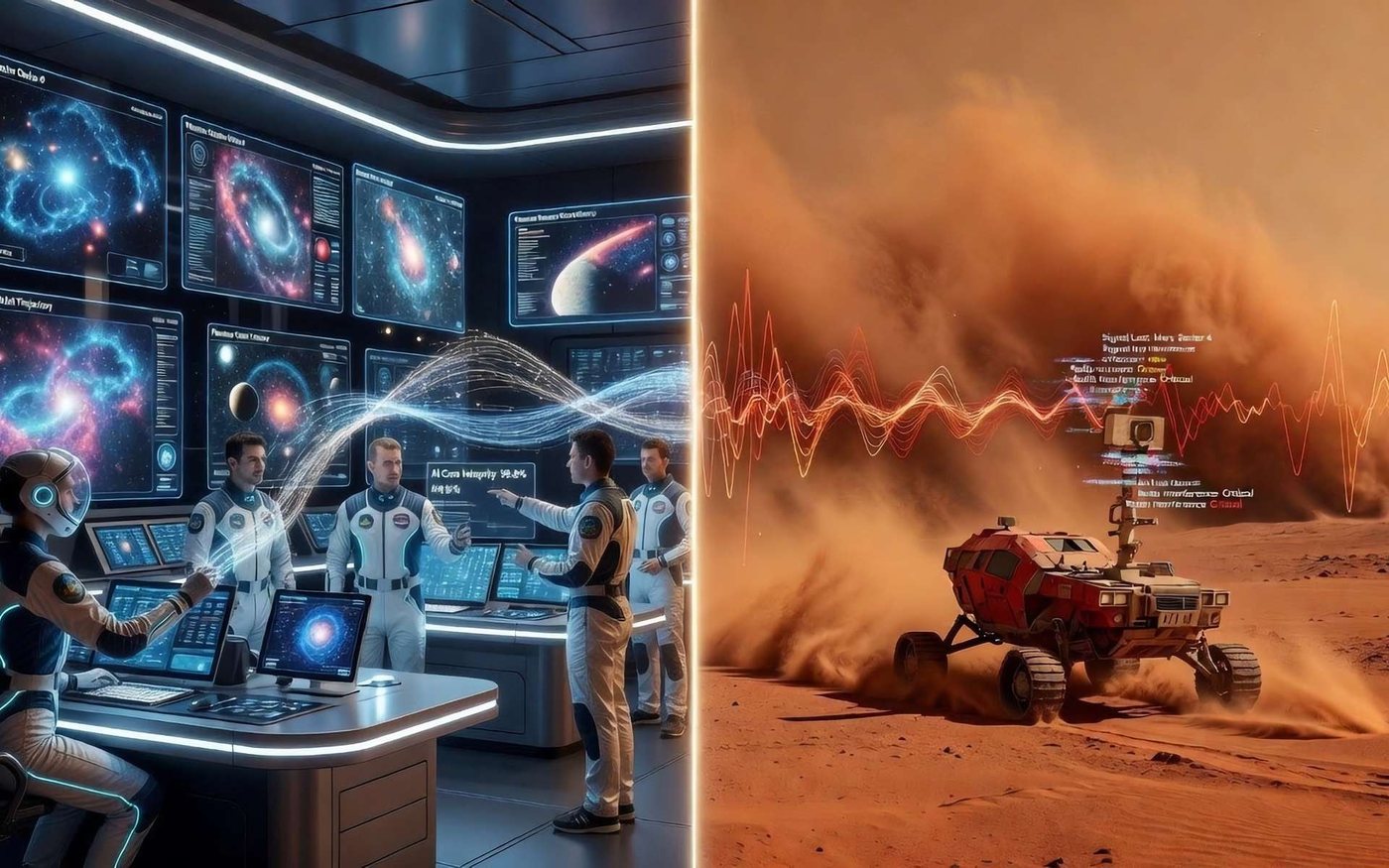
On Mars, autonomous navigation has moved from an experiment to an everyday operating mode. Because the planet is extremely distant, commanding a rover in real time is not possible. The vehicles must make their own decisions, reading the terrain ahead and choosing a safe path without waiting for instructions from Earth. This onboard intelligence allows rovers to continue moving and collecting data between communication windows, and it has become a normal part of mission operations.
Closer to home, robotic assistants are beginning to share the working environment with astronauts. On long missions, time is one of the most valuable resources on board. Robots equipped with artificial intelligence can take over repetitive checks, monitor equipment, and handle certain routine procedures, giving astronauts more time for scientific work and maintenance. Their presence on spacecraft marks a shift away from the idea of machines as simple tools and toward systems that can work alongside people.
This change is about more than convenience. It reflects a broader evolution in mission design. Space agencies and mission planners no longer treat artificial intelligence as a distant ambition; they are integrating it into systems that must function in extreme conditions. The stakes are highest when communication delays make ground control impractical, because a spacecraft then has no choice but to rely on its own judgment.
The practical challenge now is to make these systems more robust and reliable as missions become more ambitious. If spacecraft continue to travel farther from Earth, the demands on onboard intelligence will only increase. The question is no longer whether artificial intelligence belongs in space. It is already there, doing essential work. The gap between what science fiction once imagined and what space missions actually do is growing smaller.