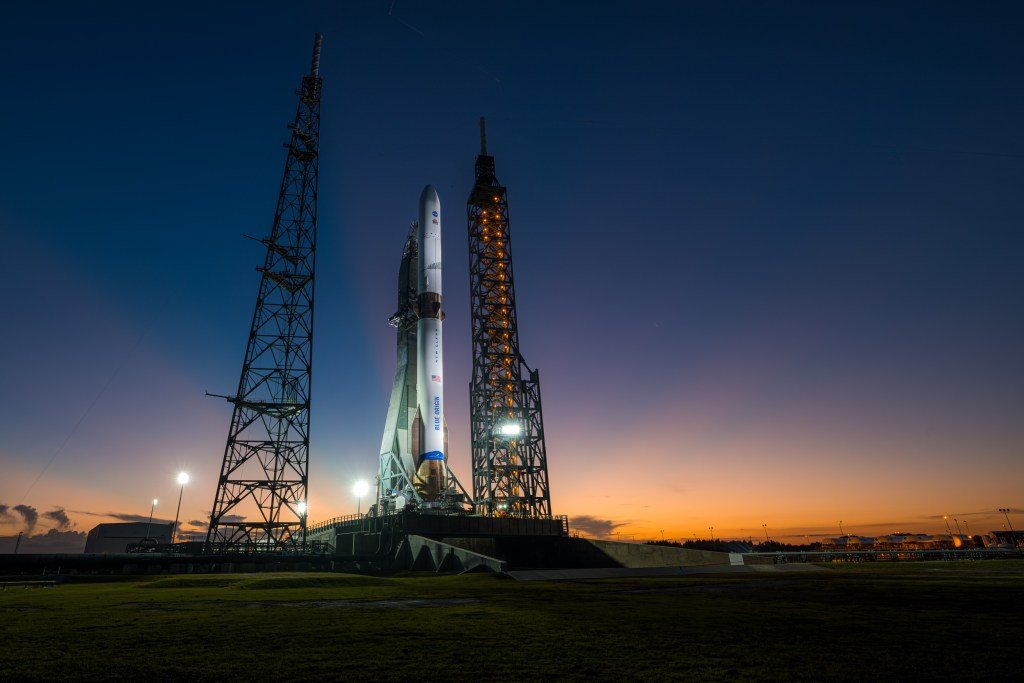
The U.S. Air Force Research Laboratory has added $11.7 million to a Blue Origin contract focused on the use of space rockets for point-to-point cargo deliveries. The increased funding extends the service's research into a logistics concept that would carry military supplies between locations on Earth by rocket.
Under the modified agreement, Blue Origin will continue work on the idea of launching a rocket from one point and recovering or delivering its payload at a distant destination. The approach is intended to complement traditional transport by moving high-priority cargo much more quickly than aircraft or ships. The contract is managed by the Air Force Research Laboratory, the U.S. Air Force's science and technology organization, which has been investigating rocket-based logistics as part of a broader effort to modernize how the military moves equipment and supplies.
The additional $11.7 million increases the value of the work Blue Origin is doing for AFRL on the project. The company, which designs and launches reusable rockets, is being asked to examine the technical and operational requirements for point-to-point delivery. That includes questions about how cargo would be integrated with a rocket, how a vehicle would reach a designated landing area, and whether the approach can deliver materials in a state that would be usable by forces in the field.
Point-to-point rocket transport is based on the same flight profile used in spaceflight. A rocket would carry a payload high above the atmosphere, travel across the globe, and then descend to a landing site near its final destination. Because the vehicle moves through space rather than through the atmosphere for most of the journey, travel times could be drastically shorter than those of conventional freight. For the military, that speed could matter in situations where troops need urgent resupply of food, fuel, medical supplies, or other critical equipment.
The Air Force's interest in the concept is part of a wider push to incorporate commercial space capabilities into defense operations. Rocket cargo is still at an early stage, and the expanded funding appears intended to support further analysis and possibly the development of technology that could be tested later. The service has not indicated a date for operational use, and the additional money does not commit the Air Force to fielding a rocket delivery system.
Blue Origin already works with the Air Force on other space-related activities, and this contract expansion gives the company another layer of involvement in military programs. The company's focus on reusable launch vehicles makes it an obvious partner for a project that would need a rocket capable of carrying cargo, delivering it precisely, and potentially being reused. The contract is part of the Pentagon's broader interest in commercial partnerships, which has grown as private companies have developed new space capabilities at lower cost.
The modified award also suggests that early research has been judged useful enough to continue. While AFRL has not publicly detailed the results of the earlier phase, the funding increase is an indication that the work met the lab's expectations. Questions remain about cost, payload size, and the ability to service cargo quickly once a rocket lands, and the expanded contract would allow Blue Origin to address those issues more thoroughly.
The contract expansion is the latest step in a gradual move by the U.S. military toward treating rockets as a potential logistics tool. The idea has drawn attention within defense planning because it could bypass crowded airports and damaged ports. For now, the program remains an experiment, but with the additional $11.7 million, Blue Origin will have more room to study whether rocket-based cargo delivery can move from concept to a practical capability.