A new study has found that a famous space weather event, long believed to have caused a train delay in 1859, actually occurred seven years later. The research, published in a scientific journal, reexamines historical records of geomagnetic storms and their effects on early technology.
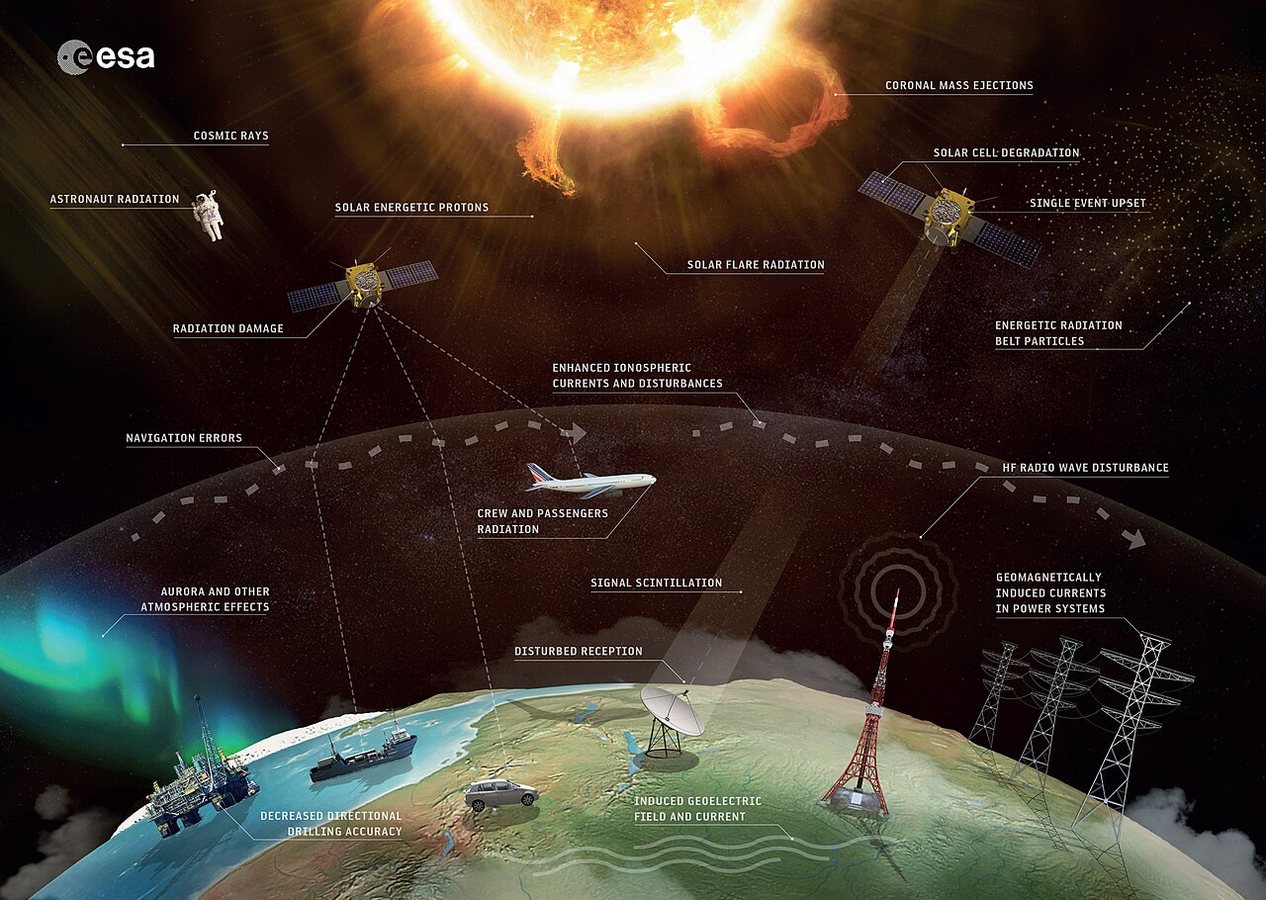
The Carrington Event of 1859 is often described as the first major space weather event to affect technology, disrupting telegraph systems worldwide. However, the study shows that earlier incidents occurred, with telegraph systems disrupted by geomagnetic storms as early as the late 1840s. This finding challenges the conventional timeline of space weather impacts on human infrastructure.
According to the study, the famous train delay attributed to the Carrington Event actually happened in 1866, seven years after the solar storm. The researchers analyzed historical documents and telegraph records to establish a more accurate chronology of space weather events and their technological consequences.
The implications of this research extend beyond historical accuracy. Understanding when and how space weather affects technology is crucial for modern society, which relies heavily on satellites, power grids, and communication networks. By correcting the historical record, scientists can better assess the risks posed by future geomagnetic storms.
The study also highlights the importance of archival research in space weather science. By combining historical records with modern scientific understanding, researchers can reconstruct past events and improve predictive models. This interdisciplinary approach is essential for preparing for potential space weather threats.
In related space news, a newly formed crater on the moon is providing insights into lunar geology. The crater, formed by an asteroid impact in 2024, is the largest ever observed forming in real time. It was first spotted when researchers compared images from NASA's Lunar Reconnaissance Orbiter taken in 2024 and 2025, and was named McGetchin crater.
According to models of impact frequency, a crater this size—about 222 metres across—is expected only once every 132 years. While the moon has many larger craters, watching one form and evolve offers a unique opportunity to study lunar surface processes. «Cratering is probably the most common process that happens in the solar system,» said Tyler Powell at Johns Hopkins University. «Having a baseline for a pristine crater that can serve as our calibration point for how these processes start is really incredible.»
Powell and colleagues measured surface temperatures around McGetchin crater and found a spot about 7 kilometres wide that is a few degrees colder than the surrounding area during the lunar night. These cold spots form when lunar dust fluffs up after an impact, cooling faster after sunset. Another team, led by Mark Robinson at Intuitive Machines, found that the impact flung dust and rocks more than 120 kilometres from the crater.
«Over the last several years, we've developed this understanding that these impacts modify more than just the region right where the crater is,» Powell said. «It's really striking that a crater can modify the lunar surface to distances far larger than the crater itself.» This research will help scientists study the history of the moon and other airless, cratered objects, and could aid future exploration. «If we're trying to send rovers or astronauts or build things on the moon, we want to understand the properties of the surface,» Powell added.