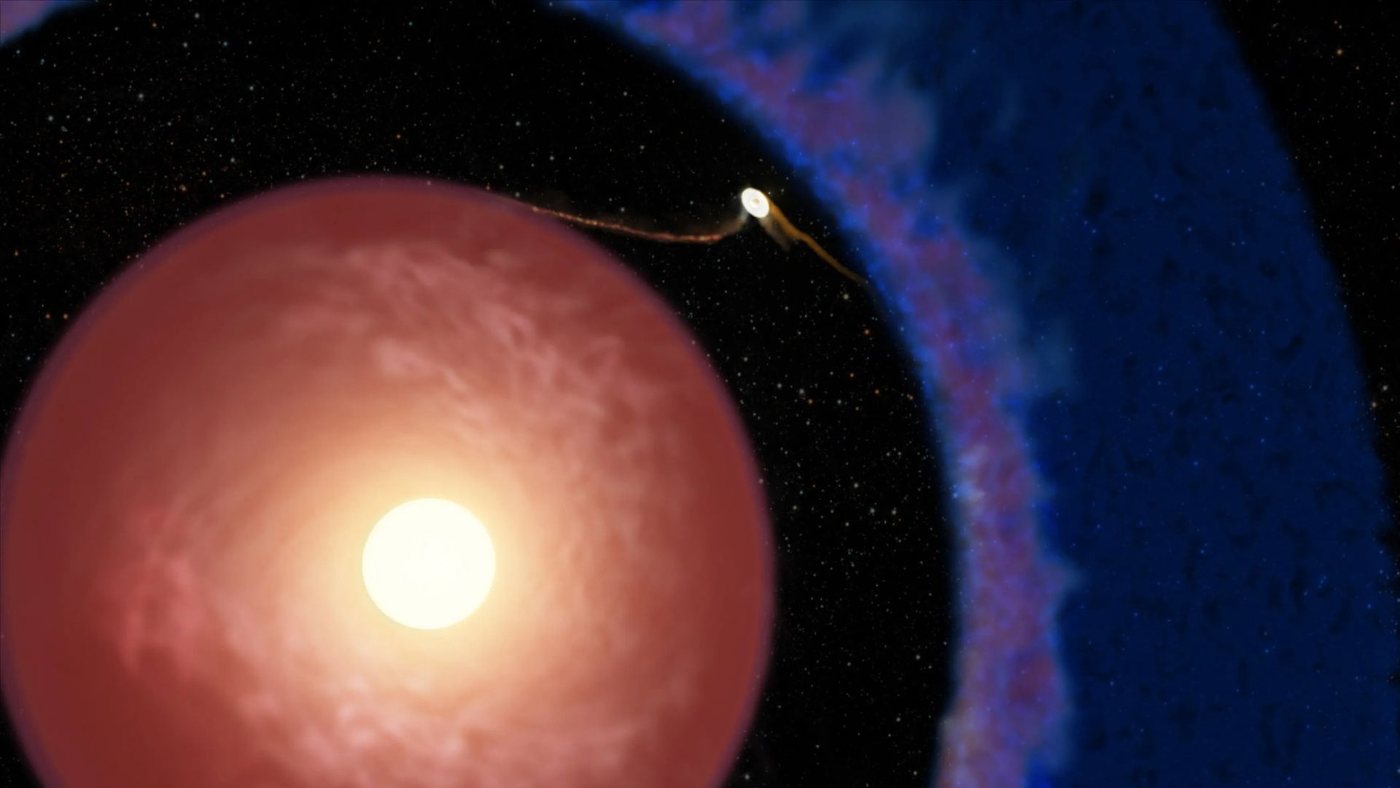
Astronomers have confirmed the youngest planet ever detected, a Jupiter-size world less than a million years old that is still in the process of forming. The planet, designated Elias 2-24 b, orbits a young star and offers an unprecedented look at a world being born, according to research reported by ScienceDaily.
The discovery is significant because it gives scientists a rare snapshot of planetary formation in action. Most known exoplanets are billions of years old, their birth environments long since dispersed. Elias 2-24 b, by contrast, is so young that it may still be surrounded by the disk of gas and dust from which it coalesced, allowing researchers to study the conditions and timescales involved in the birth of a giant planet.
What makes the finding especially surprising is how quickly the planet appears to have formed. Prevailing theories suggest that gas giants take several million years to assemble, gradually accumulating mass from a protoplanetary disk. Elias 2-24 b challenges that timeline, having reached Jupiter-like proportions in under a million years. The rapid formation is difficult to reconcile with standard models, particularly because the planet lies far from its host star, where material is sparser and orbital periods are longer.
Scientists have long debated how giant planets form at large distances from their stars. One leading idea, core accretion, holds that a solid core forms first and then captures a massive envelope of gas. That process is thought to be slow, especially in the outer reaches of a disk. An alternative, gravitational instability, suggests that a disk can fragment directly into a planet-size clump, a much faster route. The youth and distance of Elias 2-24 b may favor the latter scenario, though researchers caution that more observations are needed before drawing firm conclusions.
The planet's host star, Elias 2-24, is itself young and still surrounded by a prominent protoplanetary disk. Such disks are common around newborn stars, but catching a planet before the disk dissipates is rare. The system therefore serves as a natural laboratory for testing ideas about how planets interact with their birth environment, including how they carve gaps in disks and influence the distribution of dust and gas.
Confirmation of the planet relied on multiple lines of evidence, including direct imaging and analysis of the disk's structure. The object's infrared brightness and position are consistent with a young, massive planet still radiating heat from its formation. Its detection adds to a small but growing sample of directly imaged exoplanets, most of which are similarly young and massive because those are the easiest to see against the glare of their stars.
The finding carries implications beyond the Elias 2-24 system. If giant planets can form in under a million years at wide separations, then theories of planet formation and migration may need revision. It also raises questions about how common such fast-forming worlds are and whether they survive in place or eventually migrate inward toward their stars.
For now, Elias 2-24 b stands as the youngest known planet, a benchmark for future studies. Astronomers expect that continued observations of young disks will uncover more infant worlds, helping to piece together the sequence of events that turns a cloud of dust and gas into a planetary system. The discovery is reported in the journal Science.