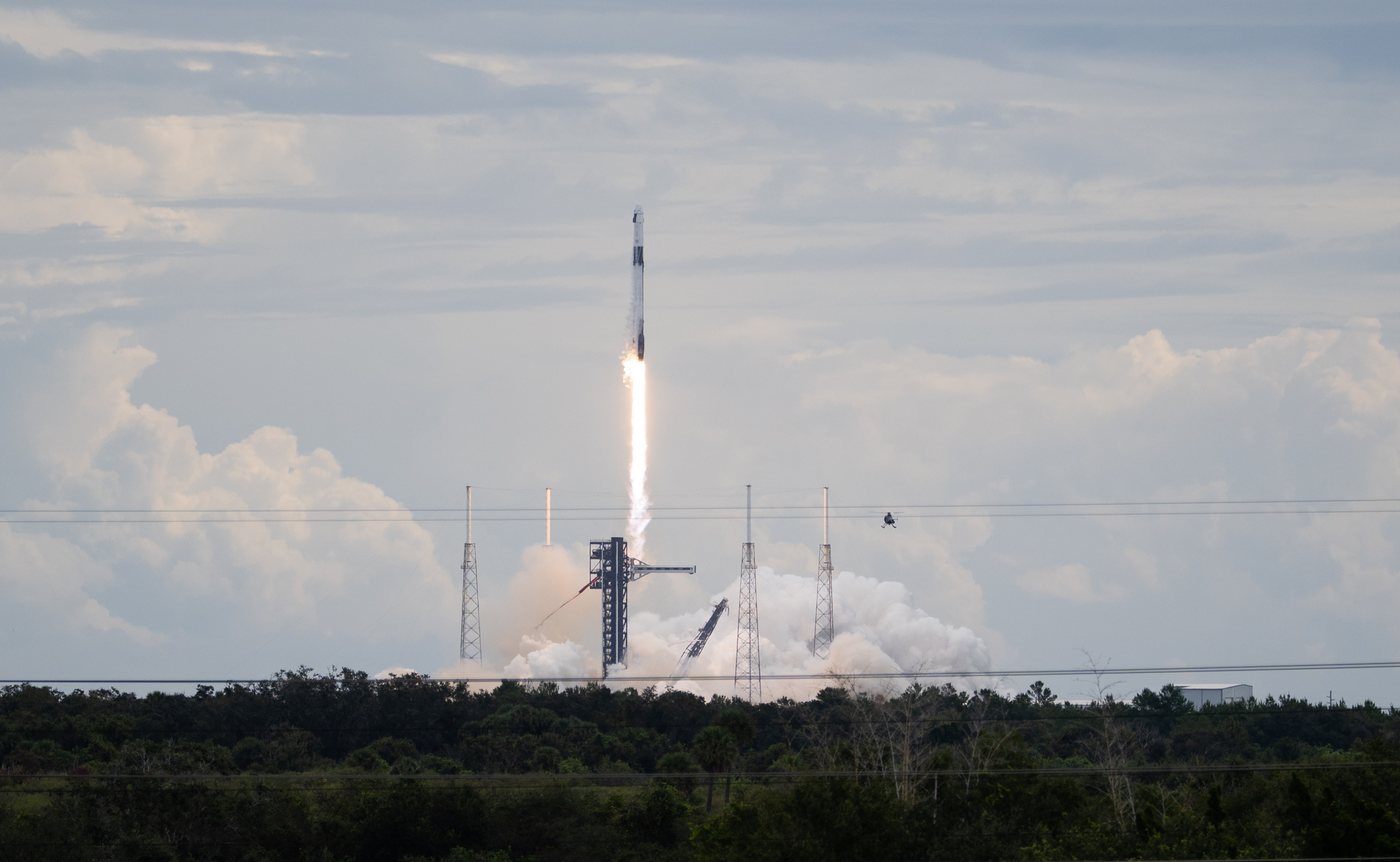
Blue Origin is working toward a return to flight by the end of 2026, and NASA has formally added a Blue Moon Mark 2 (Mk2) lander test article to its revised Artemis III low-Earth orbit mission profile. The company is also rebuilding its launch infrastructure after a hot-fire anomaly earlier this year.
Under the updated Artemis III plan, the Mk2 test article will launch on a New Glenn rocket and enter low-Earth orbit ahead of Orion, which will launch on the Space Launch System to carry out rendezvous and proximity operations with the lander. SpaceX's Starship Human Landing System will also take part in the Artemis III mission. Once docked, the Artemis III astronauts will spend two days attached to the lander to evaluate the operational environment firsthand. Crew members will enter the cabin to assess environmental control and life-support systems, flight avionics, software interfaces and manual controls.
Manufacturing of the test article is progressing across Blue Origin's Florida facilities. Structural fabrication of the dome and barrel panels is underway, with final hull welding expected to finish by January 2027. Technicians will then integrate communication systems, flight controls and avionics before testing and encapsulation within New Glenn's seven-meter fairing halves at Launch Complex 36A.
NASA has also outlined an accelerated concept of operations for Artemis IV, targeted for 2028, which moves away from the originally planned Near Rectilinear Halo Orbit aggregation. Two versions of the mission were detailed, one using Starship as the lander and one using Blue Moon Mk2. In the Blue Moon version, three Transfer Stages would join the lander in low-Earth orbit, and the combined stack would head toward an Elliptical Polar Orbit around the Moon, staging off the first two Transfer Stages as their propellant runs out. Orion would then dock with the lander, and after separation the third Transfer Stage would perform the descent burn to bring the Mk2 lander down to low-lunar orbit and then to the surface.
After surface operations, the Mk2 ascent element would lift off from the Moon, redock with Orion, and the crew would transfer back into the spacecraft before Orion performs its trans-Earth injection burn. Blue Origin plans an uncrewed landing demonstration with the Mk2 lander before flying astronauts on Artemis IV. NASA will choose between Blue Origin and SpaceX for Artemis IV based on how both vehicles perform on Artemis III.
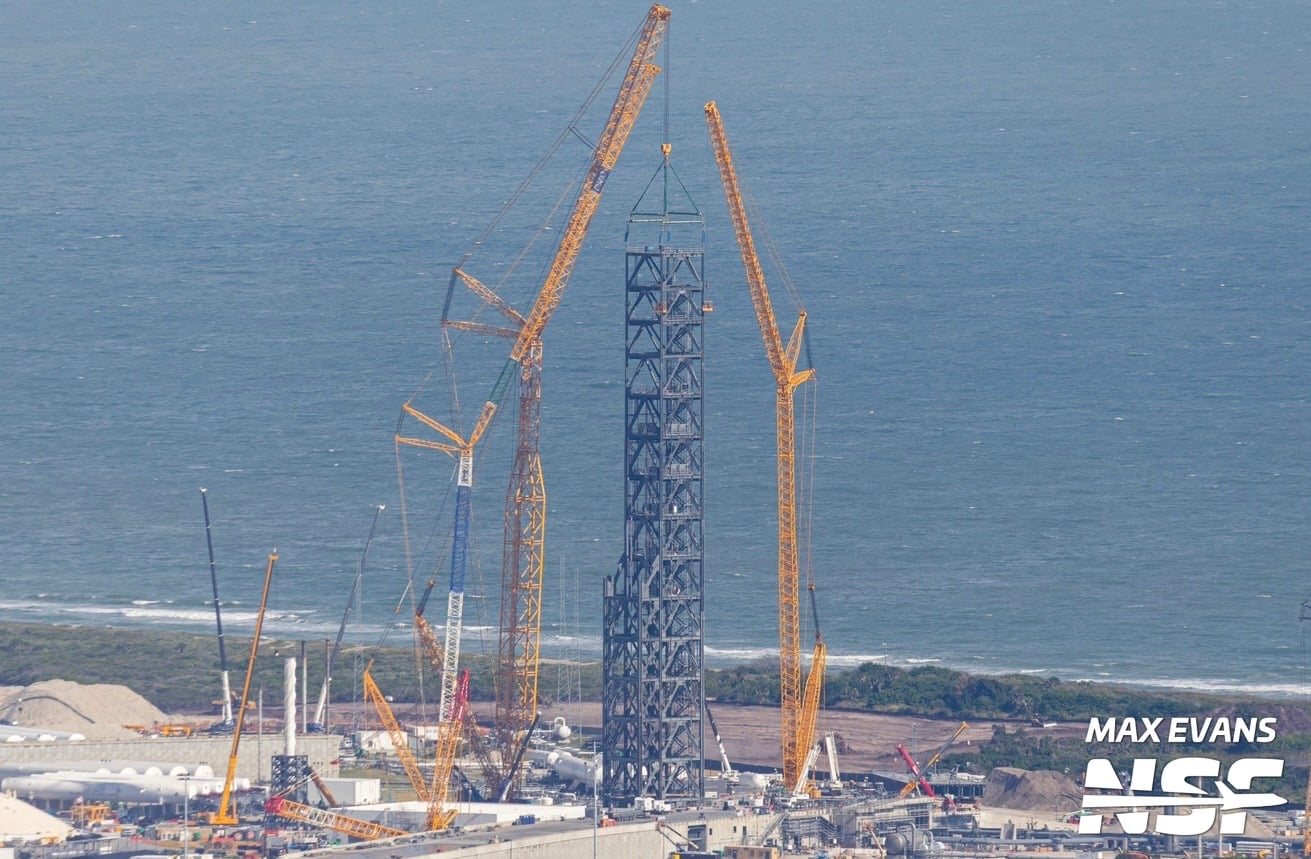
At Cape Canaveral Space Force Station, Blue Origin has made rapid progress recovering from the hot-fire anomaly at Launch Complex 36A earlier this year. On October 24, Blue Origin CEO Dave Limp confirmed that all nine modules of the Vehicle Access Tower have been repaired and stacked back into their original configuration. The pad's launch bridge was re-erected and certified ready for operational use on October 9. Limp has said the company is targeting a return to launch by the end of 2026.
Work is also advancing at the neighboring Launch Complex 36B, the company's secondary pad. Crews completed the first major concrete pour for the pile caps, with about 450 truckloads of concrete delivered in a convoy stretching nearly three miles up the coast. Three more pours are planned to complete the foundation, for a total of about 15,000 cubic yards. Crews will then erect the flame diverter, excavate the flame trench, install the launch mount and a Vehicle Access Tower, and lay fluid lines to bring cryogenic and high-pressure propellants from LC-36A's central tank farm. The expansion will give dedicated capacity for the larger 9-by-4 New Glenn configuration and improve operational flexibility and flight cadence.
10